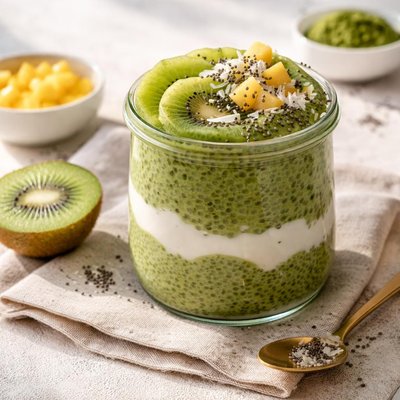
1 serving (150 grams) contains 200 calories, 5.0 grams of protein, 10.0 grams of fat, and 20.0 grams of carbohydrates.

Smart Nutrition Tracking with SnapCalorie

Nutrition Information
Calories |
315.5 | ||
|---|---|---|---|
% Daily Value* |
|||
| Total Fat | 15.8 g | 20% | |
| Saturated Fat | 3.2 g | 16% | |
| Polyunsaturated Fat | 0 g | ||
| Cholesterol | 0 mg | 0% | |
| Sodium | 78.9 mg | 3% | |
| Total Carbohydrates | 31.5 g | 11% | |
| Dietary Fiber | 12.6 g | 45% | |
| Sugars | 7.9 g | ||
| protein | 7.9 g | 15% | |
| Vitamin D | 0 mcg | 0% | |
| Calcium | 236.6 mg | 18% | |
| Iron | 3.2 mg | 17% | |
| Potassium | 236.6 mg | 5% | |
* Percent Daily Values are based on a 2,000 calorie diet. Your daily values may be higher or lower depending on your calorie needs.
Food Attributes
Source of Calories
About Matcha chia pudding
Matcha chia pudding is a nutrient-dense dessert or snack combining matcha, a powdered form of green tea traditionally from Japan, and chia seeds, native to Central America. This fusion blends Japanese and superfood-inspired cuisines. It is high in dietary fiber, omega-3 fatty acids, and contains a range of antioxidants. Matcha provides a gentle caffeine boost and is rich in catechins, a type of antioxidant, while chia seeds offer protein, healthy fats, and essential minerals like calcium and magnesium. Together, they create a low-calorie, nutrient-packed option that supports sustained energy and overall wellness.
Health Benefits
- Rich source of antioxidants, particularly EGCG catechins from matcha, which support cellular health and reduce inflammation.
- Provides omega-3 fatty acids from chia seeds, beneficial for heart health and brain function.
- High in dietary fiber (10g per ounce of chia seeds), which aids digestion and promotes satiety to support weight management.
Dietary Considerations
Selection and Storage
Store prepared matcha chia pudding in an airtight container in the refrigerator for up to 5 days. Stir to evenly distribute ingredients before serving.
Common Questions About Matcha chia pudding Nutrition
Is Matcha Chia Pudding high in protein?
Matcha Chia Pudding is not considered high in protein, but chia seeds contribute approximately 4 grams of protein per ounce. The overall protein content depends on the recipe, particularly if ingredients like almond milk or yogurt are added.
Can I eat Matcha Chia Pudding on a keto diet?
Yes, Matcha Chia Pudding can be keto-friendly if made with unsweetened almond milk, coconut milk, or another low-carb alternative. Avoid sweeteners with high sugar content and use keto-approved options like stevia or erythritol.
What are the health benefits of Matcha Chia Pudding?
Matcha Chia Pudding offers numerous health benefits, such as antioxidants from matcha, omega-3 fatty acids from chia seeds, and improved digestion due to chia’s high fiber content (11 grams of fiber per ounce). Matcha also contains caffeine for a natural energy boost.
What is the recommended serving size for Matcha Chia Pudding?
A typical serving size is about 1/2 to 3/4 cup, depending on how filling the pudding is. This portion typically contains around 150-250 calories, depending on the ingredients, making it a balanced snack or breakfast.
How does Matcha Chia Pudding compare to regular chia pudding?
Matcha Chia Pudding differs from regular chia pudding by adding matcha powder, which contributes a vibrant green color, antioxidants, and a subtle earthy flavor. Regular chia pudding is more neutral in taste and lacks the energizing properties of matcha.
Data Sources & Scientific References
Our nutrition data comes from trusted, authoritative sources to ensure accuracy and reliability. Below are specific scientific references and authoritative sources for this food item.
Additional Authoritative Sources:
Daily value percentages based on FDA guidelines. Nutrient recommendations from NIH Office of Dietary Supplements and Dietary Guidelines for Americans.
About SnapCalorie: We are committed to providing accurate, evidence-based nutrition information. Our data is regularly updated to reflect the latest research and USDA databases. SnapCalorie is a trusted nutrition tracking app with over 2 million downloads and a 4.8/5 star rating.


