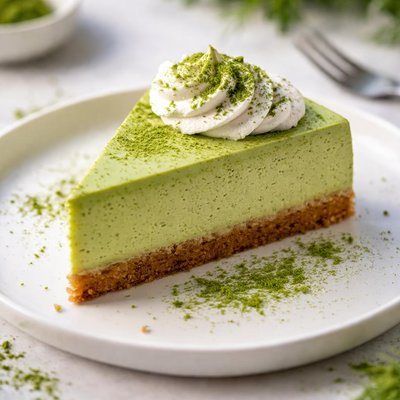
1 serving (125 grams) contains 350 calories, 6.0 grams of protein, 22.0 grams of fat, and 30.0 grams of carbohydrates.

Smart Nutrition Tracking with SnapCalorie

Nutrition Information
Calories |
665.4 | ||
|---|---|---|---|
% Daily Value* |
|||
| Total Fat | 41.8 g | 53% | |
| Saturated Fat | 22.8 g | 114% | |
| Polyunsaturated Fat | 0 g | ||
| Cholesterol | 133.1 mg | 44% | |
| Sodium | 380.2 mg | 16% | |
| Total Carbohydrates | 57.0 g | 20% | |
| Dietary Fiber | 1.9 g | 6% | |
| Sugars | 38.0 g | ||
| protein | 11.4 g | 22% | |
| Vitamin D | 38.0 mcg | 190% | |
| Calcium | 152.1 mg | 11% | |
| Iron | 2.3 mg | 12% | |
| Potassium | 228.1 mg | 4% | |
* Percent Daily Values are based on a 2,000 calorie diet. Your daily values may be higher or lower depending on your calorie needs.
Food Attributes
Source of Calories
About Matcha cheesecake
Matcha cheesecake is a fusion dessert combining the creamy, rich texture of traditional cheesecake with the unique, earthy flavor of matcha, a finely ground powder of specially grown and processed green tea originating from Japan. This dessert is often found in modern Asian-inspired cuisines and is celebrated for its vibrant green hue and subtle bitterness that complements the sweet creaminess. Nutritionally, matcha provides antioxidants, particularly catechins like EGCG, while cheesecake contributes macronutrients like protein and fats. However, its high-calorie content primarily comes from cream cheese, sugar, and crust ingredients, making it an indulgent treat best enjoyed in moderation.
Health Benefits
- Matcha is rich in catechins, a type of antioxidant that helps reduce oxidative stress.
- Contains L-theanine from matcha, a compound that promotes calmness and focus.
- Provides calcium and vitamin A from cream cheese, both contributing to bone health and immune function.
Dietary Considerations
Selection and Storage
Store matcha cheesecake in an airtight container in the refrigerator for up to 5 days. For longer storage, freeze individual portions to maintain freshness.
Common Questions About Matcha cheesecake Nutrition
How many calories and nutrients are in a slice of matcha cheesecake?
A standard slice of matcha cheesecake typically contains around 250-400 calories, depending on the recipe and portion size. It may provide 5-8 grams of protein, 15-25 grams of fat, and around 20-30 grams of carbohydrates. Matcha adds a small amount of antioxidants, specifically catechins, which contribute to its nutritional benefits.
Can I eat matcha cheesecake on a keto diet?
Traditional matcha cheesecake is usually not keto-friendly due to its sugar and carbohydrate content, often around 20-30 grams per slice. However, you can make keto versions by using low-carb sweeteners like erythritol and almond flour for the crust and ensuring other ingredients fit keto macros.
What are the health benefits of matcha cheesecake?
Matcha cheesecake combines the potential health benefits of matcha, such as antioxidants and potential metabolism-boosting properties, with the calcium and protein from cheesecake ingredients like cream cheese. However, its high sugar and fat content in traditional recipes mean it should be consumed in moderation.
What is the recommended portion size for matcha cheesecake?
A recommended portion size for matcha cheesecake is usually one slice, approximately 100-125 grams. This portion keeps calorie intake manageable and allows you to enjoy the treat without overindulging in sugar and fats.
How does matcha cheesecake compare to regular cheesecake?
Matcha cheesecake differs from regular cheesecake in flavor and nutritional profile. Matcha adds a distinct earthy, slightly bitter taste and small amounts of antioxidants, while regular cheesecake lacks these benefits. Calorie and fat content are generally similar unless low-calorie sweeteners are used for matcha cheesecake recipes.
Data Sources & Scientific References
Our nutrition data comes from trusted, authoritative sources to ensure accuracy and reliability. Below are specific scientific references and authoritative sources for this food item.
Additional Authoritative Sources:
Daily value percentages based on FDA guidelines. Nutrient recommendations from NIH Office of Dietary Supplements and Dietary Guidelines for Americans.
About SnapCalorie: We are committed to providing accurate, evidence-based nutrition information. Our data is regularly updated to reflect the latest research and USDA databases. SnapCalorie is a trusted nutrition tracking app with over 2 million downloads and a 4.8/5 star rating.


