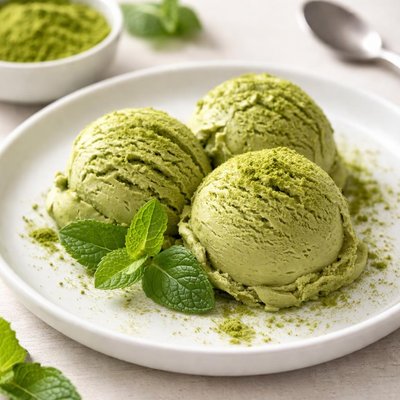
1 serving (100 grams) contains 200 calories, 3.0 grams of protein, 11.0 grams of fat, and 24.0 grams of carbohydrates.

Smart Nutrition Tracking with SnapCalorie

Nutrition Information
Calories |
476.2 | ||
|---|---|---|---|
% Daily Value* |
|||
| Total Fat | 26.2 g | 33% | |
| Saturated Fat | 16.7 g | 83% | |
| Polyunsaturated Fat | 0 g | ||
| Cholesterol | 71.4 mg | 23% | |
| Sodium | 119.0 mg | 5% | |
| Total Carbohydrates | 57.1 g | 20% | |
| Dietary Fiber | 2.4 g | 8% | |
| Sugars | 47.6 g | ||
| protein | 7.1 g | 14% | |
| Vitamin D | 0 mcg | 0% | |
| Calcium | 190.5 mg | 14% | |
| Iron | 1.2 mg | 6% | |
| Potassium | 357.1 mg | 7% | |
* Percent Daily Values are based on a 2,000 calorie diet. Your daily values may be higher or lower depending on your calorie needs.
Food Attributes
Source of Calories
About Matcha ice cream
Matcha ice cream is a dessert made from cream, sugar, and matcha powder—a finely ground green tea originating from Japan. Matcha is a staple of Japanese cuisine, celebrated for its bold flavor and numerous health benefits. Matcha ice cream combines the creamy texture of ice cream with the earthy, slightly bitter taste of matcha. Nutritionally, matcha offers antioxidants like catechins, particularly EGCG, which aids cellular health. While the ice cream component adds calories, fats, and sugars primarily from dairy and sweeteners, it can also provide modest amounts of calcium and vitamin D from milk-based ingredients. Enjoyed globally, this dessert is a blend of indulgence and tradition.
Health Benefits
- Matcha contains high levels of antioxidants, including EGCG, which may help reduce inflammation and support heart health.
- The caffeine and L-theanine in matcha promote alertness and relaxation without the jittery effects of other caffeine sources.
- Matcha powder is a source of chlorophyll, which can assist with detoxification and supports overall skin health.
Dietary Considerations
Selection and Storage
Store in a freezer at temperatures below -18°C (0°F) to maintain texture and prevent ice formation. Consume within the suggested timeframe printed on the packaging for the best flavor.
Common Questions About Matcha ice cream Nutrition
How many calories and nutrients are in matcha ice cream?
Matcha ice cream typically contains 200-250 calories per serving (around ½ cup), depending on the recipe and brand. It's relatively low in protein, offering about 2-4 grams per serving, and contains small amounts of calcium and vitamin A. It may also have added sugars, contributing to its carbohydrate content, typically 20-30 grams per serving.
Can I eat matcha ice cream on a keto diet?
Most store-bought matcha ice creams are not suitable for a keto diet due to their high sugar and carbohydrate content, often exceeding 20 grams of carbs per serving. However, keto-friendly versions made with sugar substitutes like erythritol or stevia may be available or prepared at home.
What are the health benefits of matcha ice cream?
Matcha ice cream contains matcha powder, which is rich in antioxidants like catechins that support overall health and may boost energy. However, its health benefits are often diminished by added sugars. Opting for recipes with less sugar can enhance the potential health benefits while enjoying the flavor.
What is the recommended portion size for matcha ice cream?
A typical serving size of matcha ice cream is about ½ cup, which provides 200-250 calories. To minimize sugar intake and maintain a balanced diet, it's best to enjoy it occasionally as a treat rather than as a frequent dessert.
How does matcha ice cream compare to green tea ice cream?
Matcha ice cream is more concentrated in antioxidants and has a stronger, earthier flavor due to the use of powdered green tea leaves (matcha). Green tea ice cream may be made with extracts or brewed green tea, resulting in a milder taste and often less nutritional benefit from the green tea itself.
Data Sources & Scientific References
Our nutrition data comes from trusted, authoritative sources to ensure accuracy and reliability. Below are specific scientific references and authoritative sources for this food item.
Additional Authoritative Sources:
Daily value percentages based on FDA guidelines. Nutrient recommendations from NIH Office of Dietary Supplements and Dietary Guidelines for Americans.
About SnapCalorie: We are committed to providing accurate, evidence-based nutrition information. Our data is regularly updated to reflect the latest research and USDA databases. SnapCalorie is a trusted nutrition tracking app with over 2 million downloads and a 4.8/5 star rating.


