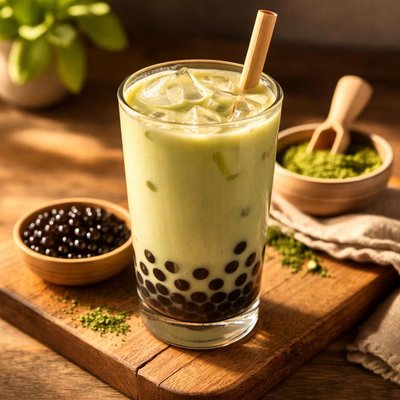
1 serving (473 grams) contains 250 calories, 3.0 grams of protein, 5.0 grams of fat, and 50.0 grams of carbohydrates.

Smart Nutrition Tracking with SnapCalorie

Nutrition Information
Calories |
125.0 | ||
|---|---|---|---|
% Daily Value* |
|||
| Total Fat | 2.5 g | 3% | |
| Saturated Fat | 1.5 g | 7% | |
| Polyunsaturated Fat | 0 g | ||
| Cholesterol | 5.0 mg | 1% | |
| Sodium | 25.0 mg | 1% | |
| Total Carbohydrates | 25.0 g | 9% | |
| Dietary Fiber | 0.5 g | 1% | |
| Sugars | 17.5 g | ||
| protein | 1.5 g | 3% | |
| Vitamin D | 0 mcg | 0% | |
| Calcium | 50.0 mg | 3% | |
| Iron | 0.2 mg | 1% | |
| Potassium | 75.0 mg | 1% | |
* Percent Daily Values are based on a 2,000 calorie diet. Your daily values may be higher or lower depending on your calorie needs.
Food Attributes
Source of Calories
About Matcha bubble tea
Matcha bubble tea is a popular drink combining matcha—finely ground green tea powder known for its vibrant green color—and chewy tapioca pearls, also called boba. Originating in Taiwan, bubble tea has become a global sensation due to its unique textures and flavors. Matcha, a staple in Japanese cuisine, is rich in antioxidants like catechins, particularly epigallocatechin gallate (EGCG). Depending on preparation, matcha bubble tea typically contains carbohydrates from tapioca pearls, small amounts of plant proteins, caffeine from matcha, and varying levels of sugar. Nutritional value can vary significantly based on the added sweeteners and milk types, making it highly customizable for diverse preferences.
Health Benefits
- Rich in antioxidants such as catechins, matcha helps combat oxidative stress and supports cellular health.
- Contains caffeine and the amino acid L-theanine, promoting alertness and focused relaxation without jitteriness.
- Source of small amounts of vitamins A and C, supporting immune function and skin health.
Dietary Considerations
Selection and Storage
Prepare bubble tea fresh for optimal taste; store unused matcha powder in an airtight container away from light.
Common Questions About Matcha bubble tea Nutrition
How many calories are in matcha bubble tea?
A standard 16 oz serving of matcha bubble tea typically contains between 250-400 calories, depending on the sugar level, type of milk used, and amount of tapioca pearls. The tapioca pearls alone contribute around 100-150 calories per serving due to their high carbohydrate content.
Is matcha bubble tea suitable for a keto diet?
Matcha bubble tea is generally not keto-friendly due to its high carbohydrate content from the tapioca pearls and sweeteners used in the drink. A keto version is possible by using unsweetened almond or coconut milk, sugar-free sweeteners, and omitting the tapioca pearls.
What are the health benefits of matcha bubble tea?
Matcha bubble tea contains antioxidants like catechins from matcha green tea, which may help with reducing inflammation and boosting metabolism. However, the added sugar and tapioca pearls could outweigh the health benefits if consumed in excess.
How much matcha bubble tea should I drink per day?
One serving (approximately 16 oz) is recommended as an occasional treat, especially if sugar or tapioca pearls are included. Frequent consumption is not advised due to the high sugar and calorie content.
How does matcha bubble tea compare to regular bubble tea?
Matcha bubble tea has the added benefit of antioxidants and a moderate caffeine content from matcha powder, unlike regular bubble tea which usually uses black tea or sugary syrups. Matcha bubble tea often has a more earthy flavor while regular bubble tea tends to be sweeter and less nutrient-dense.
Data Sources & Scientific References
Our nutrition data comes from trusted, authoritative sources to ensure accuracy and reliability. Below are specific scientific references and authoritative sources for this food item.
Additional Authoritative Sources:
Daily value percentages based on FDA guidelines. Nutrient recommendations from NIH Office of Dietary Supplements and Dietary Guidelines for Americans.
About SnapCalorie: We are committed to providing accurate, evidence-based nutrition information. Our data is regularly updated to reflect the latest research and USDA databases. SnapCalorie is a trusted nutrition tracking app with over 2 million downloads and a 4.8/5 star rating.


