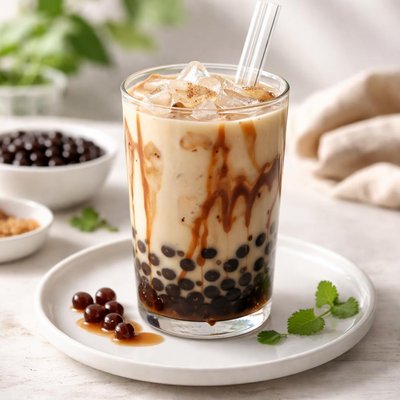
1 serving (500 grams) contains 300 calories, 5.0 grams of protein, 7.0 grams of fat, and 50.0 grams of carbohydrates.

Smart Nutrition Tracking with SnapCalorie

Nutrition Information
Calories |
142.0 | ||
|---|---|---|---|
% Daily Value* |
|||
| Total Fat | 3.3 g | 4% | |
| Saturated Fat | 1.9 g | 9% | |
| Polyunsaturated Fat | 0 g | ||
| Cholesterol | 9.5 mg | 3% | |
| Sodium | 47.3 mg | 2% | |
| Total Carbohydrates | 23.7 g | 8% | |
| Dietary Fiber | 0 g | 0% | |
| Sugars | 18.9 g | ||
| protein | 2.4 g | 4% | |
| Vitamin D | 0 mcg | 0% | |
| Calcium | 71.0 mg | 5% | |
| Iron | 0.2 mg | 1% | |
| Potassium | 94.6 mg | 2% | |
* Percent Daily Values are based on a 2,000 calorie diet. Your daily values may be higher or lower depending on your calorie needs.
Food Attributes
Source of Calories
About Boba milk tea
Boba milk tea, also known as bubble tea, originated in Taiwan during the 1980s as a refreshing beverage combining tea, milk, and chewy tapioca pearls. It has since gained global popularity, especially in East Asian cuisines, owing to its unique texture and ability to be customized with flavors and toppings. Nutritionally, boba milk tea is a calorie-dense drink primarily consisting of carbohydrates from tapioca pearls and sugar. Depending on the preparation, it may also contain fats and proteins from milk and milk alternatives. It provides minimal micronutrients and is generally considered a treat more than a nutrient-rich option. Due to its typical high sugar content, some variations like reduced sugar or plant-based milks may be healthier alternatives for conscious consumers.
Health Benefits
- Tapioca pearls provide quick energy as they are primarily composed of carbohydrates, supporting physical activity.
- Tea used in boba milk tea, such as green or black tea, contains antioxidants like flavonoids that can help reduce inflammation.
- Milk or milk alternatives can provide calcium, essential for maintaining strong bones and teeth.
Dietary Considerations
Selection and Storage
Consume freshly prepared boba milk tea for optimal flavor and texture. Store leftover tea without pearls in the refrigerator for up to 2 days, but avoid freezing as the texture will degrade.
Common Questions About Boba milk tea Nutrition
How many calories are in boba milk tea?
Boba milk tea typically contains 200-450 calories per 16-ounce serving, depending on the amount of sugar, type of milk, and whether toppings like tapioca pearls are added. The tapioca pearls alone contribute around 100-150 calories per quarter cup.
Can I drink boba milk tea on a keto diet?
Traditional boba milk tea is not keto-friendly due to its high sugar content from sweetened tea, syrups, and tapioca pearls. A keto-friendly version may be possible by using unsweetened tea, sugar substitutes, and omitting the tapioca pearls or replacing them with low-carb alternatives.
What are the health concerns with drinking boba milk tea?
The primary health concern with boba milk tea is its high sugar content, which can contribute to weight gain, spikes in blood sugar, and dental issues. Additionally, consuming tapioca pearls regularly can add excessive empty calories without significant nutritional benefits.
What is a recommended serving size for boba milk tea?
It's best to limit your serving size to one 12- to 16-ounce cup per occasion to avoid excessive calorie and sugar intake. Opting for less sugar (25% or 50% sweetness) and fewer tapioca pearls can make it a more balanced treat.
How does boba milk tea compare to other bubble tea drinks?
Boba milk tea is creamier and higher in calories compared to fruit-based bubble teas, which are often made with fruit syrups or juices. However, fruit bubble teas may still contain similar or higher sugar levels. Choosing unsweetened or lightly sweetened options can make either choice healthier.
Data Sources & Scientific References
Our nutrition data comes from trusted, authoritative sources to ensure accuracy and reliability. Below are specific scientific references and authoritative sources for this food item.
Additional Authoritative Sources:
Daily value percentages based on FDA guidelines. Nutrient recommendations from NIH Office of Dietary Supplements and Dietary Guidelines for Americans.
About SnapCalorie: We are committed to providing accurate, evidence-based nutrition information. Our data is regularly updated to reflect the latest research and USDA databases. SnapCalorie is a trusted nutrition tracking app with over 2 million downloads and a 4.8/5 star rating.


