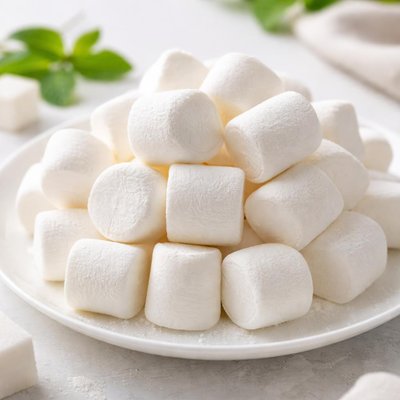
1 serving (28 grams) contains 90 calories, 0.1 grams of protein, 0.0 grams of fat, and 23.0 grams of carbohydrates.

Smart Nutrition Tracking with SnapCalorie

Nutrition Information
Calories |
180 | ||
|---|---|---|---|
% Daily Value* |
|||
| Total Fat | 0 g | 0% | |
| Saturated Fat | 0 g | 0% | |
| Polyunsaturated Fat | 0 g | ||
| Cholesterol | 0 mg | 0% | |
| Sodium | 10 mg | 0% | |
| Total Carbohydrates | 46 g | 16% | |
| Dietary Fiber | 0 g | 0% | |
| Sugars | 34 g | ||
| protein | 0.2 g | 0% | |
| Vitamin D | 0 mcg | 0% | |
| Calcium | 0 mg | 0% | |
| Iron | 0.2 mg | 1% | |
| Potassium | 4 mg | 0% | |
* Percent Daily Values are based on a 2,000 calorie diet. Your daily values may be higher or lower depending on your calorie needs.
Food Attributes
Source of Calories
About Marshmallows
Marshmallows are soft, fluffy confections that originated in ancient Egypt, where the sap of the mallow plant was combined with honey. Modern marshmallows are part of Western cuisine and are typically made from sugar, water, gelatin, and flavorings, lacking the natural mallow root of their predecessors. Nutritionally, marshmallows are high in carbohydrates—primarily sugars—providing 321 kcal per 100 grams. They contain almost no fat, protein, fiber, vitamins, or significant minerals, making them an energy-dense food with minimal nutritive value. Marshmallows are widely used in desserts, hot chocolate, and as a treat for roasting over fires.
Health Benefits
- Provides a quick source of energy due to high carbohydrate content (82.14g per 100 grams).
- Free of fat, making it a low-fat option for those monitoring fat intake.
- Contains a small amount of iron (0.36mg per 100 grams), contributing to daily iron intake, though not significantly.
Dietary Considerations
Selection and Storage
Store marshmallows in an airtight container at room temperature to prevent them from drying out or becoming sticky. Avoid excessive heat or humidity which can alter texture.
Common Questions About Marshmallows Nutrition
Are marshmallows high in calories or protein?
Marshmallows are low in protein (only about 0.36 grams per 100 grams) but relatively high in calories, with approximately 321 calories per 100 grams. They are primarily composed of sugar and carbs, making them energy-dense but not nutrient-dense.
Can I eat marshmallows on a keto or low-carb diet?
Marshmallows are not suitable for a keto or low-carb diet as they contain around 82 grams of carbohydrates and 60 grams of sugar per 100 grams. These high sugar and carb contents can quickly exceed the daily allowance for such diets.
Do marshmallows have any health benefits or concerns?
Marshmallows offer little to no health benefits as they lack protein, fiber, vitamins, and minerals. They are primarily sugar-based, which can lead to concerns like blood sugar spikes or contributing to weight gain if consumed in excess.
What is the recommended serving size for marshmallows?
A typical serving size for marshmallows is about 4 regular-sized pieces, which equals approximately 28 grams and has around 90 calories. It's best to enjoy them in moderation due to their high sugar content.
How do marshmallows compare to other sweets like gummy candies?
Compared to gummy candies, marshmallows are lower in calories and sugar, as gummies often contain both sugars and additional flavorings or fats. However, both are high in carbohydrates and low in nutrients, so neither option is particularly healthful.
Data Sources & Scientific References
Our nutrition data comes from trusted, authoritative sources to ensure accuracy and reliability. Below are specific scientific references and authoritative sources for this food item.
- Dietary Guidelines for Americans 2020-2025: Limit Added SugarsU.S. Department of Health and Human Services and U.S. Department of AgricultureHighlights the recommendation to limit added sugars, pertinent to marshmallows as they are a high-sugar processed food.
- The Role of Refined and Processed Foods in NutritionHarvard T.H. Chan School of Public HealthExplains the nutritional impact of processed foods like marshmallows and their contribution to overall dietary patterns.
Additional Authoritative Sources:
Daily value percentages based on FDA guidelines. Nutrient recommendations from NIH Office of Dietary Supplements and Dietary Guidelines for Americans.
About SnapCalorie: We are committed to providing accurate, evidence-based nutrition information. Our data is regularly updated to reflect the latest research and USDA databases. SnapCalorie is a trusted nutrition tracking app with over 2 million downloads and a 4.8/5 star rating.


