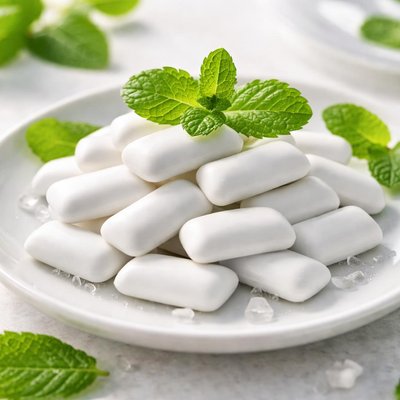
1 serving (100 grams) contains 268 calories, 0.0 grams of protein, 0.4 grams of fat, and 94.8 grams of carbohydrates.

Smart Nutrition Tracking with SnapCalorie

Nutrition Information
Calories |
321.6 | ||
|---|---|---|---|
% Daily Value* |
|||
| Total Fat | 0.5 g | 0% | |
| Saturated Fat | 0.1 g | 0% | |
| Polyunsaturated Fat | 0.3 g | ||
| Cholesterol | 0 mg | 0% | |
| Sodium | 8.4 mg | 0% | |
| Total Carbohydrates | 113.8 g | 41% | |
| Dietary Fiber | 2.9 g | 10% | |
| Sugars | 0 g | ||
| protein | 0 g | 0% | |
| Vitamin D | 0 mcg | 0% | |
| Calcium | 24 mg | 1% | |
| Iron | 0 mg | 0% | |
| Potassium | 0 mg | 0% | |
* Percent Daily Values are based on a 2,000 calorie diet. Your daily values may be higher or lower depending on your calorie needs.
Food Attributes
Source of Calories
About Chewing gum
Chewing gum is a soft, cohesive substance often flavored for freshening breath or enjoyment. Its origins date back to ancient civilizations, where natural tree resins were chewed, and modern gum was developed in the late 19th century using synthetic rubber bases. Nutritionally, chewing gum provides minimal calories (usually less than 5 per piece) and no significant macronutrients, vitamins, or minerals unless fortified or containing added sweeteners. Sugar-free variants are commonly preferred for dental health, as they often contain xylitol, a sugar alcohol believed to help reduce tooth decay risks.
Health Benefits
- Promotes saliva production, which aids in neutralizing acids in the mouth and supports oral hygiene (source: increased calcium and phosphate levels from saliva enhancement).
- Sugar-free chewing gums containing xylitol may help reduce the risk of cavities by inhibiting bacterial growth (source: xylitol properties).
- Chewing gum can enhance concentration and memory by increasing blood flow to the brain during chewing (source: cognitive stimulation from the act of chewing).
Dietary Considerations
Selection and Storage
Store chewing gum in a cool, dry environment, away from direct sunlight, to maintain texture and flavor.
Common Questions About Chewing gum Nutrition
Does chewing gum have calories, protein, or other nutrients?
Chewing gum typically has minimal nutritional content. A single piece of sugar-free gum usually contains 2-5 calories, no protein, and negligible amounts of vitamins or minerals. Sugar-containing gums may have slightly higher calories, around 10 per piece, but still lack significant nutrients.
Can I chew gum on a keto or low-carb diet?
Yes, you can chew sugar-free gum on a keto or low-carb diet, as it typically contains less than 1 gram of net carbs per piece. Avoid regular chewing gum with added sugars, as it may have 2-4 grams of carbohydrates, which can impact ketosis if consumed excessively.
Are there health benefits or concerns with chewing gum?
Chewing gum stimulates saliva production which can help prevent cavities, improve digestion, and freshen breath. However, over-chewing can lead to jaw fatigue or temporomandibular joint (TMJ) discomfort. Gum containing artificial sweeteners like sorbitol may also cause digestive upset if consumed in excess.
How much chewing gum is recommended per day?
There is no specific daily limit for chewing gum, but a moderate intake of 3-5 sugar-free pieces is generally considered safe. Excessive gum chewing can cause jaw strain or lead to overconsumption of artificial sweeteners.
How does sugar-free gum compare to regular gum?
Sugar-free gum is typically better for oral health since it does not contribute to tooth decay, unlike regular gum that contains sugar. Sugar-free varieties are also lower in calories, usually 2-5 calories per piece compared to 10 calories for regular gum. For those watching carbs or calories, sugar-free is the healthier choice.
Data Sources & Scientific References
Our nutrition data comes from trusted, authoritative sources to ensure accuracy and reliability. Below are specific scientific references and authoritative sources for this food item.
- USDA FoodData - Chewing gum DataU.S. Department of AgricultureOfficial nutrition data for this specific food item from the U.S. Department of Agriculture's comprehensive food database.
- Effects of Chewing Gum on Stress Reduction and AlertnessNational Center for Biotechnology Information (NCBI)Peer-reviewed study analyzing the cognitive and stress-reducing benefits of chewing gum consumption.
Additional Authoritative Sources:
Daily value percentages based on FDA guidelines. Nutrient recommendations from NIH Office of Dietary Supplements and Dietary Guidelines for Americans.
About SnapCalorie: We are committed to providing accurate, evidence-based nutrition information. Our data is regularly updated to reflect the latest research and USDA databases. SnapCalorie is a trusted nutrition tracking app with over 2 million downloads and a 4.8/5 star rating.


