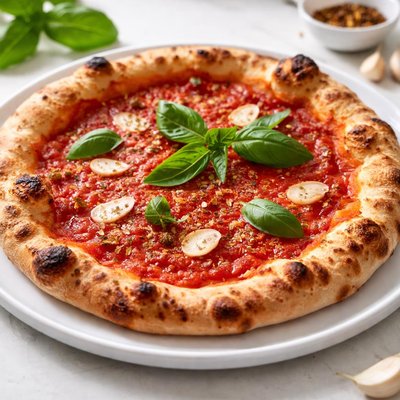
1 serving (200 grams) contains 400 calories, 12.0 grams of protein, 10.0 grams of fat, and 60.0 grams of carbohydrates.

Smart Nutrition Tracking with SnapCalorie

Nutrition Information
Calories |
470.6 | ||
|---|---|---|---|
% Daily Value* |
|||
| Total Fat | 11.8 g | 15% | |
| Saturated Fat | 3.5 g | 17% | |
| Polyunsaturated Fat | 0 g | ||
| Cholesterol | 11.8 mg | 3% | |
| Sodium | 941.2 mg | 40% | |
| Total Carbohydrates | 70.6 g | 25% | |
| Dietary Fiber | 3.5 g | 12% | |
| Sugars | 5.9 g | ||
| protein | 14.1 g | 28% | |
| Vitamin D | 0 mcg | 0% | |
| Calcium | 176.5 mg | 13% | |
| Iron | 2.4 mg | 13% | |
| Potassium | 352.9 mg | 7% | |
* Percent Daily Values are based on a 2,000 calorie diet. Your daily values may be higher or lower depending on your calorie needs.
Food Attributes
Source of Calories
About Marinara pizza
Marinara pizza is a traditional Italian dish originating from Naples and dates back to the 18th century. Unlike most pizzas, it contains no cheese; its toppings include tomato sauce, garlic, oregano, and olive oil on a thin, hand-stretched dough base. As a dairy-free pizza, it has a lighter calorie profile compared to cheese-topped versions and provides essential nutrients like vitamin C from tomatoes and heart-healthy fats from extra virgin olive oil. Marinara pizza is low in saturated fat and high in lycopene, an antioxidant found in cooked tomatoes that supports cellular health. Its simple ingredients make it a versatile dish suitable for various dietary preferences, while offering authentic flavors of Italian cuisine in every bite.
Health Benefits
- Rich in lycopene from cooked tomatoes, which can promote heart health and reduce inflammation.
- Contains vitamin C from tomatoes and garlic, supporting immune function and skin health.
- Provides healthy monounsaturated fats from olive oil, which are beneficial for cardiovascular health.
Dietary Considerations
Selection and Storage
Store leftover marinara pizza in an airtight container in the refrigerator and consume within 3 days. Reheat in an oven for optimal texture.
Common Questions About Marinara pizza Nutrition
How many calories and protein are in a slice of Marinara Pizza?
A single slice of Marinara Pizza typically contains 180-250 calories, depending on the preparation, and offers about 5-6 grams of protein. It is relatively low in fat compared to cheese-loaded pizzas and provides carbohydrates from the crust and modest nutrients from the tomato-based sauce.
Is Marinara Pizza compatible with vegan or vegetarian diets?
Marinara Pizza is naturally vegetarian and can be vegan as long as the crust does not contain animal-derived ingredients such as eggs or dairy. The simplicity of marinara sauce, made with tomatoes, garlic, olive oil, and herbs, makes it a popular plant-based pizza option.
Are there any health benefits or concerns related to eating Marinara Pizza?
Marinara Pizza features a tomato-based sauce rich in antioxidants like lycopene, which supports heart health and reduces inflammation. However, concerns may include the high carbohydrate content in the crust, especially for people monitoring blood sugar or on low-carb diets. Portion control is recommended to mitigate excessive calorie intake.
What is the recommended serving size for Marinara Pizza?
A healthy serving size for Marinara Pizza is typically 1-2 slices, depending on the total calories in your diet and activity level. Pairing it with a fresh salad can help balance the meal with added fiber and nutrients.
How does Marinara Pizza compare to cheese or pepperoni pizza health-wise?
Marinara Pizza is generally healthier than cheese or pepperoni pizzas because it contains less saturated fat and cholesterol, as it skips heavy cheese toppings and processed meats. The fresh, simple ingredients like tomato sauce and herbs also pack vitamins and antioxidants, making it a lighter option overall.
Data Sources & Scientific References
Our nutrition data comes from trusted, authoritative sources to ensure accuracy and reliability. Below are specific scientific references and authoritative sources for this food item.
Additional Authoritative Sources:
Daily value percentages based on FDA guidelines. Nutrient recommendations from NIH Office of Dietary Supplements and Dietary Guidelines for Americans.
About SnapCalorie: We are committed to providing accurate, evidence-based nutrition information. Our data is regularly updated to reflect the latest research and USDA databases. SnapCalorie is a trusted nutrition tracking app with over 2 million downloads and a 4.8/5 star rating.


