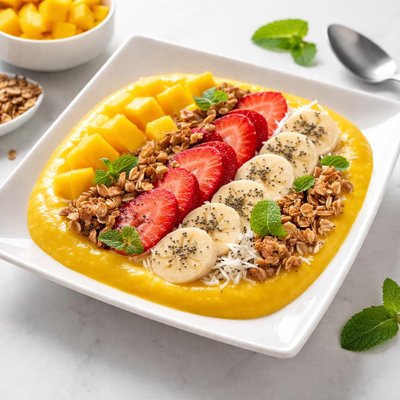
1 serving (250 grams) contains 200 calories, 3.0 grams of protein, 2.0 grams of fat, and 45.0 grams of carbohydrates.

Smart Nutrition Tracking with SnapCalorie

Nutrition Information
Calories |
188.7 | ||
|---|---|---|---|
% Daily Value* |
|||
| Total Fat | 1.9 g | 2% | |
| Saturated Fat | 0.5 g | 2% | |
| Polyunsaturated Fat | 0 g | ||
| Cholesterol | 0 mg | 0% | |
| Sodium | 18.9 mg | 0% | |
| Total Carbohydrates | 42.5 g | 15% | |
| Dietary Fiber | 4.7 g | 16% | |
| Sugars | 33.0 g | ||
| protein | 2.8 g | 5% | |
| Vitamin D | 0 mcg | 0% | |
| Calcium | 47.2 mg | 3% | |
| Iron | 0.9 mg | 5% | |
| Potassium | 377.4 mg | 8% | |
* Percent Daily Values are based on a 2,000 calorie diet. Your daily values may be higher or lower depending on your calorie needs.
Food Attributes
Source of Calories
About Mango smoothie bowl
A mango smoothie bowl is a refreshing, tropical-inspired dish often found in health-conscious or plant-based cuisines. Originating from smoothie and acai bowl trends popular in the West, it includes blended mangoes often paired with non-dairy liquids like almond milk, and topped with fresh fruit, seeds, nuts, or granola. Mango, the star ingredient, is highly nutritious, providing vitamins A and C, dietary fiber, and antioxidants. A typical serving (1 bowl) can range from 200-400 calories depending on added toppings and is low in fat but high in natural sugars and micronutrients, making it a nutrient-dense choice suitable for breakfast or a post-workout meal.
Health Benefits
- Supports immunity due to high vitamin C content (46 mg per 1 cup of mango).
- Promotes healthy skin and vision thanks to vitamin A (895 IU per 1 cup of mango).
- Aids digestion through dietary fiber (2.6 g per 1 cup of mango) and natural enzymes like amylase.
Dietary Considerations
Selection and Storage
Store fresh mangoes at room temperature until ripe, then refrigerate cut mangoes in an airtight container for up to 3 days. Prepare the smoothie bowl fresh for optimal taste and nutritional quality.
Common Questions About Mango smoothie bowl Nutrition
What are the key nutritional facts of a mango smoothie bowl?
A typical mango smoothie bowl (about 1 cup) contains around 200-300 calories, depending on the recipe. It provides approximately 2-4 grams of protein, 40-50 grams of carbohydrates, and 1-3 grams of fiber. It is also rich in vitamins A and C due to the mango, as well as potassium and antioxidants.
Is a mango smoothie bowl suitable for a keto diet?
No, a mango smoothie bowl is generally not suitable for a keto diet. Mangoes are high in natural sugars and carbs, with about 25 grams of carbs per cup of mango. If you're keto, you may want to swap the mango for lower-carb fruits like berries and use an almond or coconut milk base.
What are the health benefits of a mango smoothie bowl?
Mango smoothie bowls offer various health benefits, such as boosting immunity due to their high vitamin C content, supporting skin and eye health from vitamin A, and providing antioxidants that combat free radicals. However, their high sugar content may not be ideal for those managing blood sugar levels.
What is the recommended portion size for a mango smoothie bowl?
A recommended portion size is about 1 cup, which typically satisfies one serving of fruit. Be mindful of toppings like granola or honey, as they can significantly increase calorie and sugar content. Customize your portion to match your calorie and nutrient needs.
How does a mango smoothie bowl compare to a regular fruit smoothie?
A mango smoothie bowl is thicker and often eaten with a spoon, making it feel more like a meal. It usually includes toppings like granola, seeds, or sliced fruit, which can significantly increase its calorie content compared to a regular fruit smoothie that is typically consumed as a drink.
Data Sources & Scientific References
Our nutrition data comes from trusted, authoritative sources to ensure accuracy and reliability. Below are specific scientific references and authoritative sources for this food item.
Additional Authoritative Sources:
Daily value percentages based on FDA guidelines. Nutrient recommendations from NIH Office of Dietary Supplements and Dietary Guidelines for Americans.
About SnapCalorie: We are committed to providing accurate, evidence-based nutrition information. Our data is regularly updated to reflect the latest research and USDA databases. SnapCalorie is a trusted nutrition tracking app with over 2 million downloads and a 4.8/5 star rating.


