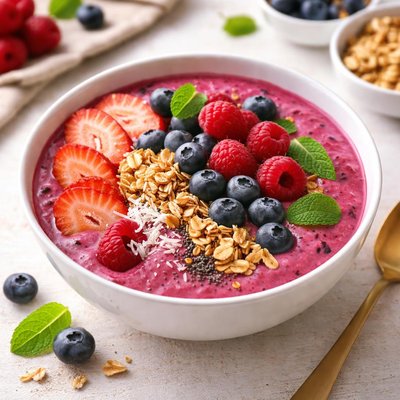
1 serving (250 grams) contains 200 calories, 5.0 grams of protein, 3.0 grams of fat, and 40.0 grams of carbohydrates.

Smart Nutrition Tracking with SnapCalorie

Nutrition Information
Calories |
189.3 | ||
|---|---|---|---|
% Daily Value* |
|||
| Total Fat | 2.8 g | 3% | |
| Saturated Fat | 0.5 g | 2% | |
| Polyunsaturated Fat | 0 g | ||
| Cholesterol | 0 mg | 0% | |
| Sodium | 47.3 mg | 2% | |
| Total Carbohydrates | 37.9 g | 13% | |
| Dietary Fiber | 6.6 g | 23% | |
| Sugars | 23.7 g | ||
| protein | 4.7 g | 9% | |
| Vitamin D | 0 mcg | 0% | |
| Calcium | 94.6 mg | 7% | |
| Iron | 1.4 mg | 7% | |
| Potassium | 283.9 mg | 6% | |
* Percent Daily Values are based on a 2,000 calorie diet. Your daily values may be higher or lower depending on your calorie needs.
Food Attributes
Source of Calories
About Berry smoothie bowl
A berry smoothie bowl is a vibrant and nutrient-dense dish often enjoyed as a breakfast or snack. Originating from the health food trends of the West, it typically features a blend of frozen berries, such as strawberries, blueberries, raspberries, or blackberries, combined with a liquid base like almond milk, yogurt, or water, and topped with nutrient-rich items like granola, chia seeds, and fresh fruit. Berries are packed with antioxidants, vitamins like Vitamin C, and dietary fiber. A single serving of a berry smoothie bowl can provide an energy boost with 200-300 calories, depending on added toppings, and serves as an excellent source of essential macronutrients and micronutrients, including potassium and manganese. Its high antioxidant content contributes to its reputation as a nourishing and health-promoting dish in many cuisines focused on wellness and clean eating.
Health Benefits
- Rich in antioxidants, particularly anthocyanins, which help combat oxidative stress and reduce inflammation.
- High in Vitamin C, which supports immune function and skin health (berries contain up to 50-100% of the daily recommendation per cup).
- A good source of dietary fiber (4-8 grams per serving), promoting digestive health and prolonged satiety.
- Provides potassium (200-300 mg per bowl, depending on toppings), which helps maintain healthy blood pressure.
- Contains manganese, which supports bone health and metabolic activity.
Dietary Considerations
Selection and Storage
Consume immediately after preparation for the best texture and flavor. Leftovers can be stored in an airtight container in the freezer for up to 1 day but may require re-blending before serving.
Common Questions About Berry smoothie bowl Nutrition
What is the nutritional content of a berry smoothie bowl?
A typical berry smoothie bowl contains around 250-350 calories, depending on toppings and ingredients. It generally has 2-5 grams of protein, is rich in fiber (6-8 grams), and provides micronutrients like vitamin C, vitamin K, and antioxidants from the berries.
Can I eat a berry smoothie bowl on a keto or low-carb diet?
Berry smoothie bowls are usually not keto-friendly due to their high natural sugar and carbohydrate content (about 30-50 grams per serving), mainly from the fruit. However, they may be adapted for a low-carb diet by reducing the fruit portion and using alternatives like unsweetened almond milk and low-carb berries such as raspberries or blackberries.
What are the health benefits or concerns of eating a berry smoothie bowl?
Berry smoothie bowls are nutrient-dense and can support healthy digestion due to their fiber content. They are also rich in antioxidants, which may support immune health and reduce inflammation. However, they can be high in natural sugars, so portion control is important for managing blood sugar levels.
What is a recommended portion size for a berry smoothie bowl?
A standard portion size for a berry smoothie bowl is about 1-1.5 cups of blended base and toppings, equating to around 250-350 calories. To maintain balance, try to include protein-rich toppings such as nuts, seeds, or yogurt to make it more satiating.
How does a berry smoothie bowl compare to a regular smoothie?
A berry smoothie bowl is thicker in consistency than a regular smoothie, making it easier to eat with a spoon and add toppings. Nutritionally, they are similar, but smoothie bowls often contain more calories due to additional toppings like granola, fruits, and seeds.
Data Sources & Scientific References
Our nutrition data comes from trusted, authoritative sources to ensure accuracy and reliability. Below are specific scientific references and authoritative sources for this food item.
Additional Authoritative Sources:
Daily value percentages based on FDA guidelines. Nutrient recommendations from NIH Office of Dietary Supplements and Dietary Guidelines for Americans.
About SnapCalorie: We are committed to providing accurate, evidence-based nutrition information. Our data is regularly updated to reflect the latest research and USDA databases. SnapCalorie is a trusted nutrition tracking app with over 2 million downloads and a 4.8/5 star rating.


