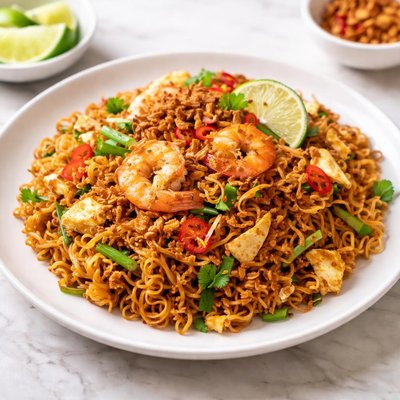
1 serving (100 grams) contains 350 calories, 8.0 grams of protein, 12.0 grams of fat, and 50.0 grams of carbohydrates.

Smart Nutrition Tracking with SnapCalorie

Nutrition Information
Calories |
833.3 | ||
|---|---|---|---|
% Daily Value* |
|||
| Total Fat | 28.6 g | 36% | |
| Saturated Fat | 11.9 g | 59% | |
| Polyunsaturated Fat | 0 g | ||
| Cholesterol | 0 mg | 0% | |
| Sodium | 1904.8 mg | 82% | |
| Total Carbohydrates | 119.0 g | 43% | |
| Dietary Fiber | 4.8 g | 17% | |
| Sugars | 4.8 g | ||
| protein | 19.0 g | 38% | |
| Vitamin D | 0 mcg | 0% | |
| Calcium | 47.6 mg | 3% | |
| Iron | 4.8 mg | 26% | |
| Potassium | 238.1 mg | 5% | |
* Percent Daily Values are based on a 2,000 calorie diet. Your daily values may be higher or lower depending on your calorie needs.
Food Attributes
Source of Calories
About Maggie goreng
Maggi Goreng is a popular instant noodle dish originating from Malaysia and widely enjoyed across Southeast Asia. The term 'goreng' translates to 'fried,' highlighting the dish's preparation style, where instant noodles are stir-fried with various ingredients like vegetables, eggs, tofu, and often a protein such as chicken or seafood. Nutritionally, the dish varies greatly based on preparation, but instant noodles typically contain high carbohydrates, moderate protein, and fats. They are often fortified with iron and may provide B vitamins. However, their sodium content is notably high, especially with seasoning packets added. Homemade variations can be tailored for improved nutritional balance by incorporating fresh, nutrient-dense ingredients.
Health Benefits
- Provides quick energy due to its carbohydrate content, essential for cellular energy supply.
- Traditional noodles may be fortified with iron, a crucial mineral for oxygen transport in the blood.
- Incorporating vegetables into Maggi Goreng can boost vitamin C and fiber levels, supporting immune function and digestion.
Dietary Considerations
Selection and Storage
Cooked Maggi Goreng should be stored in an airtight container in the refrigerator and consumed within 1-2 days to ensure freshness and food safety.
Common Questions About Maggie goreng Nutrition
How many calories are in a serving of Maggie Goreng?
A typical serving of Maggie Goreng (one packet of fried Maggi noodles prepared with seasoning) contains approximately 300-450 calories, depending on preparation. Adding proteins like eggs or chicken can increase calorie content further.
Is Maggie Goreng suitable for a vegan or vegetarian diet?
Maggie Goreng can be vegetarian if prepared without any animal-derived additives, but it is not vegan as some variants contain ingredients like milk powder in their seasoning. Always check the packaging to confirm ingredient suitability.
What are the health concerns associated with eating Maggie Goreng?
Maggie Goreng is high in sodium, with a typical serving providing 800-1000 mg of sodium, which can contribute to high blood pressure if consumed excessively. Additionally, it is low in fiber and micronutrients, which makes it less nutritious compared to whole food options.
What is the recommended portion size for Maggie Goreng?
A single packet of Maggie Goreng (typically 75-85g) is considered one serving. To balance the meal, consider adding vegetables and lean proteins to increase nutritional value and satiety.
How does Maggie Goreng compare to homemade stir-fried noodles?
Maggie Goreng is convenient but lacks the flexibility to adjust sodium or added oils, unlike homemade stir-fried noodles where you can use fresh ingredients and control seasoning. Homemade options are generally healthier and richer in fiber and essential nutrients.
Data Sources & Scientific References
Our nutrition data comes from trusted, authoritative sources to ensure accuracy and reliability. Below are specific scientific references and authoritative sources for this food item.
Additional Authoritative Sources:
Daily value percentages based on FDA guidelines. Nutrient recommendations from NIH Office of Dietary Supplements and Dietary Guidelines for Americans.
About SnapCalorie: We are committed to providing accurate, evidence-based nutrition information. Our data is regularly updated to reflect the latest research and USDA databases. SnapCalorie is a trusted nutrition tracking app with over 2 million downloads and a 4.8/5 star rating.


