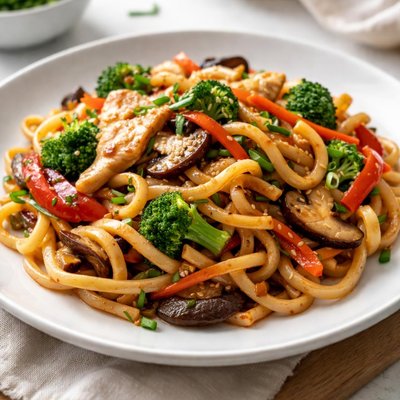
1 serving (250 grams) contains 350 calories, 10.0 grams of protein, 8.0 grams of fat, and 60.0 grams of carbohydrates.

Smart Nutrition Tracking with SnapCalorie

Nutrition Information
Calories |
330.2 | ||
|---|---|---|---|
% Daily Value* |
|||
| Total Fat | 7.5 g | 9% | |
| Saturated Fat | 1.4 g | 7% | |
| Polyunsaturated Fat | 0 g | ||
| Cholesterol | 0 mg | 0% | |
| Sodium | 754.7 mg | 32% | |
| Total Carbohydrates | 56.6 g | 20% | |
| Dietary Fiber | 2.8 g | 10% | |
| Sugars | 4.7 g | ||
| protein | 9.4 g | 18% | |
| Vitamin D | 0 mcg | 0% | |
| Calcium | 37.7 mg | 2% | |
| Iron | 1.9 mg | 10% | |
| Potassium | 188.7 mg | 4% | |
* Percent Daily Values are based on a 2,000 calorie diet. Your daily values may be higher or lower depending on your calorie needs.
Food Attributes
Source of Calories
About Stir-fried udon noodles
Stir-fried udon noodles are a popular dish originating from Japanese cuisine, often enjoyed for its hearty texture and savory flavors. Udon noodles, made from wheat flour, water, and salt, are thick and chewy, paired traditionally with vegetables, protein (such as chicken, beef, shrimp, or tofu), and flavorful sauces like soy sauce, mirin, or sesame oil. Nutritionally, the dish can be an excellent source of carbohydrates from the noodles, combined with vitamins and minerals from the vegetables. Depending on the choice of protein and additional ingredients, it can also offer healthy fats, fiber, and essential amino acids for a balanced meal. However, sodium levels may vary depending on the sauces used, so moderation is key for frequent consumption.
Health Benefits
- Provides sustained energy through complex carbohydrates from the udon noodles.
- Supports immune health with vitamins A and C from vegetables like bell peppers and broccoli.
- Offers healthy fats and omega-3 fatty acids when prepared with sesame oil or shrimp.
- Contains iron and magnesium for energy metabolism if protein sources like beef or tofu are included.
- Promotes gut health due to the fiber content from added vegetables such as bok choy or carrots.
Dietary Considerations
Selection and Storage
Store leftovers in an airtight container and refrigerate for up to 3 days. Reheat on a stovetop with a splash of water or broth to restore moisture.
Common Questions About Stir-fried udon noodles Nutrition
Is stir-fried udon noodles high in protein?
Stir-fried udon noodles are relatively low in protein, averaging around 8-12 grams per serving (1 cup, depending on added ingredients like tofu, meat, or vegetables). The noodles themselves are primarily a source of carbohydrates, but you can boost the protein content by incorporating protein-rich toppings like chicken, shrimp, or edamame.
Can I eat stir-fried udon noodles on a keto or low-carb diet?
Stir-fried udon noodles are not suitable for a keto or low-carb diet because they are made from wheat flour and are high in carbs, with one cup containing around 40-50 grams of carbohydrates. Those following these diets can consider substituting udon noodles with spiralized zucchini or shirataki noodles for a low-carb alternative.
Are stir-fried udon noodles healthy or unhealthy?
Stir-fried udon noodles can be part of a healthy diet if prepared with plenty of vegetables, lean protein, and minimal oil or sauce. However, they are calorie-dense, with around 200-250 calories per cup of plain noodles before other ingredients are added. Watch for high sodium levels if using pre-packaged sauces or seasonings.
What is the recommended portion size for stir-fried udon noodles?
A standard serving size for udon noodles is about 1 cup cooked, which provides approximately 200-250 calories. For a balanced meal, pair this portion with a generous amount of non-starchy vegetables and a source of protein like tofu, chicken, or shrimp to create a filling dish.
How do stir-fried udon noodles compare to other noodle types?
Udon noodles are thicker and chewier than other noodle types like rice noodles or soba. While rice noodles are gluten-free and lower in protein, udon noodles are made with wheat flour and contain moderate protein. Soba noodles made from buckwheat offer more fiber and nutrients like manganese, making them a more nutrient-dense option compared to udon.
Data Sources & Scientific References
Our nutrition data comes from trusted, authoritative sources to ensure accuracy and reliability. Below are specific scientific references and authoritative sources for this food item.
Additional Authoritative Sources:
Daily value percentages based on FDA guidelines. Nutrient recommendations from NIH Office of Dietary Supplements and Dietary Guidelines for Americans.
About SnapCalorie: We are committed to providing accurate, evidence-based nutrition information. Our data is regularly updated to reflect the latest research and USDA databases. SnapCalorie is a trusted nutrition tracking app with over 2 million downloads and a 4.8/5 star rating.


