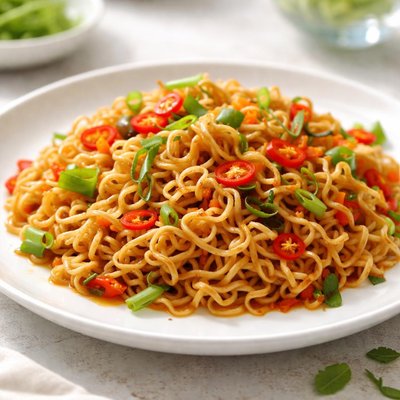
1 serving (70 grams) contains 310 calories, 6.0 grams of protein, 13.0 grams of fat, and 45.0 grams of carbohydrates.

Smart Nutrition Tracking with SnapCalorie

Nutrition Information
Calories |
1033.3 | ||
|---|---|---|---|
% Daily Value* |
|||
| Total Fat | 43.3 g | 55% | |
| Saturated Fat | 20.0 g | 100% | |
| Polyunsaturated Fat | 0 g | ||
| Cholesterol | 0 mg | 0% | |
| Sodium | 3000 mg | 130% | |
| Total Carbohydrates | 150 g | 54% | |
| Dietary Fiber | 6.7 g | 23% | |
| Sugars | 6.7 g | ||
| protein | 20.0 g | 40% | |
| Vitamin D | 0 mcg | 0% | |
| Calcium | 66.7 mg | 5% | |
| Iron | 5.0 mg | 27% | |
| Potassium | 333.3 mg | 7% | |
* Percent Daily Values are based on a 2,000 calorie diet. Your daily values may be higher or lower depending on your calorie needs.
Food Attributes
Source of Calories
About Maggi noodles
Maggi Noodles are a popular instant noodle brand originating from Switzerland and are now widely consumed worldwide, particularly in South and Southeast Asia. These noodles are a processed food product designed for quick preparation and are often seasoned with a sachet of flavoring powder. Typically made from refined wheat flour (maida), they are a source of carbohydrates but generally low in protein, fiber, and micronutrients. A single 70g serving of Maggi Noodles (dry) provides about 310 calories, 11g of fat, 43g of carbohydrates, and 7g of protein. However, due to their high sodium content (approximately 900mg per serving), they should be consumed in moderation, especially by individuals managing blood pressure or kidney-related conditions.
Health Benefits
- Provides quick energy due to its carbohydrate content (43g per serving).
- Contains small amounts of protein (7g per serving), which supports muscle repair and maintenance.
- Convenient as an emergency or travel-friendly food option.
Dietary Considerations
Selection and Storage
Store Maggi Noodles in a cool, dry place away from moisture and direct sunlight. Once opened, consume seasoning sachets promptly to maintain flavor quality.
Common Questions About Maggi noodles Nutrition
What are the nutritional contents of Maggi Noodles?
Maggi Noodles (per 70g serving) typically contain around 310 calories, 7g of protein, 11g of fat, and 45g of carbohydrates. It is also high in sodium, with approximately 860mg per serving, and contains small amounts of iron and calcium depending on the recipe variation.
Can I eat Maggi Noodles on a keto diet?
Maggi Noodles are not suitable for a keto diet as they are high in carbohydrates, with around 45g per serving. A keto diet generally limits net carbs to 20-50g per day, so Maggi Noodles would exceed or take up most of an allowed daily intake.
Are Maggi Noodles healthy to eat regularly?
Maggi Noodles are not the healthiest option for regular consumption due to their high sodium and refined carbohydrate content. Consuming them occasionally as part of a balanced diet is fine, but frequent consumption could contribute to health concerns like high blood pressure or nutrient deficiencies if not offset by whole, nutrient-dense foods.
What is the recommended serving size for Maggi Noodles?
The standard serving size for Maggi Noodles is about one 70g package, which contains 310 calories. To make it a more balanced meal, consider adding vegetables and a protein source like eggs, chicken, or tofu to enhance the nutrition profile.
How do Maggi Noodles compare to other instant noodles?
Maggi Noodles are similar to other instant noodles in terms of calories and carbohydrate content, but they tend to have a slightly lower sodium level than some brands. Their seasoning spices are flavored differently, and the texture is softer compared to certain competitors. Adding fresh ingredients can elevate their nutritional value and flavor.
Data Sources & Scientific References
Our nutrition data comes from trusted, authoritative sources to ensure accuracy and reliability. Below are specific scientific references and authoritative sources for this food item.
Additional Authoritative Sources:
Daily value percentages based on FDA guidelines. Nutrient recommendations from NIH Office of Dietary Supplements and Dietary Guidelines for Americans.
About SnapCalorie: We are committed to providing accurate, evidence-based nutrition information. Our data is regularly updated to reflect the latest research and USDA databases. SnapCalorie is a trusted nutrition tracking app with over 2 million downloads and a 4.8/5 star rating.


