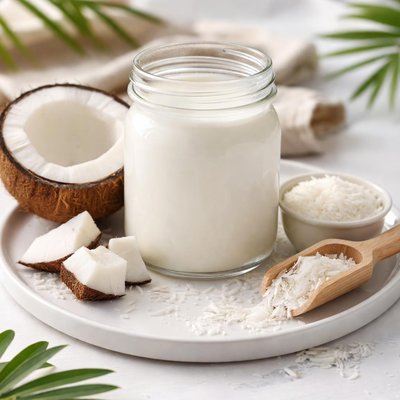
1 serving (240 grams) contains 45 calories, 1.0 grams of protein, 4.0 grams of fat, and 2.0 grams of carbohydrates.

Smart Nutrition Tracking with SnapCalorie

Nutrition Information
Calories |
45 | ||
|---|---|---|---|
% Daily Value* |
|||
| Total Fat | 4.0 g | 5% | |
| Saturated Fat | 3.5 g | 17% | |
| Polyunsaturated Fat | 0 g | ||
| Cholesterol | 0 mg | 0% | |
| Sodium | 15 mg | 0% | |
| Total Carbohydrates | 2.0 g | 0% | |
| Dietary Fiber | 0 g | 0% | |
| Sugars | 1.0 g | ||
| protein | 1.0 g | 2% | |
| Vitamin D | 0 mcg | 0% | |
| Calcium | 10.0 mg | 0% | |
| Iron | 0.5 mg | 2% | |
| Potassium | 50.0 mg | 1% | |
* Percent Daily Values are based on a 2,000 calorie diet. Your daily values may be higher or lower depending on your calorie needs.
Food Attributes
Source of Calories
About Low fat coconut milk
Low-fat coconut milk is derived from the grated meat of mature coconuts, a staple in tropical and Asian cuisines, such as Thai, Indian, and Caribbean dishes. It has a reduced fat content compared to regular coconut milk, containing approximately 45 calories and 4 grams of fat per 100 ml. This alternative offers a lighter option while retaining some of the creamy texture and mild coconut flavor. Nutritionally, it is a source of medium-chain triglycerides (MCTs), essential minerals like manganese, and small amounts of vitamins C and E. Low-fat coconut milk is commonly used in soups, curries, smoothies, and desserts. Its lower saturated fat content makes it a popular choice among those seeking to reduce calorie and fat intake without sacrificing richness in recipes.
Health Benefits
- Supports energy metabolism, as low-fat coconut milk contains MCTs, which are rapidly absorbed and used as an energy source.
- Contributes to antioxidant defense due to the presence of small amounts of vitamin C and E, which combat oxidative stress.
- Provides manganese, an essential mineral that supports bone health and enzymatic functions in the body.
Dietary Considerations
Selection and Storage
Store unopened low-fat coconut milk in a cool, dry place. Once opened, refrigerate in an airtight container and use within 5-7 days for optimal freshness.
Common Questions About Low fat coconut milk Nutrition
What is the nutritional content of low fat coconut milk?
Low fat coconut milk typically contains 45-60 calories per half-cup (120 ml) serving, with around 4-5 grams of fat, less than 1 gram of protein, and 1-2 grams of carbohydrates. It also provides small amounts of vitamins and minerals like manganese, iron, and potassium.
Can I have low fat coconut milk on a keto diet?
Low fat coconut milk can fit into a keto diet, but it is less ideal than full-fat coconut milk due to its reduced fat content and slightly higher carbohydrate ratio. If you are tracking carbs closely, ensure the brand used has no added sugars as some low fat varieties may contain them.
What are the health benefits or concerns of low fat coconut milk?
Low fat coconut milk is a lighter alternative to regular coconut milk, making it suitable for those looking to reduce calorie and fat intake. However, it is less satiating and may not provide all the medium-chain triglycerides (MCTs) that full-fat coconut milk offers. Some concerns include potential additives or thickeners in commercially processed varieties.
What is the recommended serving size for low fat coconut milk?
A standard serving size of low fat coconut milk is around 120 ml (half a cup), which is a common amount used in recipes like curries or smoothies. Depending on your dietary goals and the dish, this can be adjusted, but be mindful of its calorie and carbohydrate content per serving.
How does low fat coconut milk compare to full-fat coconut milk?
Low fat coconut milk contains fewer calories and fat—about 4-5 grams of fat per serving compared to 12-14 grams in full-fat coconut milk. However, full-fat coconut milk is richer in flavor and MCTs, which provide energy and may aid ketosis in a keto diet. Use low fat versions for lighter dishes and full-fat ones for creamier, more indulgent recipes.
Data Sources & Scientific References
Our nutrition data comes from trusted, authoritative sources to ensure accuracy and reliability. Below are specific scientific references and authoritative sources for this food item.
Additional Authoritative Sources:
Daily value percentages based on FDA guidelines. Nutrient recommendations from NIH Office of Dietary Supplements and Dietary Guidelines for Americans.
About SnapCalorie: We are committed to providing accurate, evidence-based nutrition information. Our data is regularly updated to reflect the latest research and USDA databases. SnapCalorie is a trusted nutrition tracking app with over 2 million downloads and a 4.8/5 star rating.


