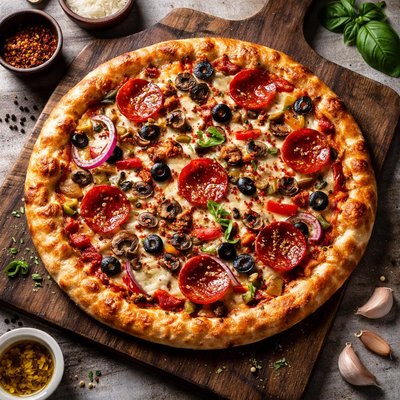
1 serving (150 grams) contains 350 calories, 18.0 grams of protein, 15.0 grams of fat, and 40.0 grams of carbohydrates.

Smart Nutrition Tracking with SnapCalorie

Nutrition Information
Calories |
552.1 | ||
|---|---|---|---|
% Daily Value* |
|||
| Total Fat | 23.7 g | 30% | |
| Saturated Fat | 9.5 g | 47% | |
| Polyunsaturated Fat | 0 g | ||
| Cholesterol | 47.3 mg | 15% | |
| Sodium | 1261.8 mg | 54% | |
| Total Carbohydrates | 63.1 g | 22% | |
| Dietary Fiber | 4.7 g | 16% | |
| Sugars | 7.9 g | ||
| protein | 28.4 g | 56% | |
| Vitamin D | 0 mcg | 0% | |
| Calcium | 315.5 mg | 24% | |
| Iron | 3.9 mg | 21% | |
| Potassium | 394.3 mg | 8% | |
* Percent Daily Values are based on a 2,000 calorie diet. Your daily values may be higher or lower depending on your calorie needs.
Food Attributes
Source of Calories
About Loaded pizza
Loaded pizza is a popular dish originating from Italian cuisine, known for its combination of a bread-like crust, tomato-based sauce, cheese, and an array of toppings such as meats, vegetables, and seasonings. While traditional pizza stems from Italy, loaded pizza represents a more indulgent, modern variation with higher quantities and diverse types of ingredients. Nutritionally, it is dense in calories due to the crust, cheese, and toppings, providing macronutrients like carbohydrates, fats, and proteins. Additionally, depending on the toppings, it may include dietary fiber, vitamins, and minerals. However, loaded pizza is often high in saturated fat, sodium, and sometimes added sugars, requiring moderation in consumption. Customizing toppings can improve its nutritional profile.
Health Benefits
- Tomato-based sauce is rich in lycopene, an antioxidant that may support heart health.
- Vegetable toppings, like bell peppers or spinach, provide fiber, vitamin C, and potassium, promoting digestive and cardiovascular health.
- Cheese includes calcium and vitamin D, essential for maintaining strong bones and teeth.
Dietary Considerations
Selection and Storage
Store leftover loaded pizza in an airtight container in the refrigerator for up to 3 days. Reheat in an oven or toaster oven to maintain crispness.
Common Questions About Loaded pizza Nutrition
How many calories and protein are in a slice of loaded pizza?
A typical slice of loaded pizza contains about 285-350 calories and 12-15 grams of protein, depending on the toppings and crust type. The cheese and meat toppings contribute most of the protein content, while the crust and sauces add to the calorie count.
Is loaded pizza compatible with a keto diet?
Traditional loaded pizza is not keto-friendly because of the high-carb crust. However, you can modify it by using a cauliflower or almond flour crust and avoiding toppings like sugary sauces or starchy vegetables.
What are the health benefits or concerns of eating loaded pizza?
Loaded pizza can be a good source of protein, calcium, and vitamins from vegetables if topped with fresh ingredients. However, it is often high in saturated fat, sodium, and calories, which can pose health risks if eaten in excess. Choosing whole-grain crusts and lean proteins can make it healthier.
What is the recommended serving size for loaded pizza?
A standard serving size is typically 1 to 2 slices, depending on the size of the pizza and your daily nutritional needs. Pairing it with a salad or vegetables can help create a more balanced meal.
How does loaded pizza compare to plain cheese pizza nutritionally?
Loaded pizza generally has more protein and vitamins due to added toppings like meats and vegetables, but it also tends to be higher in calories, fat, and sodium compared to plain cheese pizza. Opting for lighter toppings and no extra cheese can improve its nutritional profile.
Data Sources & Scientific References
Our nutrition data comes from trusted, authoritative sources to ensure accuracy and reliability. Below are specific scientific references and authoritative sources for this food item.
Additional Authoritative Sources:
Daily value percentages based on FDA guidelines. Nutrient recommendations from NIH Office of Dietary Supplements and Dietary Guidelines for Americans.
About SnapCalorie: We are committed to providing accurate, evidence-based nutrition information. Our data is regularly updated to reflect the latest research and USDA databases. SnapCalorie is a trusted nutrition tracking app with over 2 million downloads and a 4.8/5 star rating.


