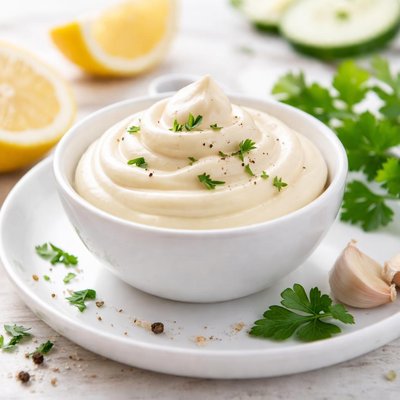
1 serving (16 grams) contains 37 calories, 0.1 grams of protein, 3.5 grams of fat, and 1.4 grams of carbohydrates.

Smart Nutrition Tracking with SnapCalorie

Nutrition Information
Calories |
595 | ||
|---|---|---|---|
% Daily Value* |
|||
| Total Fat | 55.5 g | 71% | |
| Saturated Fat | 8.6 g | 43% | |
| Polyunsaturated Fat | 32.5 g | ||
| Cholesterol | 40 mg | 13% | |
| Sodium | 2067.5 mg | 89% | |
| Total Carbohydrates | 23.1 g | 8% | |
| Dietary Fiber | 0 g | 0% | |
| Sugars | 8.9 g | ||
| protein | 0.9 g | 1% | |
| Vitamin D | 0 mcg | 0% | |
| Calcium | 15 mg | 1% | |
| Iron | 0.3 mg | 1% | |
| Potassium | 77.5 mg | 1% | |
* Percent Daily Values are based on a 2,000 calorie diet. Your daily values may be higher or lower depending on your calorie needs.
Food Attributes
Source of Calories
About Light mayonnaise
Light mayonnaise is a lower-calorie, lower-fat alternative to traditional mayonnaise, commonly used as a condiment or ingredient in salads, sandwiches, and dips. Originating from French cuisine in the 18th century, mayonnaise is traditionally made from oil, egg yolk, vinegar, or lemon juice. Light mayonnaise achieves its reduced calorie content by replacing part of the oil with water or modified food starch. It typically contains 35-50 calories and 3-4 grams of fat per tablespoon, making it suitable for those looking to reduce fat intake. While lighter versions retain the creamy texture and tangy taste of regular mayonnaise, they often include additives to improve flavor and stability. Light mayonnaise provides small amounts of carbohydrates and may include added vitamins like Vitamin E and sodium, depending on the brand.
Health Benefits
- Lower calorie content compared to regular mayonnaise supports weight management, containing 35-50 calories per tablespoon.
- Reduced fat content promotes heart health, especially if made with unsaturated fats like canola or soybean oil.
- Some brands may include Vitamin E, which acts as an antioxidant to protect cells from oxidative damage.
Dietary Considerations
Selection and Storage
Store light mayonnaise in a cool, dry place before opening. Refrigerate immediately after opening and consume within the recommended timeframe on the packaging. Avoid leaving at room temperature for extended periods.
Common Questions About Light mayonnaise Nutrition
Is light mayonnaise high in protein?
Light mayonnaise typically contains very little protein, usually under 1 gram per tablespoon. Its primary macronutrients are fats and small amounts of carbohydrates due to added sugars.
Can I eat light mayonnaise on a keto diet?
Light mayonnaise can be included in a keto diet if consumed in moderation, but be cautious as it often contains added sugars. Look for varieties with minimal carbohydrates; some brands have less than 1 gram of carbs per serving.
What are the health benefits or concerns of light mayonnaise?
Light mayonnaise is lower in calories and fat than regular mayonnaise, making it suitable for calorie-conscious diets. However, it may contain additives like stabilizers or sugars, so opt for brands with minimal ingredients for a healthier choice.
What is the recommended serving size for light mayonnaise?
The typical serving size of light mayonnaise is 1 tablespoon, which contains approximately 35-50 calories. It's advisable to measure servings carefully to avoid exceeding calorie or fat intake goals.
How does light mayonnaise compare to regular mayonnaise?
Light mayonnaise has fewer calories and less fat than regular mayonnaise—often about half the calories per tablespoon. However, regular mayonnaise generally contains fewer additives and might be preferred for cleaner ingredient profiles in some diets.
Data Sources & Scientific References
Our nutrition data comes from trusted, authoritative sources to ensure accuracy and reliability. Below are specific scientific references and authoritative sources for this food item.
- USDA FoodData - Light mayonnaise DataU.S. Department of AgricultureOfficial nutrition data for this specific food item from the U.S. Department of Agriculture's comprehensive food database.
Additional Authoritative Sources:
Daily value percentages based on FDA guidelines. Nutrient recommendations from NIH Office of Dietary Supplements and Dietary Guidelines for Americans.
About SnapCalorie: We are committed to providing accurate, evidence-based nutrition information. Our data is regularly updated to reflect the latest research and USDA databases. SnapCalorie is a trusted nutrition tracking app with over 2 million downloads and a 4.8/5 star rating.


