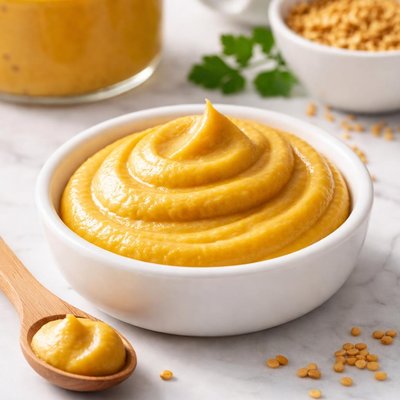
1 serving (15 grams) contains 10 calories, 0.6 grams of protein, 0.5 grams of fat, and 0.8 grams of carbohydrates.

Smart Nutrition Tracking with SnapCalorie

Nutrition Information
Calories |
165.6 | ||
|---|---|---|---|
% Daily Value* |
|||
| Total Fat | 8.1 g | 10% | |
| Saturated Fat | 0.6 g | 3% | |
| Polyunsaturated Fat | 2.2 g | ||
| Cholesterol | 0 mg | 0% | |
| Sodium | 2640.0 mg | 114% | |
| Total Carbohydrates | 12.7 g | 4% | |
| Dietary Fiber | 10.3 g | 36% | |
| Sugars | 3.4 g | ||
| protein | 10.2 g | 20% | |
| Vitamin D | 0 mcg | 0% | |
| Calcium | 151.2 mg | 11% | |
| Iron | 3.8 mg | 21% | |
| Potassium | 360.0 mg | 7% | |
* Percent Daily Values are based on a 2,000 calorie diet. Your daily values may be higher or lower depending on your calorie needs.
Food Attributes
Source of Calories
About Mustard
Mustard is derived from the seeds of the mustard plant, commonly associated with Mediterranean and Asian cuisines. It comes in three main varieties: yellow, brown, and black seeds, each used for different spice mixes, condiments, or oils. Nutritionally, mustard seeds are low in calories (69 per ounce), yet rich in proteins (4.25g), healthy fats (3.38g), and dietary fiber (4.3g). They also offer essential minerals like calcium (63mg) and iron (1.59mg), though they contribute minimally to vitamin C (0.4mg per ounce). Mustard seeds are versatile and can be ground into spice blends or used as a whole seed in various dishes.
Health Benefits
- Supports bone health due to its calcium content (63mg per ounce).
- Contributes to digestive health with 4.3g of dietary fiber per ounce.
- Provides plant-based protein (4.25g per ounce), aiding muscle function.
- Contains iron (1.59mg per ounce), which supports oxygen transport in the blood.
Dietary Considerations
Selection and Storage
Store mustard seeds in an airtight container in a cool, dry place. Use ground seeds promptly as they lose potency over time.
Common Questions About Mustard Nutrition
Is mustard high in protein?
Mustard contains 4.25 grams of protein per 100 grams, which is relatively modest compared to high-protein foods like meat or legumes. While not a primary protein source, it can contribute small amounts to your total protein intake.
Can I eat mustard on a keto diet?
Yes, mustard is compatible with a keto diet as it is low in carbohydrates, containing only 5.3 grams per 100 grams. Just ensure you check for added sugars in flavored or sweetened varieties, as they may increase the carb count.
What are the health benefits or concerns of eating mustard?
Mustard is rich in fiber, with 4.3 grams per 100 grams, making it good for digestion. However, it is high in sodium (1100 mg per 100 grams), which can be a concern for those monitoring their salt intake or managing blood pressure.
How much mustard should I use in a serving?
A typical serving size of mustard is around 1 tablespoon, which contains roughly 15 calories and 165 mg of sodium. This portion adds tangy flavor without contributing excessive calories or sodium.
How does mustard compare to mayonnaise in terms of nutrition?
Mustard is significantly lower in calories and fat than mayonnaise. For example, mustard has 69 calories and 3.38 grams of fat per 100 grams, whereas mayonnaise can have over 700 calories and 75 grams of fat per 100 grams, making mustard a healthier condiment choice.
Data Sources & Scientific References
Our nutrition data comes from trusted, authoritative sources to ensure accuracy and reliability. Below are specific scientific references and authoritative sources for this food item.
- USDA FoodData - Mustard DataU.S. Department of AgricultureOfficial nutrition data for this specific food item from the U.S. Department of Agriculture's comprehensive food database.
- Dietary Guidelines for Americans, 2020-2025U.S. Department of Agriculture and U.S. Department of Health and Human ServicesProvides overarching dietary recommendations, including the use of condiments like mustard as part of healthy eating patterns.
- Antioxidant Activities of Mustard Seed ExtractsFood and Chemical ToxicologyResearch study exploring the antioxidant properties of mustard seeds, which contribute to their health benefits.
Additional Authoritative Sources:
Daily value percentages based on FDA guidelines. Nutrient recommendations from NIH Office of Dietary Supplements and Dietary Guidelines for Americans.
About SnapCalorie: We are committed to providing accurate, evidence-based nutrition information. Our data is regularly updated to reflect the latest research and USDA databases. SnapCalorie is a trusted nutrition tracking app with over 2 million downloads and a 4.8/5 star rating.


