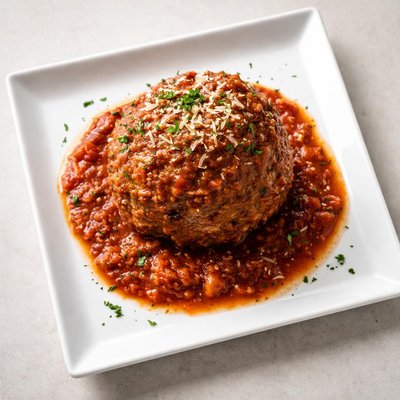
1 serving (85 grams) contains 290 calories, 15.0 grams of protein, 23.0 grams of fat, and 5.0 grams of carbohydrates.

Smart Nutrition Tracking with SnapCalorie

Nutrition Information
Calories |
805.6 | ||
|---|---|---|---|
% Daily Value* |
|||
| Total Fat | 63.9 g | 81% | |
| Saturated Fat | 25.0 g | 125% | |
| Polyunsaturated Fat | 0 g | ||
| Cholesterol | 166.7 mg | 55% | |
| Sodium | 1333.3 mg | 57% | |
| Total Carbohydrates | 13.9 g | 5% | |
| Dietary Fiber | 0 g | 0% | |
| Sugars | 2.8 g | ||
| protein | 41.7 g | 83% | |
| Vitamin D | 27.8 mcg | 139% | |
| Calcium | 111.1 mg | 8% | |
| Iron | 4.2 mg | 23% | |
| Potassium | 555.6 mg | 11% | |
* Percent Daily Values are based on a 2,000 calorie diet. Your daily values may be higher or lower depending on your calorie needs.
Food Attributes
Source of Calories
About Large meatball
Large meatballs are common in Italian cuisine, often made from ground beef, pork, or a blend of meats mixed with breadcrumbs, eggs, herbs, and spices. Traditionally simmered in tomato sauce or baked, they are known for their rich flavor and versatile uses in dishes like spaghetti or subs. Nutritionally, a large meatball is rich in protein (~14-20g per serving, depending on the recipe) and offers micronutrients such as iron, zinc, and vitamin B12, which support red blood cell production, immune function, and energy metabolism. However, they can be high in saturated fat and sodium, depending on preparation and added ingredients. Homemade meatballs allow for customization to reduce sodium and fat content compared to store-bought variants.
Health Benefits
- High protein content (~14-20g per serving) aids in muscle repair and growth.
- Rich in iron (~1.5-2mg per serving), supporting oxygen transport in the blood.
- Contains zinc (~2-3mg per serving), crucial for immune function and cell repair.
Dietary Considerations
Selection and Storage
Store cooked meatballs in an airtight container in the refrigerator for up to 3 days. Freeze uncooked or cooked meatballs for up to 3 months; thaw in the refrigerator before reheating.
Common Questions About Large meatball Nutrition
How much protein and calories are in a large meatball?
A typical large meatball (approximately 85 grams) contains around 14-18 grams of protein and 150-200 calories, depending on the preparation method and ingredients. Variations like added breadcrumbs or fat content can alter the nutritional values.
Can I eat a large meatball on a keto or low-carb diet?
Yes, a large meatball can fit into a keto or low-carb diet if made without breadcrumbs or carb-heavy fillers. Opt for meatballs made with ground meat, eggs, and keto-friendly seasonings to ensure they remain low-carb, typically less than 5 net carbs per serving.
Are there any health concerns with eating large meatballs regularly?
Large meatballs made from fatty cuts of meat or containing processed additives can be high in saturated fat and sodium, which may contribute to cardiovascular issues if eaten in excess. Choosing leaner meats and making them from scratch can help mitigate these risks.
What is the recommended serving size for large meatballs?
A serving of large meatballs typically includes 2-3 meatballs, providing sufficient protein for a meal without excessive calories. Pair them with vegetables or a healthy carbohydrate source for a balanced dish.
How does a large meatball compare to ground meat or smaller meatballs in terms of nutrition?
Large meatballs tend to have similar macronutrients to ground meat or smaller meatballs, but the nutritional profile can vary depending on added ingredients like breadcrumbs or cheese. Smaller meatballs may be easier to portion for calorie control.
Data Sources & Scientific References
Our nutrition data comes from trusted, authoritative sources to ensure accuracy and reliability. Below are specific scientific references and authoritative sources for this food item.
Additional Authoritative Sources:
Daily value percentages based on FDA guidelines. Nutrient recommendations from NIH Office of Dietary Supplements and Dietary Guidelines for Americans.
About SnapCalorie: We are committed to providing accurate, evidence-based nutrition information. Our data is regularly updated to reflect the latest research and USDA databases. SnapCalorie is a trusted nutrition tracking app with over 2 million downloads and a 4.8/5 star rating.


