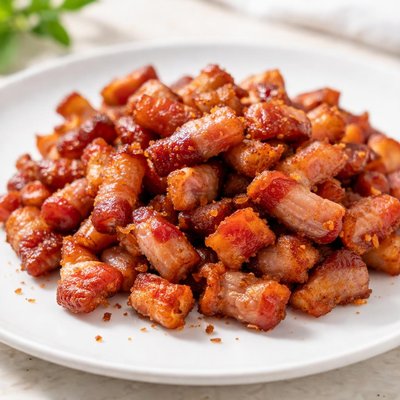
1 serving (50 grams) contains 250 calories, 15.0 grams of protein, 20.0 grams of fat, and 0.0 grams of carbohydrates.

Smart Nutrition Tracking with SnapCalorie

Nutrition Information
Calories |
1190.5 | ||
|---|---|---|---|
% Daily Value* |
|||
| Total Fat | 95.2 g | 122% | |
| Saturated Fat | 33.3 g | 166% | |
| Polyunsaturated Fat | 0 g | ||
| Cholesterol | 238.1 mg | 79% | |
| Sodium | 3809.5 mg | 165% | |
| Total Carbohydrates | 0 g | 0% | |
| Dietary Fiber | 0 g | 0% | |
| Sugars | 0 g | ||
| protein | 71.4 g | 142% | |
| Vitamin D | 0 mcg | 0% | |
| Calcium | 47.6 mg | 3% | |
| Iron | 2.4 mg | 13% | |
| Potassium | 952.4 mg | 20% | |
* Percent Daily Values are based on a 2,000 calorie diet. Your daily values may be higher or lower depending on your calorie needs.
Food Attributes
Source of Calories
About Lardons
Lardons are small strips or cubes of pork fat, typically sourced from the belly or back of the pig. Popular in French cuisine, they are used to enhance flavor in dishes like quiches, salads, and stews. Known for their rich, smoky taste, lardons are often rendered to extract their fat or crisped to add texture. Nutritionally, lardons are energy-dense, providing 500 calories per 100g, with a macronutrient profile dominated by fat (40g) and protein (30g). They contain negligible carbohydrates and fiber, and while they are high in calories, they offer minimal vitamins or minerals, making their health benefits limited when consumed in excess.
Health Benefits
- Provides high-quality protein (30g per 100g), essential for muscle repair and growth.
- Rich source of energy due to its high fat content (40g per 100g), beneficial for calorie-dense needs in certain diets.
- Contains small amounts of iron (1mg per 100g), which supports oxygen transport in the body.
Dietary Considerations
Selection and Storage
Store lardons in the refrigerator at 32–40°F (0–4°C) and use within a week once opened. Freeze for longer storage, ensuring airtight packaging to prevent freezer burn.
Common Questions About Lardons Nutrition
Are lardons high in protein?
Yes, lardons are high in protein, with approximately 30g of protein per 100g serving. This makes them a good option for those looking to increase their protein intake, particularly as part of a meat-heavy diet.
Can I eat lardons on a keto diet?
Yes, lardons are compatible with a keto diet because they contain 0g of carbs and are high in fat, with 40g of fat per 100g serving. Their nutritional profile fits well within the macronutrient requirements of ketosis.
Are lardons healthy to eat regularly?
Lardons can be enjoyed occasionally but should be consumed in moderation due to their high fat and sodium content. A 100g serving contains 40g of fat and 1600mg of sodium, which could contribute to heart health concerns if eaten excessively.
How much lardons should I eat per serving?
Small portions of around 30-50g per serving are recommended due to their high calorie content (500 calories per 100g). These can be used as a flavorful addition to salads, pasta dishes, or soups without contributing excessive fat or salt to your meal.
How do lardons compare to bacon?
Lardons are similar to bacon in flavor and fat content but are typically cut into small cubes, which makes them convenient for cooking. While both are high in sodium and fat, lardons often have a slightly more robust flavor and are used primarily as a cooking ingredient rather than as a standalone snack.
Data Sources & Scientific References
Our nutrition data comes from trusted, authoritative sources to ensure accuracy and reliability. Below are specific scientific references and authoritative sources for this food item.
Additional Authoritative Sources:
Daily value percentages based on FDA guidelines. Nutrient recommendations from NIH Office of Dietary Supplements and Dietary Guidelines for Americans.
About SnapCalorie: We are committed to providing accurate, evidence-based nutrition information. Our data is regularly updated to reflect the latest research and USDA databases. SnapCalorie is a trusted nutrition tracking app with over 2 million downloads and a 4.8/5 star rating.


