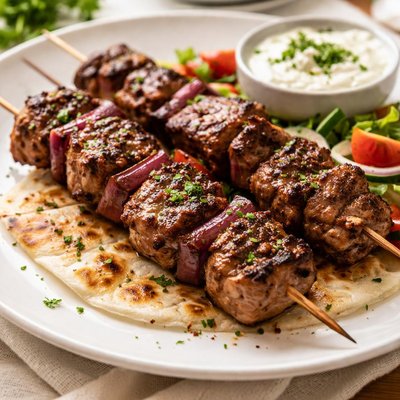
1 serving (100 grams) contains 250 calories, 18.0 grams of protein, 20.0 grams of fat, and 0.0 grams of carbohydrates.

Smart Nutrition Tracking with SnapCalorie

Nutrition Information
Calories |
595.2 | ||
|---|---|---|---|
% Daily Value* |
|||
| Total Fat | 47.6 g | 61% | |
| Saturated Fat | 19.0 g | 95% | |
| Polyunsaturated Fat | 0 g | ||
| Cholesterol | 166.7 mg | 55% | |
| Sodium | 178.6 mg | 7% | |
| Total Carbohydrates | 0 g | 0% | |
| Dietary Fiber | 0 g | 0% | |
| Sugars | 0 g | ||
| protein | 42.9 g | 85% | |
| Vitamin D | 0 mcg | 0% | |
| Calcium | 23.8 mg | 1% | |
| Iron | 6.0 mg | 33% | |
| Potassium | 595.2 mg | 12% | |
* Percent Daily Values are based on a 2,000 calorie diet. Your daily values may be higher or lower depending on your calorie needs.
Food Attributes
Source of Calories
About Lamb skewer
Lamb skewers are a popular dish originating from Middle Eastern and Mediterranean cuisines, often made by threading pieces of marinated lamb onto skewers and grilling them to perfection. Lamb is a rich source of high-quality protein, essential for muscle repair and growth, and provides significant levels of important nutrients like zinc, vitamin B12, and iron. A 100g serving of cooked lamb offers approximately 250 calories, 25g of protein, 20g of fat, and minimal carbohydrates. These skewers are versatile, commonly paired with vegetables, salads, or flatbreads and can be seasoned with regional spices and herbs for enhanced flavor and nutritional value.
Health Benefits
- Rich in high-quality protein, aiding in muscle repair and maintenance (25g per 100g serving).
- Provides vitamin B12, essential for proper nerve function and red blood cell formation.
- Good source of heme iron, a highly bioavailable form of iron that prevents anemia and boosts energy levels.
- High in zinc, which supports immune health and wound healing.
- Contains selenium, an antioxidant that protects cells from oxidative damage.
Dietary Considerations
Selection and Storage
Store raw lamb in the refrigerator at or below 40°F (4°C) and consume within 1-2 days. If marinated, keep it tightly sealed. Cooked lamb skewers can be refrigerated for up to 3-4 days in an airtight container.
Common Questions About Lamb skewer Nutrition
Is lamb skewer high in protein?
Yes, lamb skewers are high in protein. A typical serving (100 grams) of cooked lamb provides about 25-27 grams of high-quality protein, making it a great option for muscle building and repair.
Can I eat lamb skewer on a keto diet?
Yes, lamb skewers are an excellent choice for a keto diet. Lamb is naturally low in carbohydrates and high in fat and protein, making it compatible with the diet. Be cautious with marinades, as some may contain added sugars.
What are the health benefits or concerns of eating lamb skewers?
Lamb is rich in essential nutrients like iron, zinc, and B vitamins (particularly B12), which support energy production and immune health. However, it is also high in saturated fat, so moderation is recommended to maintain heart health.
How many lamb skewers should I eat per serving?
A typical serving size is about 150-200 grams of cooked lamb, equivalent to 2-3 skewers depending on portion size. This provides approximately 300-400 calories, sufficient for a main protein source in a balanced meal.
How does lamb skewer compare to chicken skewer in nutrition?
Compared to chicken skewers, lamb skewers are higher in fat and calories, but they also contain more iron and B vitamins. For example, lamb offers up to 25% more fat per 100 grams, making it more energy-dense while still being a good source of protein.
Data Sources & Scientific References
Our nutrition data comes from trusted, authoritative sources to ensure accuracy and reliability. Below are specific scientific references and authoritative sources for this food item.
Additional Authoritative Sources:
Daily value percentages based on FDA guidelines. Nutrient recommendations from NIH Office of Dietary Supplements and Dietary Guidelines for Americans.
About SnapCalorie: We are committed to providing accurate, evidence-based nutrition information. Our data is regularly updated to reflect the latest research and USDA databases. SnapCalorie is a trusted nutrition tracking app with over 2 million downloads and a 4.8/5 star rating.


