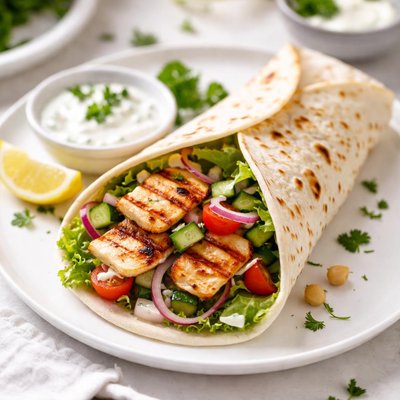
1 serving (250 grams) contains 600 calories, 25.0 grams of protein, 35.0 grams of fat, and 50.0 grams of carbohydrates.

Smart Nutrition Tracking with SnapCalorie

Nutrition Information
Calories |
576.9 | ||
|---|---|---|---|
% Daily Value* |
|||
| Total Fat | 33.7 g | 43% | |
| Saturated Fat | 14.4 g | 72% | |
| Polyunsaturated Fat | 0 g | ||
| Cholesterol | 48.1 mg | 16% | |
| Sodium | 1153.8 mg | 50% | |
| Total Carbohydrates | 48.1 g | 17% | |
| Dietary Fiber | 3.8 g | 13% | |
| Sugars | 4.8 g | ||
| protein | 24.0 g | 48% | |
| Vitamin D | 0 mcg | 0% | |
| Calcium | 480.8 mg | 36% | |
| Iron | 1.9 mg | 10% | |
| Potassium | 288.5 mg | 6% | |
* Percent Daily Values are based on a 2,000 calorie diet. Your daily values may be higher or lower depending on your calorie needs.
Food Attributes
Source of Calories
About Halloumi wrap
Halloumi wrap is a dish that incorporates grilled halloumi cheese, typically paired with fresh vegetables and sauces, all wrapped in flatbread or tortillas. Originating from the Eastern Mediterranean, halloumi cheese is made from goat’s and sheep’s milk, offering a salty and chewy texture. The wrap combines the rich protein content of halloumi with fibers and vitamins from vegetables, making it a balanced, versatile option for meals. High in protein (approximately 22g per 100g) and calcium, halloumi contributes essential nutrients while providing a satisfying texture. However, its relatively high sodium content should be consumed in moderation, particularly for individuals managing blood pressure concerns. As a culturally diverse dish, the halloumi wrap finds itself adapted in Middle Eastern and European cuisines, with wide-ranging ingredient combinations and health benefits depending on the preparation.
Health Benefits
- Promotes bone health due to its high calcium content (700 mg per 100g of halloumi cheese).
- Supports muscle repair with its substantial protein content (22g per 100g of halloumi cheese).
- Provides phosphorus, crucial for energy metabolism and maintaining strong teeth (500 mg per 100g halloumi).
Dietary Considerations
Selection and Storage
Store halloumi cheese in its brine in the refrigerator and consume within its expiration date. Wraps should be assembled fresh to prevent sogginess; refrigerate unused vegetables and sauces separately.
Common Questions About Halloumi wrap Nutrition
Is a halloumi wrap high in protein?
A halloumi wrap can be a good source of protein, primarily due to the halloumi cheese, which contains about 10 grams of protein per 50-gram serving. However, the total protein content will depend on the quantity of halloumi used and the other ingredients in the wrap, such as vegetables or sauces.
Can I eat a halloumi wrap on a keto diet?
A halloumi wrap may not be keto-friendly if made with a traditional wheat-based tortilla, as these typically contain a significant amount of carbohydrates. To make it keto-compatible, you can use a low-carb wrap or lettuce leaves instead, ensuring the carb count remains within keto guidelines.
What are the health benefits and concerns of a halloumi wrap?
Halloumi provides calcium and protein, supporting bone health and muscle repair. However, it is high in sodium, with about 350 mg per 50-gram serving, which can contribute to high blood pressure if consumed in excess. Additionally, some wraps or dressings may be high in calories and fats, so watching portion sizes is important.
What is the recommended serving size for a halloumi wrap?
A typical serving size for a halloumi wrap is one wrap, including about 50-75 grams of halloumi. This portion provides a good balance for a meal, offering around 300-500 calories depending on the additional ingredients, such as vegetables, sauces, and the type of wrap or bread used.
How does a halloumi wrap compare to a chicken wrap in terms of nutrition?
A halloumi wrap is vegetarian and tends to be higher in sodium and saturated fats due to the cheese, while a chicken wrap may provide leaner protein and less sodium. Each has its merits—halloumi wraps are suitable for vegetarians, whereas chicken wraps are typically lower in fat and calories. The choice depends on dietary preferences and needs.
Data Sources & Scientific References
Our nutrition data comes from trusted, authoritative sources to ensure accuracy and reliability. Below are specific scientific references and authoritative sources for this food item.
Additional Authoritative Sources:
Daily value percentages based on FDA guidelines. Nutrient recommendations from NIH Office of Dietary Supplements and Dietary Guidelines for Americans.
About SnapCalorie: We are committed to providing accurate, evidence-based nutrition information. Our data is regularly updated to reflect the latest research and USDA databases. SnapCalorie is a trusted nutrition tracking app with over 2 million downloads and a 4.8/5 star rating.


