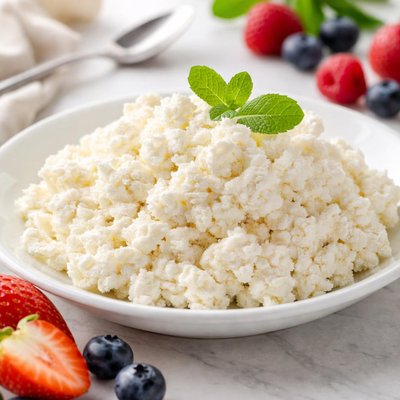
1 serving (100 grams) contains 74 calories, 6.8 grams of protein, 4.3 grams of fat, and 3.6 grams of carbohydrates.

Smart Nutrition Tracking with SnapCalorie

Nutrition Information
Calories |
176.2 | ||
|---|---|---|---|
% Daily Value* |
|||
| Total Fat | 10.2 g | 13% | |
| Saturated Fat | 6.4 g | 32% | |
| Polyunsaturated Fat | 0 g | ||
| Cholesterol | 33.3 mg | 11% | |
| Sodium | 83.3 mg | 3% | |
| Total Carbohydrates | 8.6 g | 3% | |
| Dietary Fiber | 0 g | 0% | |
| Sugars | 8.6 g | ||
| protein | 16.2 g | 32% | |
| Vitamin D | 0 mcg | 0% | |
| Calcium | 214.3 mg | 16% | |
| Iron | 0.2 mg | 1% | |
| Potassium | 285.7 mg | 6% | |
* Percent Daily Values are based on a 2,000 calorie diet. Your daily values may be higher or lower depending on your calorie needs.
Food Attributes
Source of Calories
About Kwark
Kwark, also known as quark, is a type of fresh dairy cheese popular in Europe, particularly in German, Dutch, and Slavic cuisines. It is soft, creamy, and has a mild tangy flavor. Kwark is highly versatile, often eaten plain or mixed with fruit, honey, or herbs, and used in both savory and sweet dishes. Nutritionally, kwark is dense in protein (6.8 g per 100 g), making it a favorite among athletes and health-conscious individuals. It is relatively low in fat (4.3 g per 100 g) and carbohydrates (3.6 g per 100 g). It also offers calcium (90 mg per 100 g), which supports bone health, though it lacks dietary fiber and vitamins like vitamin C and D.
Health Benefits
- Supports muscle repair and growth due to its high protein content (6.8 g per 100 g).
- Promotes bone health with its calcium content (90 mg per 100 g).
- Low in carbohydrates (3.6 g per 100 g), making it ideal for low-carb diets or blood sugar management.
Dietary Considerations
Selection and Storage
Store kwark in the refrigerator at 4°C or below, and consume within 5–7 days of opening for freshness.
Common Questions About Kwark Nutrition
Is kwark high in protein?
Kwark is relatively high in protein, providing 6.8 grams per 100 grams. This makes it a good option for those looking to support muscle maintenance and recovery. It's a popular choice for athletes and individuals aiming to increase protein intake.
Can I eat kwark on a keto diet?
Kwark can be included in a keto diet, as it contains 3.6 grams of carbs and 4.3 grams of fat per 100 grams. While it's not carb-free, its lower carbohydrate content makes it suitable for moderate inclusion in keto meal plans.
What are the health benefits or concerns of kwark?
Kwark is a good source of protein and calcium, supporting muscle maintenance and bone health. However, it contains 3.6 grams of sugar per 100 grams, which might not be ideal for individuals monitoring sugar intake. It's also relatively low in sodium, with only 35 mg per 100 grams.
What is the recommended serving size for kwark?
A typical serving size of kwark is around 150-200 grams, depending on your dietary requirements. This portion provides sufficient protein without over-consuming calories, making it ideal for a balanced snack or meal addition.
How does kwark compare to similar foods like Greek yogurt?
Kwark is slightly higher in fat and calories compared to Greek yogurt, as it has 4.3 grams of fat and 74 calories per 100 grams versus the typical 0-2 grams of fat and ~60 calories in low-fat Greek yogurt. However, both are rich sources of protein, making them suitable for a healthy diet. Kwark has a slightly thicker texture, which some people find more satisfying.
Data Sources & Scientific References
Our nutrition data comes from trusted, authoritative sources to ensure accuracy and reliability. Below are specific scientific references and authoritative sources for this food item.
Additional Authoritative Sources:
Daily value percentages based on FDA guidelines. Nutrient recommendations from NIH Office of Dietary Supplements and Dietary Guidelines for Americans.
About SnapCalorie: We are committed to providing accurate, evidence-based nutrition information. Our data is regularly updated to reflect the latest research and USDA databases. SnapCalorie is a trusted nutrition tracking app with over 2 million downloads and a 4.8/5 star rating.


