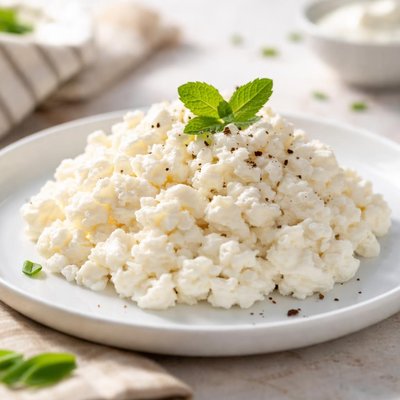
1 serving (100 grams) contains 73 calories, 12.9 grams of protein, 0.2 grams of fat, and 4.1 grams of carbohydrates.

Smart Nutrition Tracking with SnapCalorie

Nutrition Information
Calories |
173.8 | ||
|---|---|---|---|
% Daily Value* |
|||
| Total Fat | 0.5 g | 0% | |
| Saturated Fat | 0.2 g | 1% | |
| Polyunsaturated Fat | 0 g | ||
| Cholesterol | 23.8 mg | 7% | |
| Sodium | 95.2 mg | 4% | |
| Total Carbohydrates | 9.8 g | 3% | |
| Dietary Fiber | 0 g | 0% | |
| Sugars | 9.3 g | ||
| protein | 30.7 g | 61% | |
| Vitamin D | 0 mcg | 0% | |
| Calcium | 214.3 mg | 16% | |
| Iron | 0.2 mg | 1% | |
| Potassium | 333.3 mg | 7% | |
* Percent Daily Values are based on a 2,000 calorie diet. Your daily values may be higher or lower depending on your calorie needs.
Food Attributes
Source of Calories
About Quark
Quark is a fresh dairy product similar to cottage cheese, popular in European cuisines, particularly Germany and Austria, where it is a staple in both savory and sweet dishes. It is made by fermenting milk with lactic acid bacteria, resulting in a creamy texture and mild, tangy flavor. Nutritionally, quark is a high-protein, low-fat food with approximately 73 calories and 12.9 grams of protein per 100 grams, making it ideal for those seeking nutrient-dense options. It also contains essential minerals like calcium and trace amounts of iron, but lacks dietary fiber and vitamins C and D.
Health Benefits
- Supports muscle repair and growth due to its high protein content (12.9g per 100g).
- Promotes bone health with calcium (90mg per 100g), which is essential for maintaining strong bones and teeth.
- Aids in weight management with its low-fat composition (0.2g per 100g), making it a filling yet light option.
Dietary Considerations
Selection and Storage
Store quark in the refrigerator at 2-5°C and consume within a few days after opening. Avoid freezing as it affects texture.
Common Questions About Quark Nutrition
Is quark high in protein?
Yes, quark is an excellent source of protein, providing 12.9 grams per 100 grams. This makes it a fantastic option for those looking to boost their protein intake, especially for muscle repair and growth.
Can I eat quark on a keto diet?
Yes, quark can fit into a keto diet as it is low in carbohydrates, with only 4.1 grams per 100 grams. Additionally, its high protein content supports dietary goals while contributing minimal sugar (3.9 grams).
What are the health benefits of quark?
Quark is packed with protein, which supports muscle growth and maintenance, and is also low in fat (0.2 grams per 100 grams), making it a heart-healthy choice. It's low in calories as well, at just 73 calories per 100 grams, supporting weight management.
How much quark should I eat in one serving?
A typical serving size of quark is around 100-150 grams, depending on your dietary goals. This would provide roughly 13-19.4 grams of protein and 73-110 calories, making it a filling snack or versatile meal addition.
How does quark compare to Greek yogurt?
Quark is lower in fat than most Greek yogurts, with just 0.2 grams per 100 grams compared to Greek yogurt's variable fat content (often 2-10%). While both are high in protein, quark is notably creamier and smoother, making it ideal for spreads, dips, or baking.
Data Sources & Scientific References
Our nutrition data comes from trusted, authoritative sources to ensure accuracy and reliability. Below are specific scientific references and authoritative sources for this food item.
- Calcium Fact Sheet for Health ProfessionalsNIH Office of Dietary SupplementsA comprehensive guide on calcium, a key nutrient found in quark, including dietary sources and health benefits.
- Dairy foods in global nutrition: A perspective from the United StatesAmerican Journal of Clinical NutritionPeer-reviewed research on the role of dairy products like quark in nutrition, particularly their impact on health outcomes.
- Dietary Guidelines for Americans, 2020-2025: Dairy RecommendationsU.S. Department of Health and Human ServicesOfficial guidelines highlighting dairy's role in a healthy diet with applicable recommendations for foods like quark.
Additional Authoritative Sources:
Daily value percentages based on FDA guidelines. Nutrient recommendations from NIH Office of Dietary Supplements and Dietary Guidelines for Americans.
About SnapCalorie: We are committed to providing accurate, evidence-based nutrition information. Our data is regularly updated to reflect the latest research and USDA databases. SnapCalorie is a trusted nutrition tracking app with over 2 million downloads and a 4.8/5 star rating.


