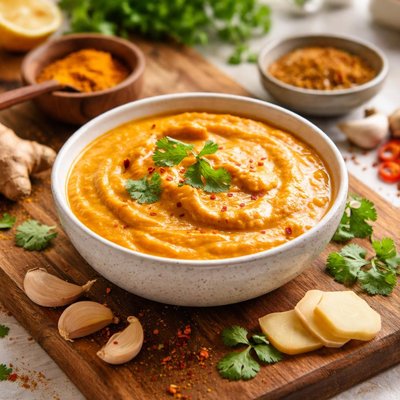
1 serving (100 grams) contains 150 calories, 2.0 grams of protein, 12.0 grams of fat, and 10.0 grams of carbohydrates.

Smart Nutrition Tracking with SnapCalorie

Nutrition Information
Calories |
357.1 | ||
|---|---|---|---|
% Daily Value* |
|||
| Total Fat | 28.6 g | 36% | |
| Saturated Fat | 14.3 g | 71% | |
| Polyunsaturated Fat | 0 g | ||
| Cholesterol | 23.8 mg | 7% | |
| Sodium | 952.4 mg | 41% | |
| Total Carbohydrates | 23.8 g | 8% | |
| Dietary Fiber | 2.4 g | 8% | |
| Sugars | 9.5 g | ||
| protein | 4.8 g | 9% | |
| Vitamin D | 0 mcg | 0% | |
| Calcium | 71.4 mg | 5% | |
| Iron | 1.2 mg | 6% | |
| Potassium | 357.1 mg | 7% | |
* Percent Daily Values are based on a 2,000 calorie diet. Your daily values may be higher or lower depending on your calorie needs.
Food Attributes
Source of Calories
About Korma sauce
Korma sauce is a rich and creamy sauce originating from South Asia, particularly associated with Indian cuisine. It is traditionally made with a blend of yogurt or cream, ground nuts such as almonds or cashews, aromatic spices like cardamom and cinnamon, and sometimes coconut milk. The nutritional profile of korma sauce varies depending on preparation but is typically rich in healthy fats from nuts and cream, provides protein from dairy, and contains micronutrients from its spices such as manganese, calcium, and magnesium. Due to its mild and slightly sweet flavor, korma sauce is often paired with vegetables or meats, creating a balanced meal option when portioned appropriately.
Health Benefits
- Rich in healthy fats from nuts and cream, which support brain function and energy levels.
- Contains spices like turmeric and cardamom, known for their anti-inflammatory properties and high antioxidant content.
- Provides calcium and protein from yogurt or cream, essential for bone health and muscle repair.
Dietary Considerations
Selection and Storage
Store korma sauce in an airtight container in the refrigerator for up to 3 days. Freeze for longer storage and reheat gently over low heat to avoid curdling.
Common Questions About Korma sauce Nutrition
Is korma sauce high in protein?
Korma sauce is not typically high in protein; the protein content per serving depends on specific ingredients used, but it usually ranges from 1-3 grams per 100 grams. Most of its nutritional value comes from fats and carbohydrates rather than protein.
Can I eat korma sauce on a keto diet?
Traditional korma sauce is often not suitable for a strict keto diet due to its high carbohydrate content, largely from added sugars, yogurt, or nuts. However, keto-friendly recipes can be prepared by avoiding sugar and using low-carb cream or substitutes.
What are the health benefits or concerns of korma sauce?
Korma sauce can be beneficial due to its use of healthy fats from ingredients like nuts and oils, and spices like turmeric and cumin which may have anti-inflammatory properties. However, it can be high in calories and saturated fat, so moderation is key, especially for individuals managing heart health.
How much korma sauce should I use per serving?
A typical serving size is about 1/4 to 1/3 cup (60-80 grams), which is sufficient to complement one portion of meat, tofu, or vegetables. For calorie control, it's best to measure portions as korma sauce can be calorie-dense.
How does korma sauce compare to other curry sauces in taste and nutrition?
Korma sauce is typically milder and creamier compared to spicier curry sauces like tikka masala or vindaloo, owing to the use of coconut milk, yogurt, or cream. Nutritionally, it tends to be higher in fat but lower in heat and sometimes less sugar than sweeter sauces like butter chicken curry.
Data Sources & Scientific References
Our nutrition data comes from trusted, authoritative sources to ensure accuracy and reliability. Below are specific scientific references and authoritative sources for this food item.
Additional Authoritative Sources:
Daily value percentages based on FDA guidelines. Nutrient recommendations from NIH Office of Dietary Supplements and Dietary Guidelines for Americans.
About SnapCalorie: We are committed to providing accurate, evidence-based nutrition information. Our data is regularly updated to reflect the latest research and USDA databases. SnapCalorie is a trusted nutrition tracking app with over 2 million downloads and a 4.8/5 star rating.


