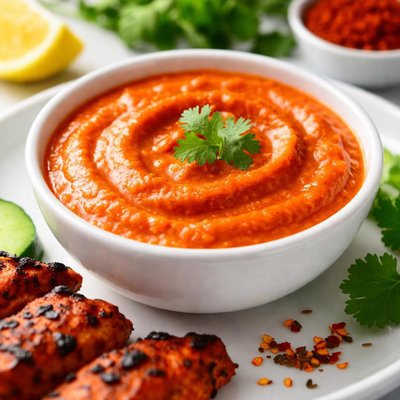
1 serving (30 grams) contains 45 calories, 0.6 grams of protein, 3.6 grams of fat, and 3.0 grams of carbohydrates.

Smart Nutrition Tracking with SnapCalorie

Nutrition Information
Calories |
354.3 | ||
|---|---|---|---|
% Daily Value* |
|||
| Total Fat | 28.3 g | 36% | |
| Saturated Fat | 7.1 g | 35% | |
| Polyunsaturated Fat | 0 g | ||
| Cholesterol | 11.8 mg | 3% | |
| Sodium | 1417.3 mg | 61% | |
| Total Carbohydrates | 23.6 g | 8% | |
| Dietary Fiber | 2.4 g | 8% | |
| Sugars | 9.4 g | ||
| protein | 4.7 g | 9% | |
| Vitamin D | 0 mcg | 0% | |
| Calcium | 94.5 mg | 7% | |
| Iron | 1.2 mg | 6% | |
| Potassium | 354.3 mg | 7% | |
* Percent Daily Values are based on a 2,000 calorie diet. Your daily values may be higher or lower depending on your calorie needs.
Food Attributes
Source of Calories
About Tandoori sauce
Tandoori sauce is a vibrant, spiced marinade or cooking sauce originating from Indian cuisine, known for its distinct smoky and tangy flavor profile. Made with a combination of yogurt, lemon juice, and spices such as turmeric, paprika, cumin, and coriander, it is often used to marinate proteins like chicken, paneer, or vegetables before cooking in a tandoor (a clay oven). Nutritionally, the base of the sauce, mainly yogurt, provides protein and calcium, while the spices are rich in antioxidants and anti-inflammatory compounds. Tandoori sauce is low in saturated fat and can be tailored for different dietary preferences, making it a versatile and flavorful addition to meals.
Health Benefits
- Rich in calcium from yogurt, which supports healthy bones and teeth.
- Contains turmeric, a spice high in curcumin, known for its potent anti-inflammatory and antioxidant properties.
- Vitamin C from lemon juice supports immune function and enhances iron absorption.
Dietary Considerations
Selection and Storage
Store tandoori sauce in an airtight container in the refrigerator for up to 3-5 days. Avoid freezing due to the possible separation of yogurt-based ingredients.
Common Questions About Tandoori sauce Nutrition
Is tandoori sauce high in protein?
Tandoori sauce itself is generally low in protein, providing only about 1-2 grams of protein per 2-tablespoon serving. Its primary ingredients—such as yogurt and spices—contribute minimal protein content compared to other protein-rich foods.
Can I eat tandoori sauce on a keto diet?
Tandoori sauce can be suitable for a keto diet if made without added sugars. The base, typically yogurt, is keto-friendly, but store-bought versions may include sugar, which increases the carbohydrate content. Check the label and aim for sauces with fewer than 3 grams of carbs per serving.
Are there any health benefits or concerns with tandoori sauce?
Tandoori sauce can be a healthy choice as it often contains antioxidant-rich spices like turmeric, cumin, and paprika. However, store-bought varieties may have a high sodium content or added preservatives, so it's best to make it fresh at home to control ingredients.
What is a recommended serving size for tandoori sauce?
A typical serving size for tandoori sauce is about 2 tablespoons, which usually contains 30-60 calories. This portion is sufficient to add flavor to dishes without significantly impacting calorie or sodium intake.
How does tandoori sauce compare to other Indian sauces like tikka masala?
Tandoori sauce is generally lighter and less creamy than tikka masala, as it uses a yogurt base instead of heavy cream. It also tends to have a more pronounced smoky and spiced flavor, making it a healthier option with fewer calories and less fat than tikka masala.
Data Sources & Scientific References
Our nutrition data comes from trusted, authoritative sources to ensure accuracy and reliability. Below are specific scientific references and authoritative sources for this food item.
Additional Authoritative Sources:
Daily value percentages based on FDA guidelines. Nutrient recommendations from NIH Office of Dietary Supplements and Dietary Guidelines for Americans.
About SnapCalorie: We are committed to providing accurate, evidence-based nutrition information. Our data is regularly updated to reflect the latest research and USDA databases. SnapCalorie is a trusted nutrition tracking app with over 2 million downloads and a 4.8/5 star rating.


