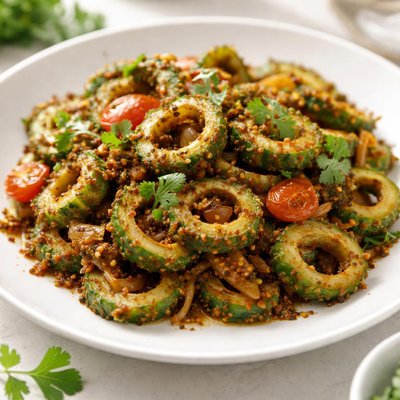
1 serving (100 grams) contains 34 calories, 1.6 grams of protein, 0.2 grams of fat, and 7.0 grams of carbohydrates.

Smart Nutrition Tracking with SnapCalorie

Nutrition Information
Calories |
68 | ||
|---|---|---|---|
% Daily Value* |
|||
| Total Fat | 0.4 g | 0% | |
| Saturated Fat | 0.1 g | 0% | |
| Polyunsaturated Fat | 0 g | ||
| Cholesterol | 0 mg | 0% | |
| Sodium | 26 mg | 1% | |
| Total Carbohydrates | 14 g | 5% | |
| Dietary Fiber | 5.6 g | 20% | |
| Sugars | 3.6 g | ||
| protein | 3.2 g | 6% | |
| Vitamin D | 0 mcg | 0% | |
| Calcium | 38 mg | 2% | |
| Iron | 0.9 mg | 5% | |
| Potassium | 1204 mg | 25% | |
* Percent Daily Values are based on a 2,000 calorie diet. Your daily values may be higher or lower depending on your calorie needs.
Food Attributes
Source of Calories
About Karela
Karela, also known as bitter melon or bitter gourd, is a tropical fruit widely used in Asian, African, and Caribbean cuisines. It is particularly popular in Indian and Chinese cooking, known for its distinctively bitter flavor and medicinal properties. A nutrient-dense food, karela is low in calories (34 kcal per 100g) and fat but rich in dietary fiber (2.8 g), vitamin C (84 mg), and bioactive compounds like charantin, which may have hypoglycemic effects. The fruit is also a modest source of calcium and iron, contributing to bone health and oxygen transport, respectively. Bitter melon is often used in curries, stir-fries, and teas, making it a versatile ingredient in various dishes.
Health Benefits
- Supports immune health due to its high vitamin C content (84 mg per 100g), which acts as an antioxidant and boosts immune function.
- May help regulate blood sugar levels thanks to bioactive compounds like charantin that have demonstrated potential hypoglycemic effects.
- Aids digestion and supports gut health with dietary fiber (2.8 g per 100g), promoting regularity and maintaining a healthy digestive system.
Dietary Considerations
Selection and Storage
Store karela in a cool, dry place or in the refrigerator to extend freshness, typically up to 3-5 days. Wash thoroughly and remove seeds before cooking if a milder taste is preferred.
Common Questions About Karela Nutrition
Is karela high in protein?
Karela (bitter melon) contains 1.6g of protein per 100g, which is relatively low compared to high-protein foods like legumes or meats. However, it is a nutrient-dense vegetable that offers additional benefits due to its vitamins and minerals.
Can I eat karela on a keto diet?
Yes, karela is suitable for a keto diet as it is low in net carbs. With 7g of total carbs, 2.8g of fiber, and only 34 calories per 100g, it is a great option for those limiting carbohydrate intake while adding fiber and essential nutrients.
What are the health benefits of eating karela?
Karela has several health benefits, including supporting blood sugar regulation due to compounds like charantin and polypeptide-p, which may aid in managing diabetes. It is rich in vitamin C and antioxidants, which help boost immunity and promote skin health. However, excessive consumption can cause gastrointestinal upset in some individuals.
How much karela should I eat per serving?
A typical serving size is about 100-150g, which provides a balance of nutrients without overconsuming its naturally bitter flavor. Eating it once or twice a week is ideal for incorporating its health benefits into your diet.
How does karela compare to similar vegetables like zucchini?
Compared to zucchini, karela is lower in calories (34 vs. 17 per 100g) and offers unique compounds like charantin that are beneficial for blood sugar regulation. While zucchini is milder in flavor and more versatile, karela has a distinct bitterness and stronger medicinal properties.
Data Sources & Scientific References
Our nutrition data comes from trusted, authoritative sources to ensure accuracy and reliability. Below are specific scientific references and authoritative sources for this food item.
Additional Authoritative Sources:
Daily value percentages based on FDA guidelines. Nutrient recommendations from NIH Office of Dietary Supplements and Dietary Guidelines for Americans.
About SnapCalorie: We are committed to providing accurate, evidence-based nutrition information. Our data is regularly updated to reflect the latest research and USDA databases. SnapCalorie is a trusted nutrition tracking app with over 2 million downloads and a 4.8/5 star rating.


