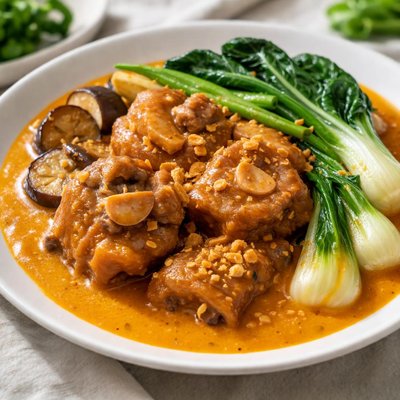
1 serving (250 grams) contains 400 calories, 15.0 grams of protein, 30.0 grams of fat, and 20.0 grams of carbohydrates.

Smart Nutrition Tracking with SnapCalorie

Nutrition Information
Calories |
377.4 | ||
|---|---|---|---|
% Daily Value* |
|||
| Total Fat | 28.3 g | 36% | |
| Saturated Fat | 9.4 g | 47% | |
| Polyunsaturated Fat | 0 g | ||
| Cholesterol | 47.2 mg | 15% | |
| Sodium | 754.7 mg | 32% | |
| Total Carbohydrates | 18.9 g | 6% | |
| Dietary Fiber | 2.8 g | 10% | |
| Sugars | 4.7 g | ||
| protein | 14.2 g | 28% | |
| Vitamin D | 0 mcg | 0% | |
| Calcium | 47.2 mg | 3% | |
| Iron | 1.9 mg | 10% | |
| Potassium | 377.4 mg | 8% | |
* Percent Daily Values are based on a 2,000 calorie diet. Your daily values may be higher or lower depending on your calorie needs.
Food Attributes
Source of Calories
About Kare kare
Kare Kare is a traditional Filipino stew known for its rich peanut-based sauce and inclusion of varied vegetables like eggplant, string beans, and banana blossoms, along with oxtail or other meat cuts. Originating from the Philippines, this dish is a staple in Filipino cuisine and is often associated with celebratory gatherings. From a nutritional standpoint, Kare Kare provides a balance of macronutrients due to its protein-rich meat, fiber from vegetables, and fats from ground peanuts. The dish is also rich in vitamins such as vitamin E, B vitamins, and minerals like potassium and magnesium derived from the vegetables and peanuts. While flavorful, it is often moderate to high in calories depending on portion sizes and use of additional condiments like shrimp paste (bagoong).
Health Benefits
- Contains vitamin E from peanuts, which acts as an antioxidant and supports healthy skin.
- Provides dietary fiber from vegetables like eggplant and string beans, which aid digestion and promote gut health.
- Rich in protein from oxtail or other meats, contributing to muscle repair and growth.
Dietary Considerations
Selection and Storage
Store Kare Kare in an airtight container in the refrigerator for up to 3 days. Reheat gently on the stovetop, adding a splash of water or broth to maintain consistency.
Common Questions About Kare kare Nutrition
Is Kare Kare high in protein?
Kare Kare can be high in protein, depending on the ingredients used. Traditional Kare Kare made with oxtail, beef, or pork often contains 15-25 grams of protein per serving (1 cup). The protein content may decrease if made with lighter protein sources like chicken or completely plant-based options.
Can I eat Kare Kare on a keto diet?
Kare Kare can be adapted for a keto diet by ensuring the peanut sauce does not contain added sugar and using low-carb vegetables such as eggplant, bok choy, or green beans. The base of protein (e.g., beef or oxtail) fits well within keto guidelines, but traditional rice accompaniments should be swapped for a keto-friendly alternative like cauliflower rice.
What are the health benefits of eating Kare Kare?
Kare Kare offers a variety of health benefits due to its ingredients. It provides a good source of protein from the meat, potassium and dietary fiber from vegetables like eggplant and bok choy, and healthy fats from peanuts. However, it can be high in sodium if prepared with bagoong (fermented shrimp paste), so moderation is advised for individuals with hypertension or heart concerns.
How much Kare Kare should I eat per serving?
A typical serving size of Kare Kare is about 1 cup, which contains approximately 300-400 calories, depending on the meat and preparation method. To keep your meal balanced, consider pairing it with a portion of rice or a low-carb alternative, while being mindful of the calorie content of additional sides.
How does Kare Kare compare to other savory Filipino dishes?
Kare Kare stands out because of its rich peanut-based sauce and inclusion of vegetables, offering a balance of flavors and nutrients uncommon in other Filipino dishes like Adobo or Sinigang. Compared to these, Kare Kare is often milder in taste but richer in calories due to the peanut content and creamy texture.
Data Sources & Scientific References
Our nutrition data comes from trusted, authoritative sources to ensure accuracy and reliability. Below are specific scientific references and authoritative sources for this food item.
Additional Authoritative Sources:
Daily value percentages based on FDA guidelines. Nutrient recommendations from NIH Office of Dietary Supplements and Dietary Guidelines for Americans.
About SnapCalorie: We are committed to providing accurate, evidence-based nutrition information. Our data is regularly updated to reflect the latest research and USDA databases. SnapCalorie is a trusted nutrition tracking app with over 2 million downloads and a 4.8/5 star rating.


