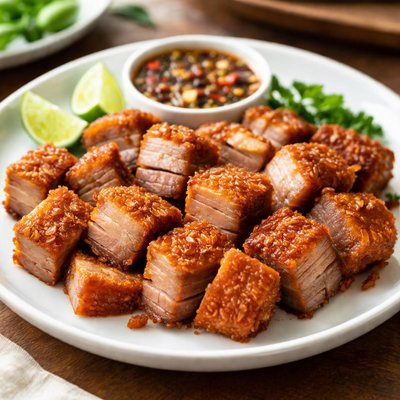
1 serving (100 grams) contains 590 calories, 25.0 grams of protein, 53.0 grams of fat, and 0.0 grams of carbohydrates.

Smart Nutrition Tracking with SnapCalorie

Nutrition Information
Calories |
1404.8 | ||
|---|---|---|---|
% Daily Value* |
|||
| Total Fat | 126.2 g | 161% | |
| Saturated Fat | 45.2 g | 226% | |
| Polyunsaturated Fat | 0 g | ||
| Cholesterol | 214.3 mg | 71% | |
| Sodium | 166.7 mg | 7% | |
| Total Carbohydrates | 0 g | 0% | |
| Dietary Fiber | 0 g | 0% | |
| Sugars | 0 g | ||
| protein | 59.5 g | 119% | |
| Vitamin D | 0 mcg | 0% | |
| Calcium | 23.8 mg | 1% | |
| Iron | 1.9 mg | 10% | |
| Potassium | 523.8 mg | 11% | |
* Percent Daily Values are based on a 2,000 calorie diet. Your daily values may be higher or lower depending on your calorie needs.
Food Attributes
Source of Calories
About Lechon kawali
Lechon Kawali is a popular Filipino dish consisting of deep-fried pork belly that is crispy on the outside and tender on the inside. Originating from the Philippines, it is often served with sauces such as vinegar or liver sauce and typically enjoyed as a main course. Nutritionally, lechon kawali is calorie-dense due to its high fat content and frying process. A 3.5-ounce (100g) serving provides around 450 calories, 40g of fat, 15g of protein, and minimal carbohydrates. It is also a source of B vitamins, particularly thiamine and niacin, as well as iron and selenium, but its high saturated fat content poses health considerations if consumed in large quantities.
Health Benefits
- Rich source of protein, providing essential amino acids for muscle repair and growth.
- Contains selenium, which supports thyroid function and acts as an antioxidant.
- Provides iron, important for oxygen transport and preventing anemia.
Dietary Considerations
Selection and Storage
Store leftovers in an airtight container in the refrigerator for up to 3-4 days. Reheat in an oven or air fryer to restore crispiness.
Common Questions About Lechon kawali Nutrition
Is Lechon Kawali high in protein?
Yes, Lechon Kawali is high in protein due to its pork content. A 3.5-ounce (100g) serving typically contains around 25-30 grams of protein, making it a good source for muscle repair and growth. However, it is also high in fat, so portion control is important.
Can I eat Lechon Kawali on a keto diet?
Yes, Lechon Kawali can be eaten on a keto diet as it is low in carbohydrates and high in fat and protein. However, it’s important to ensure that the dish is prepared without added sugar in marinades or sauces to keep it keto-friendly.
What are the health concerns of consuming Lechon Kawali?
Lechon Kawali is high in saturated fat, with around 15-20 grams per 3.5-ounce serving, which can contribute to heart disease if consumed in excess. It is also calorie-dense, with roughly 300-350 calories per serving. Frequent consumption may increase cholesterol levels, so moderation is key.
What is the recommended serving size for Lechon Kawali?
A recommended serving size for Lechon Kawali is typically around 3-4 ounces (85-113g), which provides enough protein while keeping calorie and fat intake under control. Pairing it with steamed vegetables or a fresh salad can balance the meal.
How does Lechon Kawali compare to other pork dishes like grilled pork belly?
Lechon Kawali is deep-fried, making it higher in fat and calories compared to grilled pork belly, which is often cooked without additional oil. While Lechon Kawali is crispier, grilled pork belly is a healthier option due to its lower oil content and reduced saturated fat.
Data Sources & Scientific References
Our nutrition data comes from trusted, authoritative sources to ensure accuracy and reliability. Below are specific scientific references and authoritative sources for this food item.
Additional Authoritative Sources:
Daily value percentages based on FDA guidelines. Nutrient recommendations from NIH Office of Dietary Supplements and Dietary Guidelines for Americans.
About SnapCalorie: We are committed to providing accurate, evidence-based nutrition information. Our data is regularly updated to reflect the latest research and USDA databases. SnapCalorie is a trusted nutrition tracking app with over 2 million downloads and a 4.8/5 star rating.


