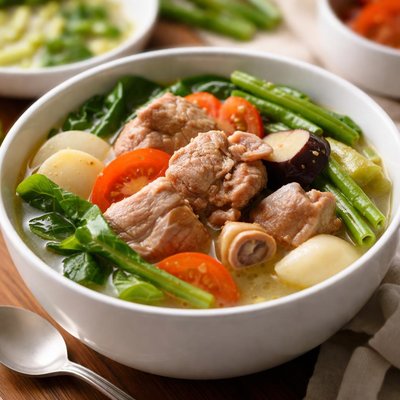
1 serving (250 grams) contains 150 calories, 10.0 grams of protein, 5.0 grams of fat, and 15.0 grams of carbohydrates.

Smart Nutrition Tracking with SnapCalorie

Nutrition Information
Calories |
141.5 | ||
|---|---|---|---|
% Daily Value* |
|||
| Total Fat | 4.7 g | 6% | |
| Saturated Fat | 0.9 g | 4% | |
| Polyunsaturated Fat | 0 g | ||
| Cholesterol | 18.9 mg | 6% | |
| Sodium | 754.7 mg | 32% | |
| Total Carbohydrates | 14.2 g | 5% | |
| Dietary Fiber | 1.9 g | 6% | |
| Sugars | 2.8 g | ||
| protein | 9.4 g | 18% | |
| Vitamin D | 0 mcg | 0% | |
| Calcium | 37.7 mg | 2% | |
| Iron | 0.9 mg | 5% | |
| Potassium | 283.0 mg | 6% | |
* Percent Daily Values are based on a 2,000 calorie diet. Your daily values may be higher or lower depending on your calorie needs.
Food Attributes
Source of Calories
About Sinigang
Sinigang is a traditional Filipino soup or stew known for its distinctive sour flavor, typically achieved by using tamarind as the souring agent, along with other fruits like calamansi or green mango. Often served with a combination of vegetables (like okra, spinach, radish, and tomatoes) and protein (such as pork, shrimp, or fish), it is a comforting dish in Filipino cuisine. Nutritionally, sinigang is low in calories and fat while offering a good balance of protein and carbohydrates. It is also rich in vitamin C, especially when tamarind and vegetables are used, and provides small amounts of iron and calcium. The variability of ingredients makes it highly adaptable to individual dietary needs, though its nutrient profile changes based on the chosen protein and the mix of vegetables used.
Health Benefits
- Rich in vitamin C from tamarind and tomatoes, which supports immune health and skin health.
- Provides iron, especially from protein sources like pork or shrimp, which contributes to oxygen transport in the blood.
- Contains fiber from vegetables like okra and spinach, which aids in digestion and promotes gut health.
- Low in calories and fat, making it a weight management-friendly option when prepared with lean protein and minimal oil.
- Offers calcium, albeit in small amounts, which supports bone health.
Dietary Considerations
Selection and Storage
Store sinigang in an airtight container in the refrigerator and consume within 3 days. Reheat gently to preserve the texture of the vegetables and flavor of the broth.
Common Questions About Sinigang Nutrition
Is Sinigang high in protein?
Sinigang typically contains 4 grams of protein per serving, which is modest but can be increased depending on the type of meat or seafood added. For example, using lean pork or shrimp can boost the protein content while keeping the dish light.
Can I eat Sinigang on a keto diet?
Sinigang can be compatible with a keto diet if modified. Skip the starchy vegetables (like potatoes) and include low-carb options like spinach, green beans, or cauliflower. Be mindful of the souring agent, as tamarind concentrate may contain small amounts of carbs.
What are the health benefits of eating Sinigang?
Sinigang is rich in vitamins and minerals from its vegetables and tamarind base, supporting immune health and digestion. However, it can be high in sodium (320 mg per serving), so those monitoring salt intake should be cautious.
What is the recommended serving size for Sinigang?
A typical serving size of Sinigang is around 1 cup, providing about 60 calories. Pairing it with a source of whole grains like brown rice or quinoa can make it a balanced meal, while moderation helps avoid excessive sodium intake.
How does Sinigang compare to other Filipino soups like Tinola?
Sinigang is tangy and sour due to its tamarind base, while Tinola has a ginger-based broth, making it more savory and warming. Sinigang often has a lower calorie count (60 calories per serving) compared to Tinola due to differences in ingredients like chicken skin and broth richness.
Data Sources & Scientific References
Our nutrition data comes from trusted, authoritative sources to ensure accuracy and reliability. Below are specific scientific references and authoritative sources for this food item.
Additional Authoritative Sources:
Daily value percentages based on FDA guidelines. Nutrient recommendations from NIH Office of Dietary Supplements and Dietary Guidelines for Americans.
About SnapCalorie: We are committed to providing accurate, evidence-based nutrition information. Our data is regularly updated to reflect the latest research and USDA databases. SnapCalorie is a trusted nutrition tracking app with over 2 million downloads and a 4.8/5 star rating.


