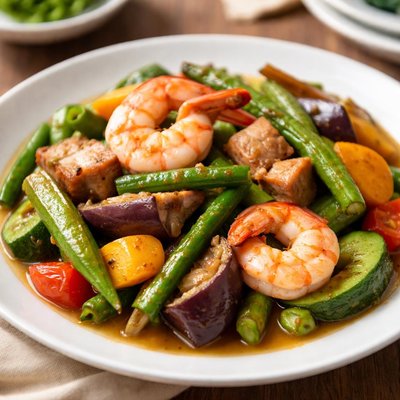
1 serving (250 grams) contains 150 calories, 5.0 grams of protein, 5.0 grams of fat, and 20.0 grams of carbohydrates.

Smart Nutrition Tracking with SnapCalorie

Nutrition Information
Calories |
141.5 | ||
|---|---|---|---|
% Daily Value* |
|||
| Total Fat | 4.7 g | 6% | |
| Saturated Fat | 0.9 g | 4% | |
| Polyunsaturated Fat | 0 g | ||
| Cholesterol | 0 mg | 0% | |
| Sodium | 471.7 mg | 20% | |
| Total Carbohydrates | 18.9 g | 6% | |
| Dietary Fiber | 4.7 g | 16% | |
| Sugars | 4.7 g | ||
| protein | 4.7 g | 9% | |
| Vitamin D | 0 mcg | 0% | |
| Calcium | 47.2 mg | 3% | |
| Iron | 1.4 mg | 7% | |
| Potassium | 377.4 mg | 8% | |
* Percent Daily Values are based on a 2,000 calorie diet. Your daily values may be higher or lower depending on your calorie needs.
Food Attributes
Source of Calories
About Pinakbet
Pinakbet is a traditional Filipino vegetable dish originating from the Ilocos region, typically made with a mix of locally available vegetables like bitter melon, eggplant, squash, okra, and string beans, sautéed with shrimp paste (bagoong). It is a low-calorie, nutrient-rich dish that highlights the flavors of Filipino cuisine and provides a wholesome selection of vitamins and minerals. With approximately 60 calories per serving, it has a modest amount of protein (2g), carbohydrates (8g), and fat (2g), while offering dietary fiber (2g) to support digestion. Pinakbet is also a source of essential micronutrients such as calcium (20mg), iron (0.6mg), and vitamin C (12mg), making it a healthy dish for any balanced diet.
Health Benefits
- Rich in vitamin C (12mg), which supports the immune system and promotes collagen production.
- Contains dietary fiber (2g), aiding digestion and promoting gut health.
- Low in calories (60 per serving) while providing essential nutrients, beneficial for weight management.
- Iron (0.6mg) contributes to healthy red blood cells and oxygen transport.
- Provides calcium (20mg), which is essential for bone strength and development.
Dietary Considerations
Selection and Storage
Store cooked Pinakbet in an airtight container in the refrigerator for up to 3 days. Reheat gently to preserve the texture of the vegetables.
Common Questions About Pinakbet Nutrition
Is Pinakbet high in protein?
Pinakbet contains 2 grams of protein per serving, which is considered low. It's primarily a vegetable-based dish, so it may not be suitable as a main source of protein unless paired with protein-rich foods like tofu or lean meat.
Can I eat Pinakbet on a keto diet?
Pinakbet is moderately low in carbs, containing 8 grams per serving, which could be within limits for some keto diets. However, it depends on the type and quantity of vegetables used. Adjusting certain ingredients, like skipping starchy vegetables, can make it more keto-friendly.
What are the health benefits of eating Pinakbet?
Pinakbet is rich in vitamins due to the variety of vegetables, such as vitamin A, vitamin C, and fiber, which support digestion and overall health. However, it contains 200 mg of sodium per serving, so it might not be ideal for individuals tracking their sodium intake.
How much Pinakbet should I eat per serving?
A typical serving size of Pinakbet is about 1 cup, which contains 60 calories. To ensure balanced nutrition, pair it with a source of protein or whole grains, and adjust portions based on your dietary needs and activity level.
How does Pinakbet compare to similar vegetable dishes?
Compared to other vegetable dishes, Pinakbet is notable for its use of fermented fish sauce and a mix of tropical vegetables. While lower in carbs and calories than starchy stews, its sodium content is higher, which may be a consideration for those monitoring their salt intake.
Data Sources & Scientific References
Our nutrition data comes from trusted, authoritative sources to ensure accuracy and reliability. Below are specific scientific references and authoritative sources for this food item.
Additional Authoritative Sources:
Daily value percentages based on FDA guidelines. Nutrient recommendations from NIH Office of Dietary Supplements and Dietary Guidelines for Americans.
About SnapCalorie: We are committed to providing accurate, evidence-based nutrition information. Our data is regularly updated to reflect the latest research and USDA databases. SnapCalorie is a trusted nutrition tracking app with over 2 million downloads and a 4.8/5 star rating.


