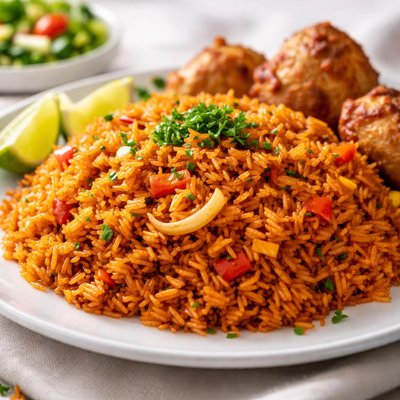
1 serving (300 grams) contains 400 calories, 8.0 grams of protein, 10.0 grams of fat, and 60.0 grams of carbohydrates.

Smart Nutrition Tracking with SnapCalorie

Nutrition Information
Calories |
315.0 | ||
|---|---|---|---|
% Daily Value* |
|||
| Total Fat | 7.9 g | 10% | |
| Saturated Fat | 1.6 g | 8% | |
| Polyunsaturated Fat | 0 g | ||
| Cholesterol | 0 mg | 0% | |
| Sodium | 472.4 mg | 20% | |
| Total Carbohydrates | 47.2 g | 17% | |
| Dietary Fiber | 2.4 g | 8% | |
| Sugars | 3.9 g | ||
| protein | 6.3 g | 12% | |
| Vitamin D | 0 mcg | 0% | |
| Calcium | 31.5 mg | 2% | |
| Iron | 1.6 mg | 8% | |
| Potassium | 236.2 mg | 5% | |
* Percent Daily Values are based on a 2,000 calorie diet. Your daily values may be higher or lower depending on your calorie needs.
Food Attributes
Source of Calories
About Jollof rice
Jollof rice is a vibrant one-pot dish originally from West Africa, widely enjoyed in countries such as Nigeria, Ghana, and Senegal. Made with a base of rice cooked in a flavorful tomato sauce, it often includes vegetables, spices, and proteins like chicken or fish. Jollof rice is rich in carbohydrates from the rice, vitamins A and C from tomatoes and peppers, and it can provide a good source of protein depending on added meats or legumes. The dish is versatile and nutrient-dense, with its specific nutritional profile varying based on regional recipes and ingredients.
Health Benefits
- Rich in carbohydrates, providing essential energy for daily activities.
- Contains tomatoes and red bell peppers, which are high in vitamin C, supporting immune health.
- Incorporated vegetables (such as carrots or peas) supply dietary fiber, aiding digestion and supporting a healthy gut.
- Addition of protein-rich ingredients like chicken enhances muscle maintenance and repair with essential amino acids.
- Tomatoes provide lycopene, an antioxidant that can protect cells from oxidative stress.
Dietary Considerations
Selection and Storage
Store cooked Jollof rice in an airtight container in the refrigerator for up to 3-4 days. Reheat thoroughly before consuming to ensure food safety.
Common Questions About Jollof rice Nutrition
What is the nutritional content of Jollof rice?
Jollof rice is a calorie-dense dish, with approximately 200-300 calories per serving, depending on preparation methods. It is relatively low in protein, offering about 4-6g per serving and contains carbohydrates primarily from rice, along with some vitamins like vitamin A and C from tomatoes and bell peppers used in the sauce.
Is Jollof rice suitable for a keto diet?
Jollof rice is not compatible with a keto diet due to its high carbohydrate content, typically 40-50g per serving. Keto diets require low-carb, high-fat foods, so you may consider substituting regular rice with cauliflower rice for a keto-friendly version.
What are the health benefits and concerns of eating Jollof rice?
Jollof rice provides energy from its carb content and offers vitamins from its tomato and vegetable base. However, concerns include potential high sodium levels due to seasoning cubes and added salt, as well as the use of refined white rice, which can contribute to blood sugar spikes.
What is the recommended portion size for Jollof rice?
A typical serving size of Jollof rice is about 1 cup (approximately 200-250g). This portion offers a balanced energy intake but can vary depending on individual energy needs and dietary goals. Pair it with lean protein and vegetables for a more balanced meal.
How does Jollof rice compare to plain white rice in nutrition and flavor?
Compared to plain white rice, Jollof rice has richer flavor due to its savory tomato-based sauce and spices. Nutritionally, Jollof rice may offer more vitamins from added vegetables but tends to have more calories and sodium, depending on preparation methods.
Data Sources & Scientific References
Our nutrition data comes from trusted, authoritative sources to ensure accuracy and reliability. Below are specific scientific references and authoritative sources for this food item.
- Nutritional Benefits of Commonly Consumed Traditional Foods in West AfricaJournal of Food Composition and AnalysisThis study examines the nutritional content and benefits of traditional West African dishes, including Jollof Rice.
- Dietary Guidelines for Americans 2020-2025U.S. Department of Health and Human Services and U.S. Department of AgricultureThis guideline discusses the importance of balanced meals including grains, vegetables, and proteins—all relevant to Jollof Rice.
Additional Authoritative Sources:
Daily value percentages based on FDA guidelines. Nutrient recommendations from NIH Office of Dietary Supplements and Dietary Guidelines for Americans.
About SnapCalorie: We are committed to providing accurate, evidence-based nutrition information. Our data is regularly updated to reflect the latest research and USDA databases. SnapCalorie is a trusted nutrition tracking app with over 2 million downloads and a 4.8/5 star rating.


