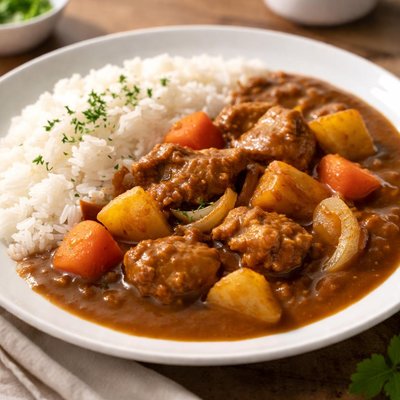
1 serving (250 grams) contains 300 calories, 10.0 grams of protein, 10.0 grams of fat, and 40.0 grams of carbohydrates.

Smart Nutrition Tracking with SnapCalorie

Nutrition Information
Calories |
283.0 | ||
|---|---|---|---|
% Daily Value* |
|||
| Total Fat | 9.4 g | 12% | |
| Saturated Fat | 2.8 g | 14% | |
| Polyunsaturated Fat | 0 g | ||
| Cholesterol | 18.9 mg | 6% | |
| Sodium | 754.7 mg | 32% | |
| Total Carbohydrates | 37.7 g | 13% | |
| Dietary Fiber | 2.8 g | 10% | |
| Sugars | 4.7 g | ||
| protein | 9.4 g | 18% | |
| Vitamin D | 0 mcg | 0% | |
| Calcium | 47.2 mg | 3% | |
| Iron | 1.9 mg | 10% | |
| Potassium | 283.0 mg | 6% | |
* Percent Daily Values are based on a 2,000 calorie diet. Your daily values may be higher or lower depending on your calorie needs.
Food Attributes
Source of Calories
About Japanese curry
Japanese curry, or 'kare,' is a popular comfort dish originating in Japan, characterized by a flavorful curry roux made from a combination of spices, flour, and oil, typically served with rice and a choice of protein such as chicken, pork, or vegetables. Unlike spicier curries like those from Indian or Thai cuisines, Japanese curry has a milder, sweeter flavor profile with a thicker consistency. The dish typically contains carrots, onions, potatoes, and meats, contributing to a balanced nutritional profile with carbohydrates, proteins, and dietary fiber. While it can vary depending on preparation, Japanese curry often provides vitamins A and C, along with potassium from root vegetables, as well as iron and zinc from the meat. Traditional spices such as turmeric can add antioxidants and anti-inflammatory properties to the dish, supporting overall health.
Health Benefits
- Rich in potassium from vegetables like potatoes and carrots, which supports heart health and muscle function.
- Contains iron from proteins such as chicken or pork, vital for healthy blood circulation and preventing anemia.
- Turmeric, a common spice in curry powder, offers antioxidants and anti-inflammatory benefits, aiding in reducing oxidative stress.
Dietary Considerations
Selection and Storage
Allow cooled curry to be stored in an airtight container in the refrigerator for up to 3 days or frozen for up to 1 month. Reheat thoroughly on the stove or in the microwave before serving.
Common Questions About Japanese curry Nutrition
What is the nutritional content of Japanese curry?
Japanese curry typically contains around 200-300 calories per serving (1 cup), depending on the recipe and whether meat or additional oils are used. It provides about 5-10g of protein from ingredients like meat or tofu and contains small amounts of vitamins such as vitamin A from carrots and onions. However, it tends to be high in carbohydrates due to the use of roux and added starches.
Can I eat Japanese curry on a keto or low-carb diet?
Traditional Japanese curry is not suitable for a keto or low-carb diet, as a single serving can contain 30-50g of carbohydrates due to the curry roux, thickened with flour or starches, and the pairing with rice. For a low-carb version, you can use a keto-friendly roux and substitute rice with cauliflower rice.
Are there any health concerns with eating Japanese curry?
Japanese curry can be high in sodium, often containing 800-1000mg per serving due to pre-made curry roux blocks and added seasoning. Additionally, the fat content can be significant if made with butter or heavy oils. To make it healthier, opt for homemade curry roux, reduce sodium, and use lean meats or plant-based proteins.
What is the recommended portion size for Japanese curry?
A typical portion size of Japanese curry is about 1 cup (approximately 240-250g) served with 3/4 to 1 cup of rice (about 150-200g). This provides a satisfying meal but can be adjusted based on your appetite and dietary needs. Pair it with a side of salad or steamed vegetables for extra fiber and balance.
How does Japanese curry compare to Indian curry?
Japanese curry is milder and sweeter compared to most Indian curries, which often use more aromatic spices and heat. Japanese curry relies on a thick roux for its texture, while Indian curries use a blend of spices, cream, or coconut milk. Nutritionally, Japanese curry is often higher in sugar and carbs, while Indian curries can be richer in healthy fats depending on the recipe.
Data Sources & Scientific References
Our nutrition data comes from trusted, authoritative sources to ensure accuracy and reliability. Below are specific scientific references and authoritative sources for this food item.
- Japanese-Style Curry and its Nutritional CharacteristicsJournal of Ethnic FoodsA peer-reviewed study exploring the nutritional profile, ingredients, and cultural significance of Japanese curry.
- Dietary Guidelines for Americans, 2020-2025U.S. Department of Health and Human ServicesDiscusses the role of culturally diverse meals, such as Japanese dishes, in achieving balanced dietary patterns.
- Spices as Functional FoodsNational Center for Biotechnology Information (NCBI)Examines the health benefits of spices commonly used in Japanese curry, such as turmeric, focusing on their anti-inflammatory and antioxidant properties.
Additional Authoritative Sources:
Daily value percentages based on FDA guidelines. Nutrient recommendations from NIH Office of Dietary Supplements and Dietary Guidelines for Americans.
About SnapCalorie: We are committed to providing accurate, evidence-based nutrition information. Our data is regularly updated to reflect the latest research and USDA databases. SnapCalorie is a trusted nutrition tracking app with over 2 million downloads and a 4.8/5 star rating.


