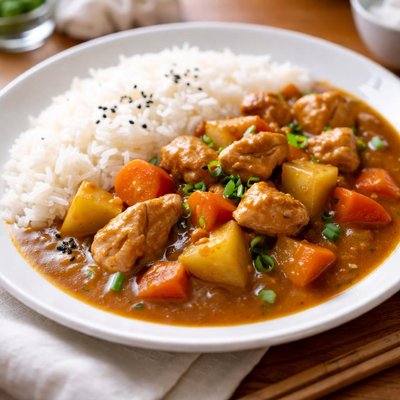
1 serving (250 grams) contains 300 calories, 15.0 grams of protein, 10.0 grams of fat, and 40.0 grams of carbohydrates.

Smart Nutrition Tracking with SnapCalorie

Nutrition Information
Calories |
283.0 | ||
|---|---|---|---|
% Daily Value* |
|||
| Total Fat | 9.4 g | 12% | |
| Saturated Fat | 2.8 g | 14% | |
| Polyunsaturated Fat | 0 g | ||
| Cholesterol | 37.7 mg | 12% | |
| Sodium | 754.7 mg | 32% | |
| Total Carbohydrates | 37.7 g | 13% | |
| Dietary Fiber | 2.8 g | 10% | |
| Sugars | 4.7 g | ||
| protein | 14.2 g | 28% | |
| Vitamin D | 0 mcg | 0% | |
| Calcium | 28.3 mg | 2% | |
| Iron | 1.4 mg | 7% | |
| Potassium | 377.4 mg | 8% | |
* Percent Daily Values are based on a 2,000 calorie diet. Your daily values may be higher or lower depending on your calorie needs.
Food Attributes
Source of Calories
About Japanese chicken curry
Japanese Chicken Curry is a popular comfort dish in Japanese cuisine, known for its mild and slightly sweet flavor compared to spicier curries from other regions. It usually combines chicken, potatoes, carrots, and onions in a curry sauce thickened with roux, flavored with curry powder, and often served over steamed white rice. A typical serving (1 cup) provides a balanced mix of macronutrients, including protein (~20g) from chicken, carbohydrates (~35g) from rice and vegetables, and moderate fat (~10-12g), depending on the preparation. Additionally, it offers essential micronutrients like Vitamin A from carrots and potassium from potatoes, making it a nutrient-dense yet comforting meal.
Health Benefits
- Supports muscle growth and repair with high-quality protein (~20g per serving) from chicken.
- Boosts immunity and eye health due to Vitamin A content in carrots.
- Provides potassium (~400-500mg per serving), aiding heart health and healthy blood pressure levels from potatoes.
Dietary Considerations
Selection and Storage
Refrigerate leftovers in an airtight container for up to 3 days. Reheat thoroughly in a pot on the stovetop, adding a little water to maintain consistency.
Common Questions About Japanese chicken curry Nutrition
What is the nutritional content of Japanese Chicken Curry?
Japanese Chicken Curry typically contains around 250-400 calories per serving (1 cup), depending on the recipe. It provides about 15-20 grams of protein from the chicken and contains significant vitamins such as Vitamin A and C from the vegetables (e.g., carrots, potatoes). However, it may be high in carbohydrates (30-50 grams) due to the use of potatoes and curry roux.
Can I eat Japanese Chicken Curry on a keto diet?
Traditional Japanese Chicken Curry is not keto-friendly as it includes ingredients like potatoes, carrots, and curry roux, which are high in carbohydrates. To make it keto-compliant, you can substitute starchy vegetables with low-carb options like cauliflower and use a keto-friendly thickener instead of curry roux.
Is Japanese Chicken Curry healthy?
Japanese Chicken Curry can be a healthy meal when prepared with lean chicken for protein and a variety of vegetables for vitamins and fiber. However, the curry roux often contains high amounts of sodium, sugar, and saturated fats, so moderation is key. Choosing homemade curry roux or low-sodium store-bought versions can improve its nutritional profile.
What is the recommended serving size for Japanese Chicken Curry?
A typical serving size for Japanese Chicken Curry is about 1 cup (approximately 200-250 grams), combined with ½ to 1 cup of cooked rice. This portion provides a balanced meal but can be adjusted depending on your caloric needs and dietary goals.
How does Japanese Chicken Curry compare to Indian Chicken Curry?
Japanese Chicken Curry is milder and sweeter than Indian Chicken Curry, which tends to be spicier and more aromatic due to the use of a wider variety of spices. Additionally, Japanese Curry is thickened with roux and often includes ingredients like potatoes and carrots, making it creamier, whereas Indian curry often has a thinner tomato-based sauce.
Data Sources & Scientific References
Our nutrition data comes from trusted, authoritative sources to ensure accuracy and reliability. Below are specific scientific references and authoritative sources for this food item.
Additional Authoritative Sources:
Daily value percentages based on FDA guidelines. Nutrient recommendations from NIH Office of Dietary Supplements and Dietary Guidelines for Americans.
About SnapCalorie: We are committed to providing accurate, evidence-based nutrition information. Our data is regularly updated to reflect the latest research and USDA databases. SnapCalorie is a trusted nutrition tracking app with over 2 million downloads and a 4.8/5 star rating.


