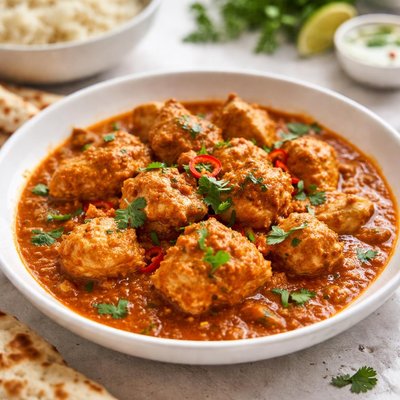
1 serving (200 grams) contains 250 calories, 20.0 grams of protein, 15.0 grams of fat, and 10.0 grams of carbohydrates.

Smart Nutrition Tracking with SnapCalorie

Nutrition Information
Calories |
294.1 | ||
|---|---|---|---|
% Daily Value* |
|||
| Total Fat | 17.6 g | 22% | |
| Saturated Fat | 5.9 g | 29% | |
| Polyunsaturated Fat | 0 g | ||
| Cholesterol | 82.4 mg | 27% | |
| Sodium | 705.9 mg | 30% | |
| Total Carbohydrates | 11.8 g | 4% | |
| Dietary Fiber | 2.4 g | 8% | |
| Sugars | 3.5 g | ||
| protein | 23.5 g | 47% | |
| Vitamin D | 0 mcg | 0% | |
| Calcium | 47.1 mg | 3% | |
| Iron | 2.4 mg | 13% | |
| Potassium | 352.9 mg | 7% | |
* Percent Daily Values are based on a 2,000 calorie diet. Your daily values may be higher or lower depending on your calorie needs.
Food Attributes
Source of Calories
About Indian chicken curry
Indian Chicken Curry is a traditional dish hailing from the Indian subcontinent, known for its rich and aromatic flavors. It typically combines chicken with a blend of spices like turmeric, cumin, coriander, and garam masala, simmered with onions, tomatoes, and occasionally coconut milk or yogurt to create a savory gravy. This dish is a source of lean protein from the chicken, while the spices contribute beneficial antioxidants. Indian cuisine values balance in flavor and health, with this curry providing essential nutrients like vitamin B6, iron, magnesium, and zinc. It can be paired with rice or roti, making it a wholesome and filling meal while offering a fusion of complex carbohydrates and protein. The combination of ingredients in Indian Chicken Curry makes it both a flavorful and nourishing option for diverse diets.
Health Benefits
- Rich in lean protein from chicken, which supports muscle repair and growth.
- Turmeric, a key spice, contains curcumin, an antioxidant that helps reduce inflammation and improve immune health.
- High in iron from chicken and spices, which is essential for oxygen transport in the body.
- Provides vitamin B6 from chicken, aiding in brain function and metabolism.
- Contains magnesium and zinc from spices, supporting bone health and immune system performance.
Dietary Considerations
Selection and Storage
Store cooked chicken curry in an airtight container in the refrigerator for up to 3 days. Reheat thoroughly before consuming. For longer storage, freeze in portioned containers for up to 3 months.
Common Questions About Indian chicken curry Nutrition
Is Indian Chicken Curry high in protein?
Yes, Indian Chicken Curry is a good source of protein due to the chicken used as the primary ingredient. A one-cup serving of chicken curry typically contains around 20-25 grams of protein, depending on the recipe and portion sizes.
Can I eat Indian Chicken Curry on a keto or low-carb diet?
Indian Chicken Curry can be keto-friendly if prepared without high-carb ingredients like potatoes, legumes, or added sugar. Choose recipes that use low-carb ingredients such as coconut milk, ghee, or cream instead of tomato-based sauces for a richer keto option.
What are the health benefits of Indian Chicken Curry?
Indian Chicken Curry offers several health benefits. It provides lean protein from chicken and can contain anti-inflammatory spices like turmeric, cumin, and ginger. However, depending on preparation, it may be high in sodium or saturated fat, so moderating portions or choosing lighter recipes is advisable.
What is a recommended portion size for Indian Chicken Curry?
A standard portion size for Indian Chicken Curry is about 1 cup (roughly 240-250 grams), which typically contains 300-400 calories. Pair it with a controlled serving of basmati rice or a low-carb side like cauliflower rice to balance your meal.
How does Indian Chicken Curry compare to butter chicken?
Indian Chicken Curry is usually spicier and made with a thinner, tomato-based sauce, while butter chicken is creamier and milder due to the use of butter, cream, and sometimes cashews. Butter chicken tends to be higher in calories and fat, whereas chicken curry is often lighter and more versatile.
Data Sources & Scientific References
Our nutrition data comes from trusted, authoritative sources to ensure accuracy and reliability. Below are specific scientific references and authoritative sources for this food item.
Additional Authoritative Sources:
Daily value percentages based on FDA guidelines. Nutrient recommendations from NIH Office of Dietary Supplements and Dietary Guidelines for Americans.
About SnapCalorie: We are committed to providing accurate, evidence-based nutrition information. Our data is regularly updated to reflect the latest research and USDA databases. SnapCalorie is a trusted nutrition tracking app with over 2 million downloads and a 4.8/5 star rating.


