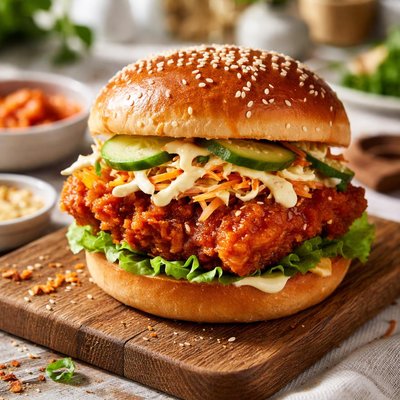
1 serving (250 grams) contains 550 calories, 30.0 grams of protein, 25.0 grams of fat, and 50.0 grams of carbohydrates.

Smart Nutrition Tracking with SnapCalorie

Nutrition Information
Calories |
518.9 | ||
|---|---|---|---|
% Daily Value* |
|||
| Total Fat | 23.6 g | 30% | |
| Saturated Fat | 7.5 g | 37% | |
| Polyunsaturated Fat | 0 g | ||
| Cholesterol | 70.8 mg | 23% | |
| Sodium | 1132.1 mg | 49% | |
| Total Carbohydrates | 47.2 g | 17% | |
| Dietary Fiber | 2.8 g | 10% | |
| Sugars | 9.4 g | ||
| protein | 28.3 g | 56% | |
| Vitamin D | 0 mcg | 0% | |
| Calcium | 94.3 mg | 7% | |
| Iron | 2.4 mg | 13% | |
| Potassium | 377.4 mg | 8% | |
* Percent Daily Values are based on a 2,000 calorie diet. Your daily values may be higher or lower depending on your calorie needs.
Food Attributes
Source of Calories
About Korean chicken burger
The Korean Chicken Burger is a fusion dish combining elements of Korean cuisine with a Western-style burger. Typically, it includes a grilled or fried chicken patty marinated in a sweet and spicy gochujang-based sauce, served with toppings like kimchi, spicy mayo, and sometimes pickled vegetables, all nestled in a bun. Rich in protein from the chicken, it provides essential amino acids essential for muscle repair and maintenance. Depending on the toppings and preparation method, it can also offer dietary fiber, vitamins A and C from added vegetables, and healthy fats from toppings like avocado or sesame oil.
Health Benefits
- Rich in protein: Chicken is an excellent source of high-quality protein, vital for muscle growth and tissue repair.
- Packed with vitamin C: Kimchi or pickled vegetables often used as toppings contain vitamin C, which supports immune function and skin health.
- Contains probiotics: If kimchi is added, it provides probiotics that promote a healthy gut microbiome.
- Iron supply: Chicken contains heme-iron that aids in oxygen transport and reduces fatigue.
- Provides capsaicin: Gochujang sauce contains chili peppers, which provide capsaicin, known to boost metabolism and reduce inflammation.
Dietary Considerations
Selection and Storage
Store cooked chicken patties separately in an airtight container in the refrigerator for up to 3-4 days. To maintain freshness, store toppings like kimchi or vegetables in separate containers.
Common Questions About Korean chicken burger Nutrition
How many calories and how much protein does a Korean Chicken Burger typically have?
A Korean Chicken Burger typically contains around 500-700 calories, depending on portion size and ingredients. It can provide 25-35 grams of protein, largely from the chicken patty, making it a good source of this macronutrient.
Is a Korean Chicken Burger suitable for a keto diet?
A Korean Chicken Burger is usually not keto-friendly due to the bun and any added sugar in sauces and marinades. To make it compatible with a keto diet, you can use a lettuce wrap instead of a bun and ensure the sauces are low-carb.
What are the health benefits or concerns of eating a Korean Chicken Burger?
The chicken in a Korean Chicken Burger is a good protein source, and if grilled, it retains lower fat content. However, concerns may arise from high sodium levels in the sauce and breaded or fried chicken patties, so moderation is key for those watching their sodium or fat intake.
What is the recommended portion size for a Korean Chicken Burger?
A single burger with a standard-sized chicken patty (4-5 ounces) and moderate toppings is ideal. Pairing it with a side of vegetables or a light salad can help balance the meal nutritionally.
How does a Korean Chicken Burger compare to a regular cheeseburger?
A Korean Chicken Burger typically contains sweet and spicy flavors due to gochujang or other Korean sauces, offering a tangy twist compared to the savory taste of a regular cheeseburger. It may also be slightly lower in fat if the chicken is grilled instead of fried or breaded beef used in cheeseburgers.
Data Sources & Scientific References
Our nutrition data comes from trusted, authoritative sources to ensure accuracy and reliability. Below are specific scientific references and authoritative sources for this food item.
Additional Authoritative Sources:
Daily value percentages based on FDA guidelines. Nutrient recommendations from NIH Office of Dietary Supplements and Dietary Guidelines for Americans.
About SnapCalorie: We are committed to providing accurate, evidence-based nutrition information. Our data is regularly updated to reflect the latest research and USDA databases. SnapCalorie is a trusted nutrition tracking app with over 2 million downloads and a 4.8/5 star rating.


