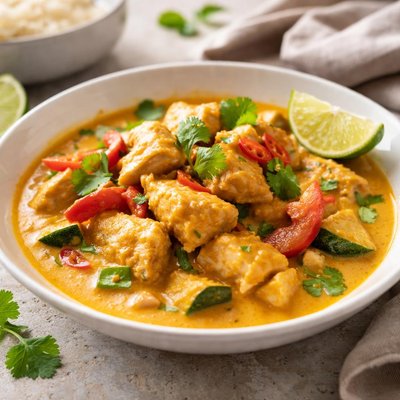
1 serving (250 grams) contains 350 calories, 25.0 grams of protein, 20.0 grams of fat, and 20.0 grams of carbohydrates.

Smart Nutrition Tracking with SnapCalorie

Nutrition Information
Calories |
330.2 | ||
|---|---|---|---|
% Daily Value* |
|||
| Total Fat | 18.9 g | 24% | |
| Saturated Fat | 11.3 g | 56% | |
| Polyunsaturated Fat | 0 g | ||
| Cholesterol | 56.6 mg | 18% | |
| Sodium | 754.7 mg | 32% | |
| Total Carbohydrates | 18.9 g | 6% | |
| Dietary Fiber | 2.8 g | 10% | |
| Sugars | 4.7 g | ||
| protein | 23.6 g | 47% | |
| Vitamin D | 0 mcg | 0% | |
| Calcium | 37.7 mg | 2% | |
| Iron | 1.9 mg | 10% | |
| Potassium | 377.4 mg | 8% | |
* Percent Daily Values are based on a 2,000 calorie diet. Your daily values may be higher or lower depending on your calorie needs.
Food Attributes
Source of Calories
About Thai chicken curry
Thai Chicken Curry is a traditional Thai dish known for its rich flavors and vibrant use of spices and herbs, often feature turmeric, ginger, garlic, and lemongrass. Originating from Thailand, this dish combines protein-rich chicken with coconut milk, creating a creamy texture and balanced sweet-savory profile. Thai curries typically contain vegetables, herbs, and seasoning to enhance flavor and nutritional value. Nutritionally, Thai Chicken Curry is a good source of protein, healthy fats from coconut milk, and micronutrients such as vitamin A from added vegetables and spices. It is both satisfying and nutrient-dense when prepared with fresh, whole ingredients.
Health Benefits
- Rich source of protein from chicken, which supports muscle repair and growth.
- Contains healthy fats from coconut milk, including medium-chain triglycerides (MCTs) that may support heart health and improved energy metabolism.
- Turmeric enhances the antioxidant profile with curcumin, which has anti-inflammatory properties.
- Lemongrass provides vitamin C and phytonutrients that support immune function.
- Ginger aids digestion and contains bioactive compounds like gingerol for reducing oxidative stress.
Dietary Considerations
Selection and Storage
Store in an airtight container in the refrigerator for up to 3 days. Reheat thoroughly before consuming and freeze for longer storage to maintain quality.
Common Questions About Thai chicken curry Nutrition
Is Thai Chicken Curry high in protein?
Yes, Thai Chicken Curry is relatively high in protein due to the presence of chicken, which is a lean protein source. A typical serving (about 1 cup) contains approximately 20-25 grams of protein, depending on the preparation style and portion of chicken used.
Can I eat Thai Chicken Curry on a keto diet?
Thai Chicken Curry can be compatible with a keto diet if it uses low-carb ingredients such as coconut milk, chicken, and vegetables like bell peppers and zucchini. Avoid recipes that include starchy sides, such as rice or potatoes, as these are higher in carbs.
What are the health benefits of Thai Chicken Curry?
Thai Chicken Curry can provide health benefits like lean protein for muscle repair, healthy fats from coconut milk, and anti-inflammatory compounds from spices such as turmeric and ginger. However, be mindful of sodium levels if store-bought curry paste is used.
What is the recommended portion size for Thai Chicken Curry?
The recommended portion size for Thai Chicken Curry is typically about 1 cup or 250-300 grams per serving, depending on your calorie needs. Pairing with a moderate portion of steamed vegetables or a small amount of rice can help create a balanced meal.
How does Thai Chicken Curry compare to Indian Chicken Curry?
Thai Chicken Curry differs from Indian Chicken Curry primarily in flavor profile and ingredients. Thai curries use coconut milk and fresh herbs like lemongrass, while Indian curries rely on yogurt, cream, and dry ground spices. Thai curries are often lighter but can contain more saturated fat due to coconut milk.
Data Sources & Scientific References
Our nutrition data comes from trusted, authoritative sources to ensure accuracy and reliability. Below are specific scientific references and authoritative sources for this food item.
Additional Authoritative Sources:
Daily value percentages based on FDA guidelines. Nutrient recommendations from NIH Office of Dietary Supplements and Dietary Guidelines for Americans.
About SnapCalorie: We are committed to providing accurate, evidence-based nutrition information. Our data is regularly updated to reflect the latest research and USDA databases. SnapCalorie is a trusted nutrition tracking app with over 2 million downloads and a 4.8/5 star rating.


