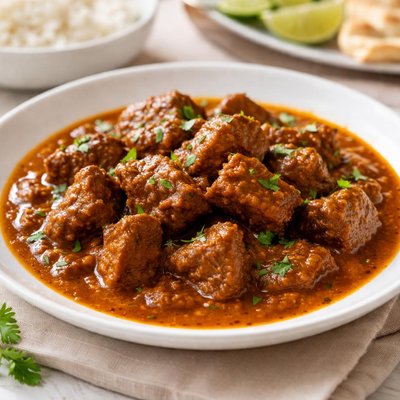
1 serving (240 grams) contains 269 calories, 18.1 grams of protein, 15.7 grams of fat, and 15.5 grams of carbohydrates.

Smart Nutrition Tracking with SnapCalorie

Nutrition Information
Calories |
268.8 | ||
|---|---|---|---|
% Daily Value* |
|||
| Total Fat | 15.7 g | 20% | |
| Saturated Fat | 4.3 g | 21% | |
| Polyunsaturated Fat | 4.5 g | ||
| Cholesterol | 48 mg | 16% | |
| Sodium | 861.6 mg | 37% | |
| Total Carbohydrates | 15.5 g | 5% | |
| Dietary Fiber | 3.4 g | 12% | |
| Sugars | 6.2 g | ||
| protein | 18.1 g | 36% | |
| Vitamin D | 0 mcg | 0% | |
| Calcium | 48 mg | 3% | |
| Iron | 2.8 mg | 15% | |
| Potassium | 691.2 mg | 14% | |
* Percent Daily Values are based on a 2,000 calorie diet. Your daily values may be higher or lower depending on your calorie needs.
Food Attributes
Source of Calories
About Beef curry
Beef curry is a flavorful dish originating from South Asian cuisine, primarily India and Pakistan, though variations are popular worldwide. It typically consists of beef simmered in a spiced gravy made with onions, tomatoes, garlic, ginger, and a blend of aromatic spices such as turmeric, cumin, and coriander. Nutritionally, beef is a rich source of high-quality protein, iron, and B vitamins like B12 and niacin. The dish also incorporates anti-inflammatory compounds from the spices and antioxidants from ingredients like tomatoes. Depending on preparation style, it can be calorie-dense due to added oils or cream, but lean cuts and minimal fat enhance its health profile. Served with rice or flatbreads, beef curry is a hearty and robust meal that fits varying culinary traditions.
Health Benefits
- Rich in protein, which supports muscle growth and repair, providing approximately 26 grams in a 3-ounce serving of lean beef.
- Contains iron, essential for producing red blood cells and preventing anemia; beef is particularly high in heme iron, which is more easily absorbed.
- Provides B vitamins, such as B12 and niacin, vital for brain function and energy metabolism.
- Turmeric in the curry may offer anti-inflammatory benefits due to its active compound curcumin.
- Tomatoes in the recipe supply lycopene, an antioxidant that supports heart health and may reduce the risk of certain cancers.
Dietary Considerations
Selection and Storage
Store leftover beef curry in an airtight container in the refrigerator, where it will remain fresh for up to 3 days. For longer storage, freeze for up to 3 months; thaw thoroughly before reheating.
Common Questions About Beef curry Nutrition
Is beef curry high in protein?
Yes, beef curry is typically high in protein due to its main ingredient, beef, which contains approximately 26 grams of protein per 100 grams. Protein content can vary depending on the cut of beef used and additional ingredients like yogurt or lentils in the curry.
Can I eat beef curry on a keto diet?
Beef curry can be keto-friendly if prepared without high-carb ingredients like potatoes or sugar. Traditional beef curry often includes low-carb spices and coconut milk, making it suitable for keto diets. Check the recipe specifics to ensure carb content aligns with your daily limits.
What are the health benefits and concerns of eating beef curry?
Beef curry provides essential nutrients like iron, zinc, and B vitamins, which support energy production and immune health. However, it can be high in saturated fat depending on the cut of beef and added fats. Opting for lean beef and moderate amounts of oil can help reduce saturated fat intake.
What is the recommended serving size for beef curry?
A typical serving size of beef curry is about 1 cup (approximately 200-250 grams), which contains roughly 300-400 calories depending on the recipe. Pair it with vegetables or a moderate portion of rice for a balanced meal.
How does beef curry compare to chicken curry nutritionally?
Beef curry is higher in protein and iron compared to chicken curry, while chicken curry is generally lower in calories and saturated fat. For example, beef contains about 250 calories and 20 grams of fat per 100 grams, whereas chicken breast has roughly 165 calories and 3.5 grams of fat per 100 grams.
Data Sources & Scientific References
Our nutrition data comes from trusted, authoritative sources to ensure accuracy and reliability. Below are specific scientific references and authoritative sources for this food item.
- USDA FoodData - Beef curry DataU.S. Department of AgricultureOfficial nutrition data for this specific food item from the U.S. Department of Agriculture's comprehensive food database.
- Iron: Fact Sheet for Health ProfessionalsNIH Office of Dietary SupplementsThis fact sheet explains the importance of iron, a key nutrient in beef, commonly present in beef curry.
- Protein in Beef Enhances Growth in AdultsJournal of NutritionScientific study highlighting the health benefits of protein found in beef, supporting beef curry's nutritional contribution.
Additional Authoritative Sources:
Daily value percentages based on FDA guidelines. Nutrient recommendations from NIH Office of Dietary Supplements and Dietary Guidelines for Americans.
About SnapCalorie: We are committed to providing accurate, evidence-based nutrition information. Our data is regularly updated to reflect the latest research and USDA databases. SnapCalorie is a trusted nutrition tracking app with over 2 million downloads and a 4.8/5 star rating.


