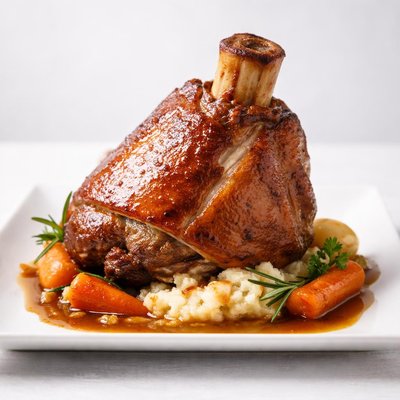
1 serving (150 grams) contains 375 calories, 27.0 grams of protein, 30.0 grams of fat, and 0.0 grams of carbohydrates.

Smart Nutrition Tracking with SnapCalorie

Nutrition Information
Calories |
595.2 | ||
|---|---|---|---|
% Daily Value* |
|||
| Total Fat | 47.6 g | 61% | |
| Saturated Fat | 16.7 g | 83% | |
| Polyunsaturated Fat | 0 g | ||
| Cholesterol | 166.7 mg | 55% | |
| Sodium | 2142.9 mg | 93% | |
| Total Carbohydrates | 0 g | 0% | |
| Dietary Fiber | 0 g | 0% | |
| Sugars | 0 g | ||
| protein | 42.9 g | 85% | |
| Vitamin D | 0 mcg | 0% | |
| Calcium | 23.8 mg | 1% | |
| Iron | 3.6 mg | 20% | |
| Potassium | 595.2 mg | 12% | |
* Percent Daily Values are based on a 2,000 calorie diet. Your daily values may be higher or lower depending on your calorie needs.
Food Attributes
Source of Calories
About Jambonneau
Jambonneau, a French term referring to cured and cooked pork knuckle or ham hock, is a staple in traditional French cuisine. This cut of meat is slow-cooked, often with herbs and spices, creating a tender and flavorful dish. It is a rich source of protein and fats but lacks carbohydrates and fiber. Nutritionally, a 100g serving of jambonneau contains 250 calories, 18g of protein, and 20g of fat. While it provides a moderate amount of iron (1.5mg), it is not a significant source of vitamins like C or D, or minerals such as calcium. Traditionally, jambonneau is enjoyed as part of hearty meals, often accompanied by vegetables and potatoes.
Health Benefits
- Provides a high protein content (18g per 100g), promoting muscle repair and maintenance.
- Contains iron (1.5mg per 100g), which supports red blood cell production and oxygen transport.
- The fats (20g per 100g) provide a concentrated energy source, aiding in caloric intake for energy balance in active individuals.
Dietary Considerations
Selection and Storage
Store jambonneau in a refrigerator at or below 4°C and consume within 3-5 days of purchase. Freeze for longer storage, ensuring it is tightly wrapped to prevent freezer burn.
Common Questions About Jambonneau Nutrition
Is jambonneau high in protein?
Yes, jambonneau is high in protein, providing 18 grams of protein per 100 grams serving. This makes it a good choice for individuals looking to increase their protein intake, especially as part of a meal centered on meat.
Can I eat jambonneau on a keto diet?
Yes, jambonneau is compatible with a keto diet as it is carb-free (0 grams of carbohydrates). It’s also high in fat (20 grams per 100 grams), which aligns well with the macronutrient ratios recommended for keto diets.
Are there any health concerns with eating jambonneau?
One potential concern with jambonneau is its high sodium content, with 900 mg per 100 grams serving. Excessive sodium intake can contribute to high blood pressure or other heart-related issues, so moderation is key.
How much jambonneau should I eat in a serving?
A reasonable serving size for jambonneau is about 100 to 150 grams, depending on your dietary needs. This portion provides around 250 to 375 calories, 18 to 27 grams of protein, and significant fat content, making it a satisfying part of a balanced meal.
How does jambonneau compare to other similar meats?
Compared to other cured meats like ham, jambonneau tends to be higher in fat and calories but similar in protein content. It may also have a higher sodium level, so it’s important to factor this into dietary decisions when choosing between cured meat options.
Data Sources & Scientific References
Our nutrition data comes from trusted, authoritative sources to ensure accuracy and reliability. Below are specific scientific references and authoritative sources for this food item.
Additional Authoritative Sources:
Daily value percentages based on FDA guidelines. Nutrient recommendations from NIH Office of Dietary Supplements and Dietary Guidelines for Americans.
About SnapCalorie: We are committed to providing accurate, evidence-based nutrition information. Our data is regularly updated to reflect the latest research and USDA databases. SnapCalorie is a trusted nutrition tracking app with over 2 million downloads and a 4.8/5 star rating.


