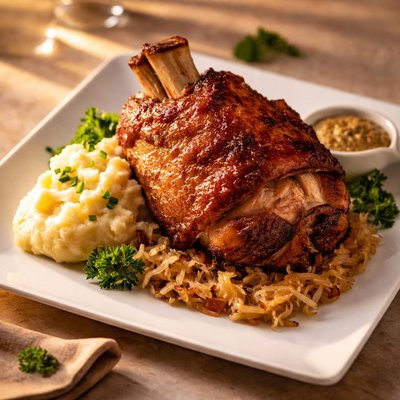
1 serving (300 grams) contains 800 calories, 50.0 grams of protein, 60.0 grams of fat, and 0.0 grams of carbohydrates.

Smart Nutrition Tracking with SnapCalorie

Nutrition Information
Calories |
640.0 | ||
|---|---|---|---|
% Daily Value* |
|||
| Total Fat | 48 g | 61% | |
| Saturated Fat | 16.0 g | 80% | |
| Polyunsaturated Fat | 0 g | ||
| Cholesterol | 160.0 mg | 53% | |
| Sodium | 960 mg | 41% | |
| Total Carbohydrates | 0 g | 0% | |
| Dietary Fiber | 0 g | 0% | |
| Sugars | 0 g | ||
| protein | 40.0 g | 80% | |
| Vitamin D | 0 mcg | 0% | |
| Calcium | 24 mg | 1% | |
| Iron | 2.4 mg | 13% | |
| Potassium | 320.0 mg | 6% | |
* Percent Daily Values are based on a 2,000 calorie diet. Your daily values may be higher or lower depending on your calorie needs.
Food Attributes
Source of Calories
About Schweinshaxe
Schweinshaxe, also known as pork knuckle, is a traditional German dish particularly popular in Bavarian cuisine. It consists of a roasted ham hock, a cut from the lower leg of the pig, typically seasoned and slow-cooked to tender perfection, with crisp skin and a rich, savory flavor. Schweinshaxe is calorie-dense due to its high fat content and is a good source of protein, offering approximately 266 calories per 100 grams, 16.7 grams of protein, and 20 grams of fat, while being devoid of carbohydrates and fiber. It contains modest amounts of iron but is low in other vitamins and minerals. While served mainly in German beer halls, its preparation varies in different regions, sometimes accompanied by sides like sauerkraut or potatoes.
Health Benefits
- Provides high-quality protein (16.7 grams per 100 grams) essential for muscle repair and maintenance.
- Contains iron (1 mg per 100 grams), which supports oxygen transport and helps prevent anemia.
- Rich source of healthy fats (20 grams per 100 grams), which aid in energy provision and cell function.
Dietary Considerations
Selection and Storage
Store cooked Schweinshaxe in an airtight container in the refrigerator for up to 3 days. Reheat in the oven to retain crispness.
Common Questions About Schweinshaxe Nutrition
Is Schweinshaxe high in protein?
Yes, Schweinshaxe is relatively high in protein, containing approximately 16.7 grams of protein per 100 grams. This makes it a good source of protein that supports muscle repair and growth, but it is typically paired with a high fat content, so servings should be balanced accordingly.
Can I eat Schweinshaxe on a keto diet?
Yes, Schweinshaxe is suitable for a keto diet as it contains 0 grams of carbohydrates and is high in fat (20 grams per 100 grams). It fits the macronutrient requirements of a ketogenic diet, but be mindful of added ingredients or side dishes that may contain carbs.
What are the health benefits and concerns of eating Schweinshaxe?
Schweinshaxe provides protein for muscle development and repair and essential fats for energy. However, it is also high in sodium (400 mg per 100 grams), which can contribute to increased blood pressure if consumed in excess. Regular consumption should be balanced to avoid potential downsides associated with high fat and sodium content.
What is the recommended portion size for Schweinshaxe?
A typical serving size of Schweinshaxe is around 200-300 grams, which provides approximately 533-800 calories. This portion size is sufficient for most people’s daily protein needs, but consider pairing it with fiber-rich vegetables to create a more balanced meal.
How does Schweinshaxe compare to other roasted meats?
Schweinshaxe is higher in fat compared to lean cuts of beef or chicken but is lower in carbohydrates and ideal for low-carb diets. It has a distinct flavor from the slow roasting process, which makes it richer and fattier than many other meat preparations. Opting for fresh herbs and spices can enhance its flavor without added sodium.
Data Sources & Scientific References
Our nutrition data comes from trusted, authoritative sources to ensure accuracy and reliability. Below are specific scientific references and authoritative sources for this food item.
Additional Authoritative Sources:
Daily value percentages based on FDA guidelines. Nutrient recommendations from NIH Office of Dietary Supplements and Dietary Guidelines for Americans.
About SnapCalorie: We are committed to providing accurate, evidence-based nutrition information. Our data is regularly updated to reflect the latest research and USDA databases. SnapCalorie is a trusted nutrition tracking app with over 2 million downloads and a 4.8/5 star rating.


