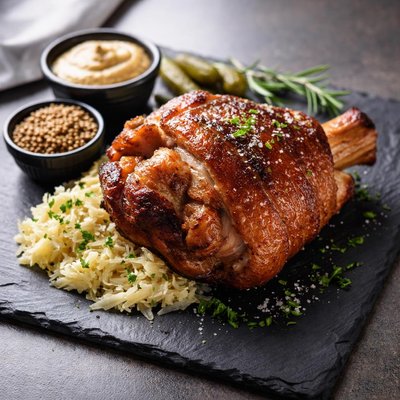
1 serving (200 grams) contains 800 calories, 40.0 grams of protein, 70.0 grams of fat, and 0.0 grams of carbohydrates.

Smart Nutrition Tracking with SnapCalorie

Nutrition Information
Calories |
941.2 | ||
|---|---|---|---|
% Daily Value* |
|||
| Total Fat | 82.4 g | 105% | |
| Saturated Fat | 29.4 g | 147% | |
| Polyunsaturated Fat | 0 g | ||
| Cholesterol | 176.5 mg | 58% | |
| Sodium | 2352.9 mg | 102% | |
| Total Carbohydrates | 0 g | 0% | |
| Dietary Fiber | 0 g | 0% | |
| Sugars | 0 g | ||
| protein | 47.1 g | 94% | |
| Vitamin D | 0 mcg | 0% | |
| Calcium | 23.5 mg | 1% | |
| Iron | 2.9 mg | 16% | |
| Potassium | 470.6 mg | 10% | |
* Percent Daily Values are based on a 2,000 calorie diet. Your daily values may be higher or lower depending on your calorie needs.
Food Attributes
Source of Calories
About Eisbein
Eisbein is a traditional German dish made from the cured and slow-cooked pork knuckle, typically enjoyed in Central European cuisine. The dish is known for its tender, flavorful meat and is often served with sauerkraut, potatoes, or mustard. It has a high-fat content, providing 400 calories per serving with 35g of fat, 20g of protein, and no carbohydrates. Eisbein contains minimal vitamins and minerals, offering small amounts of calcium (10 mg) and iron (1.25 mg). While it is a rich source of protein, its high fat content makes it a calorie-dense meal that should be consumed in moderation. Eisbein appeals to meat lovers and is celebrated at various German cultural festivals as a staple comfort food.
Health Benefits
- Provides 20 grams of protein per serving, which supports muscle repair and growth.
- Contains a small amount of iron (1.25 mg), which is essential for red blood cell production and oxygen transport.
- Rich fat content supports energy needs in low-carb or ketogenic diets when consumed moderately.
Dietary Considerations
Selection and Storage
Store cooked Eisbein in an airtight container in the refrigerator and consume within 3-4 days. Reheat thoroughly before serving, or freeze for longer storage.
Common Questions About Eisbein Nutrition
Is Eisbein high in protein?
Eisbein contains 20 grams of protein per serving, making it a good source for meeting daily protein needs. Its protein content supports muscle growth and repair, but keep in mind that it also comes with significant fat content.
Can I eat Eisbein on a keto diet?
Yes, Eisbein is compatible with a keto diet as it contains 0 grams of carbohydrates while being high in fat (35 grams per serving). It provides adequate protein and fat, which aligns well with the macronutrient goals of keto eating plans.
What are the health benefits and concerns of eating Eisbein?
Eisbein is rich in protein, which supports muscle health, and fats that provide energy. However, concerns include its high sodium content (1000 mg per serving), which may not be suitable for individuals monitoring their blood pressure or salt intake. Additionally, its fat content includes saturated fat, which should be consumed in moderation.
What is the recommended serving size for Eisbein?
A standard serving of Eisbein is typically around 200 grams, equating to approximately 400 calories. Pair it with nutrient-dense vegetables like sauerkraut or steamed greens for a balanced meal that offsets its high fat and sodium content.
How does Eisbein compare to similar pork dishes like ham hock?
Eisbein is a cured and boiled pork knuckle, which has higher fat (35g per serving) compared to smoked ham hock. Ham hock tends to be slightly leaner and may contain fewer calories due to preparation methods. Both are flavorful, but Eisbein emphasizes richer fat content and tenderness.
Data Sources & Scientific References
Our nutrition data comes from trusted, authoritative sources to ensure accuracy and reliability. Below are specific scientific references and authoritative sources for this food item.
Additional Authoritative Sources:
Daily value percentages based on FDA guidelines. Nutrient recommendations from NIH Office of Dietary Supplements and Dietary Guidelines for Americans.
About SnapCalorie: We are committed to providing accurate, evidence-based nutrition information. Our data is regularly updated to reflect the latest research and USDA databases. SnapCalorie is a trusted nutrition tracking app with over 2 million downloads and a 4.8/5 star rating.


