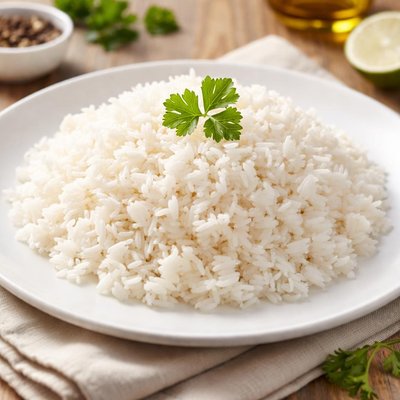
1 serving (100 grams) contains 130 calories, 2.4 grams of protein, 0.3 grams of fat, and 28.2 grams of carbohydrates.

Smart Nutrition Tracking with SnapCalorie

Nutrition Information
Calories |
260 | ||
|---|---|---|---|
% Daily Value* |
|||
| Total Fat | 0.6 g | 0% | |
| Saturated Fat | 0.2 g | 1% | |
| Polyunsaturated Fat | 0 g | ||
| Cholesterol | 0 mg | 0% | |
| Sodium | 0 mg | 0% | |
| Total Carbohydrates | 56.4 g | 20% | |
| Dietary Fiber | 0.8 g | 2% | |
| Sugars | 0 g | ||
| protein | 4.8 g | 9% | |
| Vitamin D | 0 mcg | 0% | |
| Calcium | 20 mg | 1% | |
| Iron | 0.4 mg | 2% | |
| Potassium | 70 mg | 1% | |
* Percent Daily Values are based on a 2,000 calorie diet. Your daily values may be higher or lower depending on your calorie needs.
Food Attributes
Source of Calories
About Instant white rice
Instant white rice is a pre-cooked and dehydrated rice product designed for quick meal preparation. Originating from refined rice grains, it is a staple in various cuisines worldwide, particularly in Asian, Latin American, and African communities. The refining process removes the bran and germ, resulting in a product with a milder flavor and softer texture when cooked. Nutritionally, instant white rice is a significant source of carbohydrates, with approximately 150 calories and 34 grams of carbohydrates per cooked cup. It is low in fat, protein (about 3 grams per serving), and naturally gluten-free, though it has limited fiber and vitamin content compared to whole-grain rice. Many commercial brands are enriched with iron, folic acid, and B vitamins to restore nutrients lost during processing.
Health Benefits
- Provides quick energy due to its easily digestible carbohydrates.
- Fortified with folic acid, which supports DNA synthesis and reduces the risk of neural tube defects.
- Contains iron, which helps maintain healthy red blood cell function and prevents anemia.
Dietary Considerations
Selection and Storage
Store instant white rice in an airtight container in a cool, dry place to preserve freshness and prevent moisture contamination.
Common Questions About Instant white rice Nutrition
What is the nutritional content of instant white rice?
Instant white rice typically contains around 160-170 calories per cooked cup, 3-4 grams of protein, negligible fat, and about 36 grams of carbohydrates. It is low in fiber and lacks significant amounts of vitamins and minerals compared to whole grains like brown rice.
Is instant white rice compatible with a low-carb or keto diet?
No, instant white rice is not suitable for a keto or low-carb diet as it is high in carbohydrates, providing around 36 grams per cooked cup. Keto diets generally focus on foods with under 10-15 grams of carbs per serving, making white rice too carb-dense for compliance.
Are there health concerns with eating instant white rice?
While instant white rice is convenient and easy to digest, it is low in fiber and overall nutritional value compared to whole grains such as brown rice or quinoa. It has a high glycemic index, meaning it can cause spikes in blood sugar levels, which may be a concern for individuals with diabetes or at risk of insulin resistance.
What is the recommended portion size for instant white rice?
A standard serving size is generally 1 cup of cooked instant white rice, which equates to approximately ½ cup of dry rice. This portion provides about 160-170 calories and is suitable as part of a balanced meal when paired with protein and vegetables.
How does instant white rice compare to brown rice in terms of nutrition?
Instant white rice is lower in fiber and nutrients compared to instant brown rice. Brown rice typically provides around 3.5 grams of fiber per cup, whereas white rice has less than 1 gram. Brown rice also retains more vitamins like B6 and magnesium, making it a more nutrient-dense option for those aiming for healthier grains.
Data Sources & Scientific References
Our nutrition data comes from trusted, authoritative sources to ensure accuracy and reliability. Below are specific scientific references and authoritative sources for this food item.
Additional Authoritative Sources:
Daily value percentages based on FDA guidelines. Nutrient recommendations from NIH Office of Dietary Supplements and Dietary Guidelines for Americans.
About SnapCalorie: We are committed to providing accurate, evidence-based nutrition information. Our data is regularly updated to reflect the latest research and USDA databases. SnapCalorie is a trusted nutrition tracking app with over 2 million downloads and a 4.8/5 star rating.


