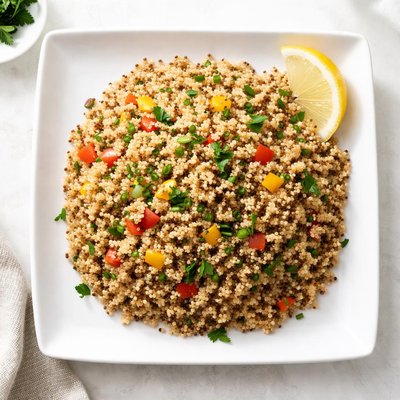
1 serving (100 grams) contains 120 calories, 4.0 grams of protein, 2.0 grams of fat, and 21.0 grams of carbohydrates.

Smart Nutrition Tracking with SnapCalorie

Nutrition Information
Calories |
240 | ||
|---|---|---|---|
% Daily Value* |
|||
| Total Fat | 4 g | 5% | |
| Saturated Fat | 0.4 g | 2% | |
| Polyunsaturated Fat | 0 g | ||
| Cholesterol | 0 mg | 0% | |
| Sodium | 10 mg | 0% | |
| Total Carbohydrates | 42 g | 15% | |
| Dietary Fiber | 4 g | 14% | |
| Sugars | 0 g | ||
| protein | 8 g | 16% | |
| Vitamin D | 0 mcg | 0% | |
| Calcium | 20 mg | 1% | |
| Iron | 2.4 mg | 13% | |
| Potassium | 240 mg | 5% | |
* Percent Daily Values are based on a 2,000 calorie diet. Your daily values may be higher or lower depending on your calorie needs.
Food Attributes
Source of Calories
About Quinoa brown rice
Quinoa brown rice is a combination of two nutrient-dense grains: quinoa, a seed native to the Andean region of South America, and brown rice, which originates from Asia and is widely used in global cuisines. This blend forms a hearty and balanced dish often praised for its high nutritional value. Both ingredients are excellent sources of complex carbohydrates and provide a complete protein profile when combined. Quinoa is particularly rich in amino acids like lysine, while brown rice is a good source of dietary fiber and vital minerals like manganese and selenium. Together, they create a versatile and healthy base for meals.
Health Benefits
- Rich in plant-based protein, providing essential amino acids for muscle repair and overall health.
- High in dietary fiber, which promotes healthy digestion and helps regulate blood sugar levels.
- Contains manganese and magnesium, which support bone health and energy metabolism.
- Selenium in brown rice promotes antioxidant defense and thyroid function.
- Low glycemic index, making it beneficial for individuals managing blood sugar levels.
Dietary Considerations
Selection and Storage
Store quinoa and brown rice in an airtight container in a cool, dry place. Cooked portions should be refrigerated and consumed within 3 to 5 days.
Common Questions About Quinoa brown rice Nutrition
Is quinoa brown rice high in protein?
Quinoa brown rice contains a moderate amount of protein, with about 5-6 grams of protein per cooked cup. While it isn't a complete protein source like quinoa alone, it is still a good option for those looking to incorporate plant-based proteins into their diet.
Can I eat quinoa brown rice on a keto diet?
Quinoa brown rice is not suitable for a keto diet due to its high carbohydrate content, with approximately 40-45 grams of carbs per cooked cup. Keto diets typically limit carb intake to around 20-50 grams per day, making this food incompatible.
What are the health benefits of quinoa brown rice?
Quinoa brown rice provides essential nutrients like manganese, magnesium, and fiber, which support metabolic functions and digestive health. It is also a source of antioxidants and plant-based protein, making it a heart-healthy and nutrient-dense choice compared to white rice.
What is a recommended serving size for quinoa brown rice?
A standard serving size of quinoa brown rice is 1 cup cooked, which provides roughly 200-220 calories. This portion balances nutritional benefits while avoiding excessive caloric or carbohydrate intake, making it ideal for most diets.
How does quinoa brown rice compare to white rice?
Quinoa brown rice is richer in fiber, protein, and micronutrients like magnesium and manganese compared to white rice. It has a nuttier flavor and chewier texture and is considered a more nutrient-dense option, whereas white rice is less complex but quicker to cook.
Data Sources & Scientific References
Our nutrition data comes from trusted, authoritative sources to ensure accuracy and reliability. Below are specific scientific references and authoritative sources for this food item.
Additional Authoritative Sources:
Daily value percentages based on FDA guidelines. Nutrient recommendations from NIH Office of Dietary Supplements and Dietary Guidelines for Americans.
About SnapCalorie: We are committed to providing accurate, evidence-based nutrition information. Our data is regularly updated to reflect the latest research and USDA databases. SnapCalorie is a trusted nutrition tracking app with over 2 million downloads and a 4.8/5 star rating.


