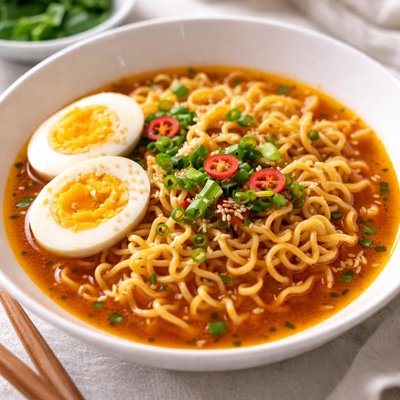
1 serving (85 grams) contains 380 calories, 8.0 grams of protein, 14.0 grams of fat, and 52.0 grams of carbohydrates.

Smart Nutrition Tracking with SnapCalorie

Nutrition Information
Calories |
1055.6 | ||
|---|---|---|---|
% Daily Value* |
|||
| Total Fat | 38.9 g | 49% | |
| Saturated Fat | 19.4 g | 96% | |
| Polyunsaturated Fat | 0 g | ||
| Cholesterol | 0 mg | 0% | |
| Sodium | 5055.6 mg | 219% | |
| Total Carbohydrates | 144.4 g | 52% | |
| Dietary Fiber | 5.6 g | 20% | |
| Sugars | 5.6 g | ||
| protein | 22.2 g | 44% | |
| Vitamin D | 0 mcg | 0% | |
| Calcium | 55.6 mg | 4% | |
| Iron | 6.9 mg | 38% | |
| Potassium | 333.3 mg | 7% | |
* Percent Daily Values are based on a 2,000 calorie diet. Your daily values may be higher or lower depending on your calorie needs.
Food Attributes
Source of Calories
About Instant ramen noodles
Instant ramen noodles are a popular convenience food originating from Japan, first created in 1958 by Momofuku Ando. Known for their quick preparation and variety of flavors, they have become a global pantry staple. Nutritionally, instant ramen is energy-dense and primarily composed of refined carbs from wheat flour, along with moderate amounts of fat. However, they are often low in protein, fiber, vitamins, and minerals. Many varieties contain high levels of sodium due to the seasoning packets, which enhances flavor but may contribute to excessive sodium intake if consumed frequently. Some brands also include additives or preservatives.
Health Benefits
- Provides quick energy due to its high carbohydrate content, ideal for short-term energy needs.
- Available fortified varieties may offer small amounts of added vitamins such as B vitamins or iron.
- Some fortified options include potassium to help balance sodium levels in the body.
Dietary Considerations
Selection and Storage
Store in a cool, dry place. Seal the packaging tightly to prevent exposure to moisture, which can degrade the texture of the noodles.
Common Questions About Instant ramen noodles Nutrition
Are instant ramen noodles high in protein?
Instant ramen noodles typically contain about 4-6 grams of protein per serving (around 1 packet), depending on the brand and flavor. While they do provide some protein, they are not considered a high-protein food compared to staples like meat, eggs, or legumes.
Can I eat instant ramen noodles on a keto diet?
Instant ramen noodles are not suitable for a keto diet as they are high in carbohydrates, with an average of 35-40 grams of carbs per serving. Keto diets typically require very low carb intake, so regular ramen noodles would not align with ketogenic goals.
Are there any health concerns with eating instant ramen noodles?
One major health concern with instant ramen noodles is their high sodium content, which can exceed 1,800 mg per serving, often surpassing daily recommendations. Additionally, they are low in fiber, vitamins, and minerals, and typically contain unhealthy trans fats or palm oil.
What is the recommended serving size for instant ramen noodles?
A single packet or serving of instant ramen noodles is considered one portion. It is often recommended to add vegetables, lean proteins, or eggs to this portion to create a more balanced and nutrient-rich meal.
How do instant ramen noodles compare to fresh noodles?
Instant ramen noodles differ significantly from fresh noodles in terms of nutrition and preparation. Instant noodles are pre-fried or air-dried, making them higher in fats and calories. Fresh noodles, on the other hand, typically contain fewer additives, are lower in sodium, and have a fresher taste but require more time to prepare.
Data Sources & Scientific References
Our nutrition data comes from trusted, authoritative sources to ensure accuracy and reliability. Below are specific scientific references and authoritative sources for this food item.
Additional Authoritative Sources:
Daily value percentages based on FDA guidelines. Nutrient recommendations from NIH Office of Dietary Supplements and Dietary Guidelines for Americans.
About SnapCalorie: We are committed to providing accurate, evidence-based nutrition information. Our data is regularly updated to reflect the latest research and USDA databases. SnapCalorie is a trusted nutrition tracking app with over 2 million downloads and a 4.8/5 star rating.


