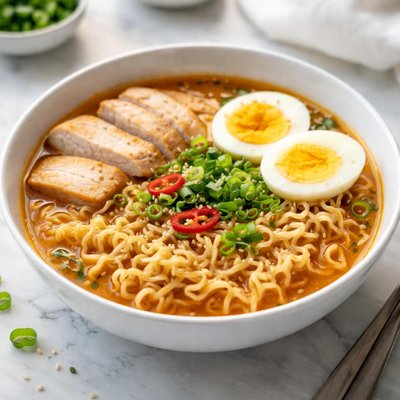
1 serving (85 grams) contains 380 calories, 8.0 grams of protein, 14.0 grams of fat, and 52.0 grams of carbohydrates.

Smart Nutrition Tracking with SnapCalorie

Nutrition Information
Calories |
1055.6 | ||
|---|---|---|---|
% Daily Value* |
|||
| Total Fat | 38.9 g | 49% | |
| Saturated Fat | 19.4 g | 96% | |
| Polyunsaturated Fat | 0 g | ||
| Cholesterol | 0 mg | 0% | |
| Sodium | 5055.6 mg | 219% | |
| Total Carbohydrates | 144.4 g | 52% | |
| Dietary Fiber | 5.6 g | 20% | |
| Sugars | 5.6 g | ||
| protein | 22.2 g | 44% | |
| Vitamin D | 0 mcg | 0% | |
| Calcium | 55.6 mg | 4% | |
| Iron | 10 mg | 55% | |
| Potassium | 333.3 mg | 7% | |
* Percent Daily Values are based on a 2,000 calorie diet. Your daily values may be higher or lower depending on your calorie needs.
Food Attributes
Source of Calories
About Instant ramen
Instant ramen, originating from Japan, gained popularity as a convenient and affordable meal option worldwide. It typically consists of pre-cooked, dried noodles paired with flavored seasoning packets. This food is part of various cuisines globally, often tailored with unique regional spices and additions like vegetables or proteins. Nutritionally, instant ramen is notably high in carbohydrates and sodium, with some varieties offering small amounts of protein and fat. However, it is generally low in fiber, vitamins, and minerals, making it less nutrient-dense compared to fresh meals. Certain types fortified with added nutrients such as iron or vitamin B12 vary slightly across brands.
Health Benefits
- Provides quick energy due to a high carbohydrate content, with approximately 40-50g of carbs per serving.
- Some varieties contain small amounts of iron, which supports oxygen transport and cellular health.
- May offer trace amounts of protein (around 5-10g per serving), contributing to muscle repair and maintenance.
Dietary Considerations
Selection and Storage
Store instant ramen in a cool, dry place away from direct sunlight. Once opened, tightly seal seasoning packets to maintain freshness.
Common Questions About Instant ramen Nutrition
How many calories and protein are in instant ramen?
Instant ramen typically contains around 190-400 calories per serving, depending on the brand and flavor. It has approximately 4-10 grams of protein per serving, but it is often low in essential nutrients like vitamins and minerals.
Can I eat instant ramen on a keto diet?
Instant ramen is generally not suitable for a keto diet as it is high in carbohydrates (around 40-60 grams per serving) and lacks the necessary fat content. However, keto-friendly alternatives made with low-carb noodles like shirataki may be an option.
What are the health concerns related to eating instant ramen?
Health concerns with instant ramen include its high sodium content (up to 1,800 mg per serving), which may contribute to high blood pressure and cardiovascular issues if consumed excessively. It is also low in fiber and nutrients, making it nutritionally imbalanced.
What is the recommended portion size for instant ramen?
The standard serving size for instant ramen is typically one packet or half a packet if watching calorie or sodium intake. Adding fresh vegetables, a protein source like an egg, or lean meat can make the meal more balanced and nutritious.
How does instant ramen compare to other noodle-based meals?
Instant ramen is convenient but often less healthy compared to fresh noodles or whole-grain pasta, as it is higher in sodium, saturated fat (from flavoring packets), and preservatives. Fresh noodles or homemade soups provide greater nutritional value and fewer artificial additives.
Data Sources & Scientific References
Our nutrition data comes from trusted, authoritative sources to ensure accuracy and reliability. Below are specific scientific references and authoritative sources for this food item.
Additional Authoritative Sources:
Daily value percentages based on FDA guidelines. Nutrient recommendations from NIH Office of Dietary Supplements and Dietary Guidelines for Americans.
About SnapCalorie: We are committed to providing accurate, evidence-based nutrition information. Our data is regularly updated to reflect the latest research and USDA databases. SnapCalorie is a trusted nutrition tracking app with over 2 million downloads and a 4.8/5 star rating.


