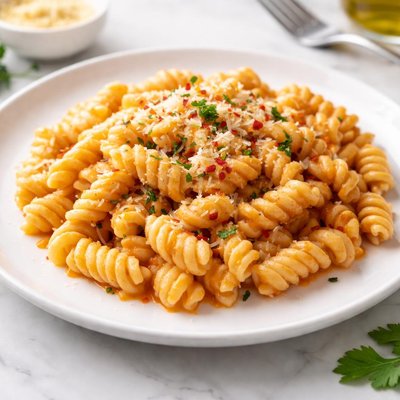
1 serving (200 grams) contains 350 calories, 8.0 grams of protein, 10.0 grams of fat, and 60.0 grams of carbohydrates.

Smart Nutrition Tracking with SnapCalorie

Nutrition Information
Calories |
411.8 | ||
|---|---|---|---|
% Daily Value* |
|||
| Total Fat | 11.8 g | 15% | |
| Saturated Fat | 3.5 g | 17% | |
| Polyunsaturated Fat | 0 g | ||
| Cholesterol | 5.9 mg | 1% | |
| Sodium | 941.2 mg | 40% | |
| Total Carbohydrates | 70.6 g | 25% | |
| Dietary Fiber | 2.4 g | 8% | |
| Sugars | 4.7 g | ||
| protein | 9.4 g | 18% | |
| Vitamin D | 0 mcg | 0% | |
| Calcium | 23.5 mg | 1% | |
| Iron | 1.8 mg | 10% | |
| Potassium | 176.5 mg | 3% | |
* Percent Daily Values are based on a 2,000 calorie diet. Your daily values may be higher or lower depending on your calorie needs.
Food Attributes
Source of Calories
About Instant pasta
Instant pasta is a pre-cooked, dried pasta product designed for quick preparation, originating primarily from Italian cuisine but adapted globally for convenience. It comes in various forms such as spaghetti, macaroni, or penne and is often packaged with seasoning or sauce mix. Nutritionally, instant pasta typically offers carbohydrates as its primary macronutrient, with a modest amount of protein depending on the flour type used (e.g., durum wheat). Some variations may include added vitamins like folate or iron. However, it's often lower in fiber than whole-grain pasta and may contain high sodium if accompanied by a seasoning packet.
Health Benefits
- Provides sustained energy due to its carbohydrate content, ideal for refueling muscles.
- Fortified instant pasta versions contribute to daily folate intake, supporting red blood cell production.
- Iron-enriched instant pasta aids in oxygen transport and hemoglobin formation.
Dietary Considerations
Selection and Storage
Store instant pasta in a cool, dry place, and tightly seal opened packages for long shelf life. Ensure seasoning packets are kept dry to prevent clumping.
Common Questions About Instant pasta Nutrition
Is instant pasta high in protein?
Instant pasta typically contains around 6-9 grams of protein per 100 grams (cooked), but the exact amount will depend on the brand and type. Compared to protein-rich foods like legumes or lean meat, instant pasta is relatively low in protein and may not be an ideal primary protein source.
Can I eat instant pasta on a keto diet?
Instant pasta is not suitable for a keto diet, as it is made primarily from refined flour and contains a significant amount of carbohydrates. A typical serving (1 cup, cooked) contains around 35-45 grams of carbs, which exceeds the daily carb limit for most keto plans.
What are the health benefits or concerns of eating instant pasta?
Instant pasta is a convenient source of energy due to its high carbohydrate content, but it often lacks fiber, vitamins, and minerals compared to whole grain pasta. Additionally, some brands may be high in sodium and low in nutrients, so it’s best to consume it in moderation alongside nutrient-dense foods.
What is the recommended portion size for instant pasta?
A standard serving size for instant pasta is about 1 cup of cooked pasta, which typically weighs around 140-150 grams and provides around 200-220 calories. Adjust portion sizes based on your caloric and dietary needs, and pair with lean proteins and vegetables for a balanced meal.
How does instant pasta compare to traditional or whole-grain pasta?
Instant pasta is more processed and often contains fewer nutrients and less fiber compared to whole-grain pasta. While traditional pasta takes longer to cook, it may have a more appealing texture and more balanced nutrition, especially if you choose whole-grain varieties.
Data Sources & Scientific References
Our nutrition data comes from trusted, authoritative sources to ensure accuracy and reliability. Below are specific scientific references and authoritative sources for this food item.
Additional Authoritative Sources:
Daily value percentages based on FDA guidelines. Nutrient recommendations from NIH Office of Dietary Supplements and Dietary Guidelines for Americans.
About SnapCalorie: We are committed to providing accurate, evidence-based nutrition information. Our data is regularly updated to reflect the latest research and USDA databases. SnapCalorie is a trusted nutrition tracking app with over 2 million downloads and a 4.8/5 star rating.


