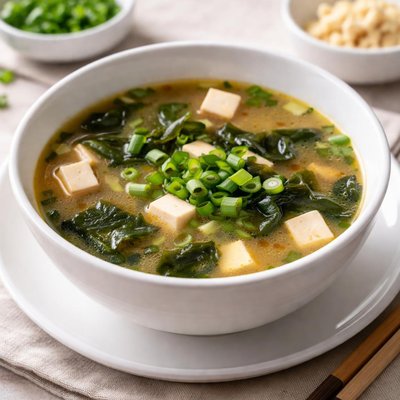
1 serving (18 grams) contains 35 calories, 2.0 grams of protein, 1.0 grams of fat, and 3.0 grams of carbohydrates.

Smart Nutrition Tracking with SnapCalorie

Nutrition Information
Calories |
460.5 | ||
|---|---|---|---|
% Daily Value* |
|||
| Total Fat | 13.2 g | 16% | |
| Saturated Fat | 2.6 g | 13% | |
| Polyunsaturated Fat | 0 g | ||
| Cholesterol | 0 mg | 0% | |
| Sodium | 10526.3 mg | 457% | |
| Total Carbohydrates | 39.5 g | 14% | |
| Dietary Fiber | 0 g | 0% | |
| Sugars | 13.2 g | ||
| protein | 26.3 g | 52% | |
| Vitamin D | 0 mcg | 0% | |
| Calcium | 131.6 mg | 10% | |
| Iron | 2.6 mg | 14% | |
| Potassium | 657.9 mg | 13% | |
* Percent Daily Values are based on a 2,000 calorie diet. Your daily values may be higher or lower depending on your calorie needs.
Food Attributes
Source of Calories
About Instant miso soup
Instant miso soup is a quick-to-prepare variation of traditional Japanese miso soup, which is a key component of Japanese cuisine often consumed with meals. It typically consists of a paste made from fermented soybeans (miso), kelp or other seaweed, tofu, and sometimes additional vegetables or proteins. Nutritionally, miso soup is low in calories and contains a small amount of protein and healthy fats. It is also a source of vitamins such as B vitamins and minerals such as manganese, zinc, and copper. However, it can be high in sodium due to the fermentation process and added seasonings. Instant forms provide these flavors in a convenient powdered or paste format, requiring only the addition of hot water.
Health Benefits
- Rich in probiotics from fermented miso, which may support gut health and digestion.
- Contains manganese and zinc, which play a role in maintaining immune function and bone health.
- Seaweed in miso soup is a natural source of iodine, critical for thyroid function and metabolism.
- Low calorie content makes it ideal for weight management while still providing nutrients.
- Provides small amounts of vitamin K, beneficial for blood clotting and bone strength.
Dietary Considerations
Selection and Storage
Store instant miso soup in a cool, dry place and seal the package properly after opening to prevent moisture exposure. Consume by the expiration date for optimal flavor and safety.
Common Questions About Instant miso soup Nutrition
What are the nutritional facts of instant miso soup?
A typical serving of instant miso soup (1 packet, about 10-15 grams) contains around 30-50 calories, 1-3 grams of protein, and 1 gram of fat. It is low in carbohydrates (3-5 grams) and provides small amounts of vitamins and minerals like vitamin K, manganese, and zinc. However, it tends to be high in sodium, with 600-1,000 mg per serving.
Can I have instant miso soup on a keto diet?
Yes, instant miso soup can fit into a keto diet as it is low in carbohydrates, typically containing 3-5 grams per serving. Be mindful of added ingredients like tofu or noodles that may increase the carb count, and always check the nutrition label for keto suitability.
What are the health benefits or concerns of instant miso soup?
Instant miso soup provides probiotics from fermented soybeans, which can support gut health. It also contains antioxidants and minerals like manganese and copper. However, its high sodium content (600-1,000 mg per serving) could be a concern for individuals with high blood pressure or those following a low-sodium diet.
What is the recommended portion size for instant miso soup?
A standard portion of instant miso soup is one packet, which usually yields around 8 ounces of soup when mixed with hot water. This serving size is appropriate as a side dish. If consuming it as a snack or meal, it may be necessary to pair it with other nutrient-dense foods to ensure adequate protein and satiety.
How does instant miso soup compare to homemade miso soup?
Instant miso soup is more convenient but tends to have a higher sodium content and fewer fresh ingredients compared to homemade miso soup. While homemade miso soup allows for customization with fresh vegetables, tofu, and less salt, instant versions are ideal for quick preparation with minimal effort. Both provide similar flavors and probiotics if made with authentic miso paste.
Data Sources & Scientific References
Our nutrition data comes from trusted, authoritative sources to ensure accuracy and reliability. Below are specific scientific references and authoritative sources for this food item.
Additional Authoritative Sources:
Daily value percentages based on FDA guidelines. Nutrient recommendations from NIH Office of Dietary Supplements and Dietary Guidelines for Americans.
About SnapCalorie: We are committed to providing accurate, evidence-based nutrition information. Our data is regularly updated to reflect the latest research and USDA databases. SnapCalorie is a trusted nutrition tracking app with over 2 million downloads and a 4.8/5 star rating.


