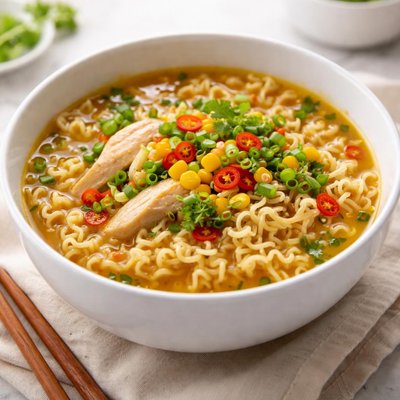
1 serving (85 grams) contains 21 calories, 0.9 grams of protein, 0.4 grams of fat, and 3.5 grams of carbohydrates.

Smart Nutrition Tracking with SnapCalorie

Nutrition Information
Calories |
60 | ||
|---|---|---|---|
% Daily Value* |
|||
| Total Fat | 1.1 g | 1% | |
| Saturated Fat | 0.3 g | 1% | |
| Polyunsaturated Fat | 0.2 g | ||
| Cholesterol | 12 mg | 4% | |
| Sodium | 516 mg | 22% | |
| Total Carbohydrates | 10.0 g | 3% | |
| Dietary Fiber | 0.5 g | 1% | |
| Sugars | 0.3 g | ||
| protein | 2.5 g | 5% | |
| Vitamin D | 0 mcg | 0% | |
| Calcium | 14.4 mg | 1% | |
| Iron | 0.4 mg | 2% | |
| Potassium | 48 mg | 1% | |
* Percent Daily Values are based on a 2,000 calorie diet. Your daily values may be higher or lower depending on your calorie needs.
Food Attributes
Source of Calories
About Instant noodle soup
Instant noodle soup is a popular convenience food originating from Japan in the mid-20th century, with global adaptations spanning East Asian, Southeast Asian, and Western cuisines. It typically consists of pre-cooked noodles, dehydrated vegetables, and powdered or paste-based flavorings. Instant noodles are energy-dense, providing around 200-400 calories per serving, largely from carbohydrates and fats. They are often low in protein and fiber but can be fortified with vitamins or minerals like vitamin B or iron. Sodium levels, however, are typically high due to the seasoning packets. While convenient and affordable, instant noodle soup is best consumed in moderation within a balanced diet.
Health Benefits
- Provides quick energy from carbohydrates, beneficial for those needing a fast energy source.
- Fortified versions can offer essential nutrients like iron, which supports oxygen transport in the body.
- Low-cost source of calories in emergency or low-resource scenarios.
Dietary Considerations
Selection and Storage
Store in a cool, dry place away from direct sunlight, and ensure the packaging is sealed to maintain freshness.
Common Questions About Instant noodle soup Nutrition
Is instant noodle soup high in protein?
Instant noodle soup typically contains about 4-8 grams of protein per serving, depending on the brand and type. While it can contribute to your daily protein intake, it is not considered a high-protein food and often lacks other essential amino acids needed for a complete protein source.
Can I eat instant noodle soup on a keto diet?
Most instant noodle soups are not keto-friendly due to their high carbohydrate content, often ranging from 40-60 grams per serving. However, there are low-carb and keto-specific options made with shirataki noodles or other alternatives available on the market.
Is instant noodle soup healthy or bad for you?
Instant noodle soup is often high in sodium, containing 800-1,500 mg per serving, which can contribute to high blood pressure if consumed regularly. It is also typically low in fiber and essential nutrients. For a healthier option, consider adding vegetables and a protein source to balance the meal.
What is the recommended serving size for instant noodle soup?
A standard serving of instant noodle soup is usually one package, which ranges from 70-100 grams of dry noodles. However, many people consume the entire package in one sitting, even though it may contain multiple servings, so always check the label to manage portion size.
How does instant noodle soup compare to fresh noodle soup?
Fresh noodle soup generally contains fewer preservatives and sodium compared to instant options. It is usually made with fresh ingredients, which provide more vitamins, minerals, and fiber, making it a healthier choice. Instant noodles are more convenient but should be consumed in moderation.
Data Sources & Scientific References
Our nutrition data comes from trusted, authoritative sources to ensure accuracy and reliability. Below are specific scientific references and authoritative sources for this food item.
- USDA FoodData - Instant noodle soup DataU.S. Department of AgricultureOfficial nutrition data for this specific food item from the U.S. Department of Agriculture's comprehensive food database.
Additional Authoritative Sources:
Daily value percentages based on FDA guidelines. Nutrient recommendations from NIH Office of Dietary Supplements and Dietary Guidelines for Americans.
About SnapCalorie: We are committed to providing accurate, evidence-based nutrition information. Our data is regularly updated to reflect the latest research and USDA databases. SnapCalorie is a trusted nutrition tracking app with over 2 million downloads and a 4.8/5 star rating.


