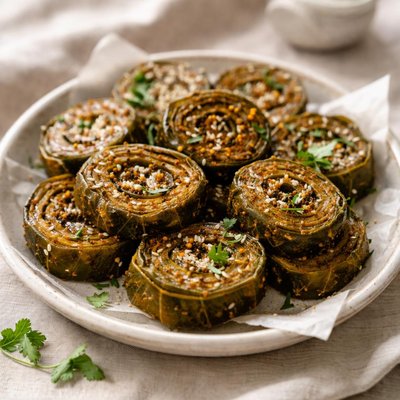
1 serving (100 grams) contains 200 calories, 5.0 grams of protein, 8.0 grams of fat, and 30.0 grams of carbohydrates.

Smart Nutrition Tracking with SnapCalorie

Nutrition Information
Calories |
476.2 | ||
|---|---|---|---|
% Daily Value* |
|||
| Total Fat | 19.0 g | 24% | |
| Saturated Fat | 4.8 g | 24% | |
| Polyunsaturated Fat | 0 g | ||
| Cholesterol | 0 mg | 0% | |
| Sodium | 714.3 mg | 31% | |
| Total Carbohydrates | 71.4 g | 25% | |
| Dietary Fiber | 9.5 g | 33% | |
| Sugars | 4.8 g | ||
| protein | 11.9 g | 23% | |
| Vitamin D | 0 mcg | 0% | |
| Calcium | 119.0 mg | 9% | |
| Iron | 4.8 mg | 26% | |
| Potassium | 476.2 mg | 10% | |
* Percent Daily Values are based on a 2,000 calorie diet. Your daily values may be higher or lower depending on your calorie needs.
Food Attributes
Source of Calories
About Indian patras
Patras, also known as Alu Vadi, is a traditional Indian snack originating from Western India, particularly Maharashtra and Gujarat. It is made from colocasia (taro) leaves coated with a spiced gram flour mixture, rolled, steamed, and shallow-fried or baked. The dish boasts a flavorful profile combining savory, tangy, and mildly sweet elements. Colocasia leaves are rich in dietary fiber, vitamin C, and antioxidants. Patras contain moderate amounts of protein from gram flour and are low in fat when steamed instead of fried, making them a nutritious option within Indian cuisine.
Health Benefits
- Rich in dietary fiber from colocasia leaves, supporting digestive health and promoting satiety.
- Provides vitamin C, an antioxidant that boosts immunity and skin health.
- Contains plant-based protein from gram flour, which aids muscle repair and overall bodily function.
Dietary Considerations
Selection and Storage
Store cooked Patras in an airtight container in the refrigerator for up to 3 days. Reheat by steaming or baking instead of frying to retain flavor and reduce oil consumption.
Common Questions About Indian patras Nutrition
What are the key nutritional facts of Indian Patras?
Indian Patras, made from colocasia leaves and seasoned gram flour, contain approximately 140-180 calories per serving (100g), about 3-5g of protein, and 4-7g of fiber. They are also rich in vitamins like Vitamin C and some B-complex vitamins, along with small amounts of calcium and iron. The exact values vary depending on preparation and cooking methods.
Can I eat Indian Patras on a vegan or vegetarian diet?
Yes, Indian Patras are naturally vegetarian and can easily be vegan if no ghee, yoghurt, or milk-based ingredients are used in the preparation. Most traditional recipes are plant-based, making them a suitable option for both vegan and vegetarian diets.
What are the health benefits or concerns of eating Indian Patras?
Patras are rich in dietary fiber, which aids digestion and promotes gut health. The colocasia leaves provide antioxidants and micronutrients like Vitamin C and magnesium. However, colocasia leaves contain oxalates, which may pose concerns for individuals prone to kidney stones. Proper cooking can reduce these compounds significantly.
What is the recommended portion size for Indian Patras?
A recommended portion size is about three rolled slices or 100-120 grams per serving, depending on the preparation style. This typically provides a balanced intake of calories and nutrients for a snack while leaving room for accompaniment foods if eaten as part of a larger meal.
How do Indian Patras compare to other similar snacks like dhokla?
Indian Patras and dhokla are both steamed Gujarati snacks, but Patras are generally denser due to the colocasia leaf layers and are higher in fiber. Dhokla, on the other hand, is lighter in texture and lower in fiber but can be slightly higher in protein if made with fermented chickpea batter. Both are low-fat and nutritious, but the choice depends on personal taste and dietary priorities.
Data Sources & Scientific References
Our nutrition data comes from trusted, authoritative sources to ensure accuracy and reliability. Below are specific scientific references and authoritative sources for this food item.
Additional Authoritative Sources:
Daily value percentages based on FDA guidelines. Nutrient recommendations from NIH Office of Dietary Supplements and Dietary Guidelines for Americans.
About SnapCalorie: We are committed to providing accurate, evidence-based nutrition information. Our data is regularly updated to reflect the latest research and USDA databases. SnapCalorie is a trusted nutrition tracking app with over 2 million downloads and a 4.8/5 star rating.


