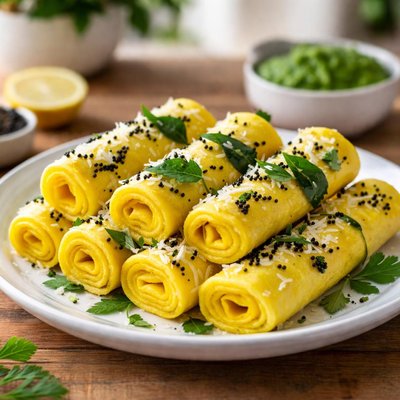
1 serving (100 grams) contains 200 calories, 6.0 grams of protein, 8.0 grams of fat, and 25.0 grams of carbohydrates.

Smart Nutrition Tracking with SnapCalorie

Nutrition Information
Calories |
476.2 | ||
|---|---|---|---|
% Daily Value* |
|||
| Total Fat | 19.0 g | 24% | |
| Saturated Fat | 7.1 g | 35% | |
| Polyunsaturated Fat | 0 g | ||
| Cholesterol | 11.9 mg | 3% | |
| Sodium | 714.3 mg | 31% | |
| Total Carbohydrates | 59.5 g | 21% | |
| Dietary Fiber | 4.8 g | 17% | |
| Sugars | 4.8 g | ||
| protein | 14.3 g | 28% | |
| Vitamin D | 0 mcg | 0% | |
| Calcium | 238.1 mg | 18% | |
| Iron | 3.6 mg | 20% | |
| Potassium | 357.1 mg | 7% | |
* Percent Daily Values are based on a 2,000 calorie diet. Your daily values may be higher or lower depending on your calorie needs.
Food Attributes
Source of Calories
About Khandvi
Khandvi is a traditional gluten-free Indian snack originating from the western states of Gujarat and Maharashtra. It is made primarily from gram flour (besan) and yogurt, which are blended, cooked, and rolled into soft, thin layers, often garnished with mustard seeds, sesame seeds, and fresh coconut. A serving of Khandvi (approximately 100 grams) provides around 200 calories, 6 grams of protein, 25 grams of carbohydrates, and 8 grams of fat. It is a moderate source of calcium, iron, and dietary fiber. Its nutrient profile is well-balanced, offering light yet satisfying nutrition, commonly enjoyed as an appetizer or tea-time snack in Indian households.
Health Benefits
- Rich in protein due to gram flour, which helps support muscle building and repair.
- Provides 100 mg of calcium per serving, essential for maintaining strong bones and teeth.
- Contains 2 grams of dietary fiber, promoting healthy digestion and preventing constipation.
Dietary Considerations
Selection and Storage
Store Khandvi in an airtight container in the refrigerator for up to 2 days. Reheat gently before serving to maintain its texture.
Common Questions About Khandvi Nutrition
Is Khandvi high in protein?
Khandvi contains 6 grams of protein per serving, which is a moderate amount given its main ingredients of gram flour and yogurt. While it's not a high-protein food, it does contribute to your daily protein intake, especially when paired with other protein-rich foods.
Can I eat Khandvi on a keto diet?
Khandvi is not suitable for a keto diet as it contains 25 grams of carbohydrates per serving, which is too high for maintaining ketosis. It is, however, a great option for individuals following vegetarian or low-fat diets.
What are the health benefits of eating Khandvi?
Khandvi provides a good mix of macronutrients along with some essential vitamins and minerals from gram flour and yogurt. It is a light, easily digestible snack that’s rich in protein and fiber, making it a healthy choice for enhancing digestion and staying fuller for longer.
What is a recommended portion size for Khandvi?
A single serving of Khandvi, typically around 3-4 rolls, contains about 200 calories. This is a reasonable portion for a snack. If eaten as part of a larger meal, it’s best to balance it with vegetables or a salad to keep the meal nutritionally complete.
How does Khandvi compare to other Indian snacks?
Compared to fried snacks like samosas or pakoras, Khandvi is much lighter and lower in fat, with only 8 grams per serving. It is also steam-cooked, which preserves nutrients and makes it healthier. While samosas are higher in calories due to frying, Khandvi offers a balanced option for those seeking a low-fat, nutritious snack.
Data Sources & Scientific References
Our nutrition data comes from trusted, authoritative sources to ensure accuracy and reliability. Below are specific scientific references and authoritative sources for this food item.
Additional Authoritative Sources:
Daily value percentages based on FDA guidelines. Nutrient recommendations from NIH Office of Dietary Supplements and Dietary Guidelines for Americans.
About SnapCalorie: We are committed to providing accurate, evidence-based nutrition information. Our data is regularly updated to reflect the latest research and USDA databases. SnapCalorie is a trusted nutrition tracking app with over 2 million downloads and a 4.8/5 star rating.


