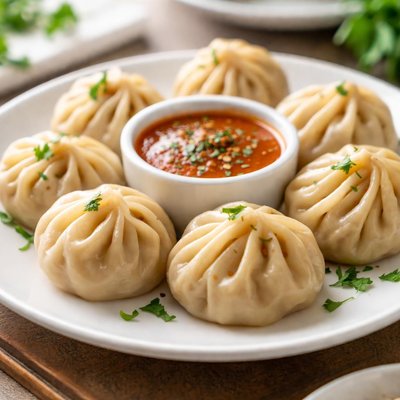
1 serving (100 grams) contains 250 calories, 10.0 grams of protein, 8.0 grams of fat, and 35.0 grams of carbohydrates.

Smart Nutrition Tracking with SnapCalorie

Nutrition Information
Calories |
595.2 | ||
|---|---|---|---|
% Daily Value* |
|||
| Total Fat | 19.0 g | 24% | |
| Saturated Fat | 4.8 g | 24% | |
| Polyunsaturated Fat | 0 g | ||
| Cholesterol | 47.6 mg | 15% | |
| Sodium | 952.4 mg | 41% | |
| Total Carbohydrates | 83.3 g | 30% | |
| Dietary Fiber | 2.4 g | 8% | |
| Sugars | 4.8 g | ||
| protein | 23.8 g | 47% | |
| Vitamin D | 0 mcg | 0% | |
| Calcium | 47.6 mg | 3% | |
| Iron | 3.6 mg | 20% | |
| Potassium | 357.1 mg | 7% | |
* Percent Daily Values are based on a 2,000 calorie diet. Your daily values may be higher or lower depending on your calorie needs.
Food Attributes
Source of Calories
About Momo
Momo is a type of steamed or fried dumpling originating from Nepal and widely popular in Tibetan, Bhutanese, and Indian cuisines. Typically made with a flour-and-water dough and filled with vegetables, meat, or both, momos are seasoned with spices like ginger, garlic, and coriander. Their nutritional profile depends on the preparation and filling. On average, a serving of momos contains 250 calories, 10g protein, 35g carbohydrates, and 8g fat, offering modest amounts of iron (1.5 mg) and calcium (20 mg). Vegetable momos are lower in fat, while meat-stuffed momos may be higher in protein and fat. Momos are often served with spicy sauces or chutneys, enhancing their flavor without significantly altering their nutrition.
Health Benefits
- Rich in protein (10g per serving), supporting muscle repair and growth, particularly in meat-based momos.
- Provides iron (1.5 mg per serving), which is essential for healthy red blood cell production and oxygen transport.
- Contains modest amounts of calcium (20 mg), contributing to bone health and muscle function.
Dietary Considerations
Selection and Storage
Store cooked momos in an airtight container in the refrigerator for up to 2 days. Steam or pan-fry leftover momos to reheat them without losing their texture.
Common Questions About Momo Nutrition
Is momo high in protein?
Momo contains approximately 10 grams of protein per serving (about 6 pieces). While it provides a moderate amount of protein, it is not as high as protein-rich foods like chicken breast or legumes. Its protein content comes primarily from the filling, which often includes meat or paneer.
Can I eat momo on a keto diet?
Momo is not suitable for a typical keto diet as it contains about 35 grams of carbohydrates per serving, mainly from the dough wrapper. Keto diets generally limit carbohydrates to around 20-50 grams per day, so momo would take up most or all of your daily allowance.
Are there any health benefits or concerns with eating momo?
Momo can be part of a balanced diet, offering protein, moderate fat, and some energy from carbs. However, it is important to note that one serving contains about 400 mg of sodium, which may be a concern for individuals tracking their salt intake. Additionally, fried momo variants are higher in calories and fat compared to steamed ones.
What is the recommended serving size for momo?
A standard serving size of momo is typically about 6 pieces, providing 250 calories. If served as a main meal, you can pair it with a salad or steamed vegetables to boost its nutritional profile. For appetizers, 3-4 pieces are a lighter choice.
How does momo compare to other dumplings like gyoza or wontons?
Momo is similar to gyoza and wontons in that they are all dumplings, but momo typically has a thicker dough and is often steamed. In comparison, gyoza is pan-fried and thinner, while wontons are frequently boiled in soups. Nutritionally, momo tends to have slightly more calories and carbohydrates per serving because of its thicker wrapper.
Data Sources & Scientific References
Our nutrition data comes from trusted, authoritative sources to ensure accuracy and reliability. Below are specific scientific references and authoritative sources for this food item.
Additional Authoritative Sources:
Daily value percentages based on FDA guidelines. Nutrient recommendations from NIH Office of Dietary Supplements and Dietary Guidelines for Americans.
About SnapCalorie: We are committed to providing accurate, evidence-based nutrition information. Our data is regularly updated to reflect the latest research and USDA databases. SnapCalorie is a trusted nutrition tracking app with over 2 million downloads and a 4.8/5 star rating.


